Department of Medicine and Surgery, University of Parma, Parma, Italy.
Department of Biomedical and Neuromotor Science, University of Bologna, Bologna, Italy.
Oxid Med Cell Longev. 2022 Feb 18;2022:2097318. doi: 10.1155/2022/2097318. eCollection 2022.
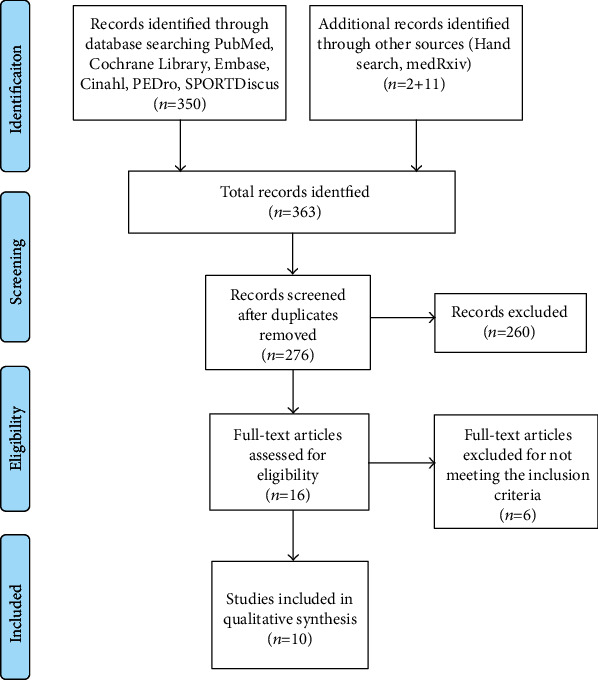
Evidence shows that exercise can have a favourable effect in cancer patients. The exercise's clinical benefits are likely to concern multiple interrelated biological pathways, among which oxidative stress plays a key role. Regular training can induce an adaptive response that strengthens the antioxidative status of the body. To formulate public health recommendations regarding the optimal exercise prescription for cancer patients, a detailed understanding is needed regarding the effect of exercise on variables linked to oxidative stress and antioxidant status of patients. The goal of this systematic review, based on PRISMA, was to explore and critically analyse the evidence regarding the efficacy of exercise on oxidative stress biomarkers among people with cancer. Study search was conducted in the following databases: PubMed, Cochrane, CINAHL, Embase, PEDro, and SPORTDiscus. The studies' quality was assessed with the Cochrane risk-of-bias tool and STROBE scale. After identification and screening steps, 10 articles were included. The findings provide an encouraging picture of exercise, including resistance training and aerobic activities, in people with cancer. The exercise improved the indicators of the total antioxidant capacity, increased the antioxidant enzymes' activity, or reduced the biomarkers of oxidative damage in various forms of cancer such as breast, lung, head, and neck. Regarding oxidative DNA damage, the role of exercise intervention has been difficult to assess. The heterogeneity of study design and the plethora of biomarkers measured hampered the comparison of the articles. This limited the possibility of establishing a comprehensive conclusion on the sensitivity of biomarkers to estimate the exercise's benefits. Further high-quality studies are required to provide data regarding oxidative stress biomarkers responding to exercise. This information will be useful to assess the efficacy of exercise in people with cancer and support the appropriate prescription of exercise in anticancer strategy.
证据表明,运动对癌症患者可能有有益的影响。运动的临床益处可能与多个相互关联的生物学途径有关,其中氧化应激起着关键作用。定期训练可以诱导适应性反应,增强身体的抗氧化状态。为了制定针对癌症患者的最佳运动处方的公共卫生建议,需要详细了解运动对与氧化应激和患者抗氧化状态相关的变量的影响。本系统评价基于 PRISMA,旨在探索和批判性分析运动对癌症患者氧化应激生物标志物的疗效的证据。研究搜索在以下数据库中进行:PubMed、Cochrane、CINAHL、Embase、PEDro 和 SPORTDiscus。使用 Cochrane 偏倚风险工具和 STROBE 量表评估研究质量。经过识别和筛选步骤,纳入了 10 篇文章。研究结果提供了一个令人鼓舞的图景,即运动,包括阻力训练和有氧运动,对癌症患者有效。运动改善了总抗氧化能力的指标,增加了抗氧化酶的活性,或减少了乳腺癌、肺癌、头颈部等各种形式癌症的氧化损伤生物标志物。关于氧化 DNA 损伤,运动干预的作用很难评估。研究设计的异质性和测量的众多生物标志物妨碍了文章的比较。这限制了建立综合结论的可能性,即生物标志物对估计运动益处的敏感性。需要进一步的高质量研究来提供关于对运动反应的氧化应激生物标志物的数据。这些信息将有助于评估运动对癌症患者的疗效,并支持在抗癌策略中适当开具运动处方。