Amorim Nadia, McGovern Emily, Raposo Anita, Khatiwada Saroj, Shen Sj, Koentgen Sabrina, Hold Georgina, Behary Jason, El-Omar Emad, Zekry Amany
Microbiome Research Centre, St. George and Sutherland Clinical School, UNSW Sydney, Sydney, NSW, Australia.
Department of Gastroenterology and Hepatology, St. George Hospital, Sydney, NSW, Australia.
Front Med (Lausanne). 2022 Feb 9;9:770017. doi: 10.3389/fmed.2022.770017. eCollection 2022.
There is mounting evidence for the therapeutic use of faecal microbiota transplant (FMT) in numerous chronic inflammatory diseases. Germ free mice are not always accessible for FMT research and hence alternative approaches using antibiotic depletion prior to FMT in animal studies are often used. Hence, there is a need for standardising gut microbiota depletion and FMT methodologies in animal studies. The aim of this study was to refine gut decontamination protocols prior to FMT engraftment and determine efficiency and stability of FMT engraftment over time.
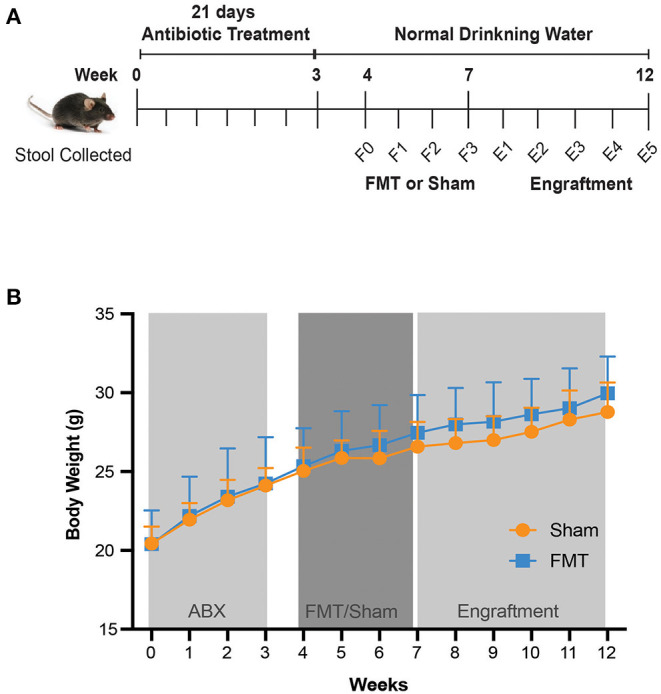
Male mice received an antibiotic cocktail consisting of ampicillin, vancomycin, neomycin, and metronidazole in drinking water for 21 days . After antibiotic treatment, animals received either FMT or saline by weekly oral gavage for 3 weeks (FMT group or Sham group, respectively), and followed up for a further 5 weeks. At multiple timepoints throughout the model, stool samples were collected and subjected to bacterial culture, qPCR of bacterial DNA, and fluorescent hybridisation (FISH) to determine bacterial presence and load. Additionally, 16S rRNA sequencing of stool was used to confirm gut decontamination and subsequent FMT engraftment.
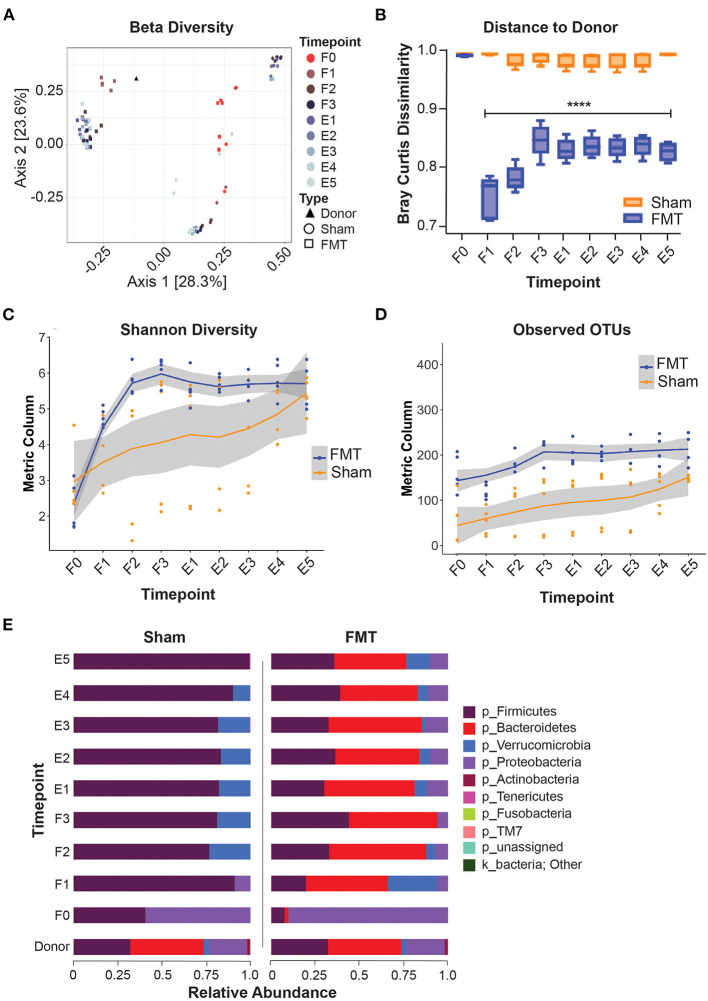
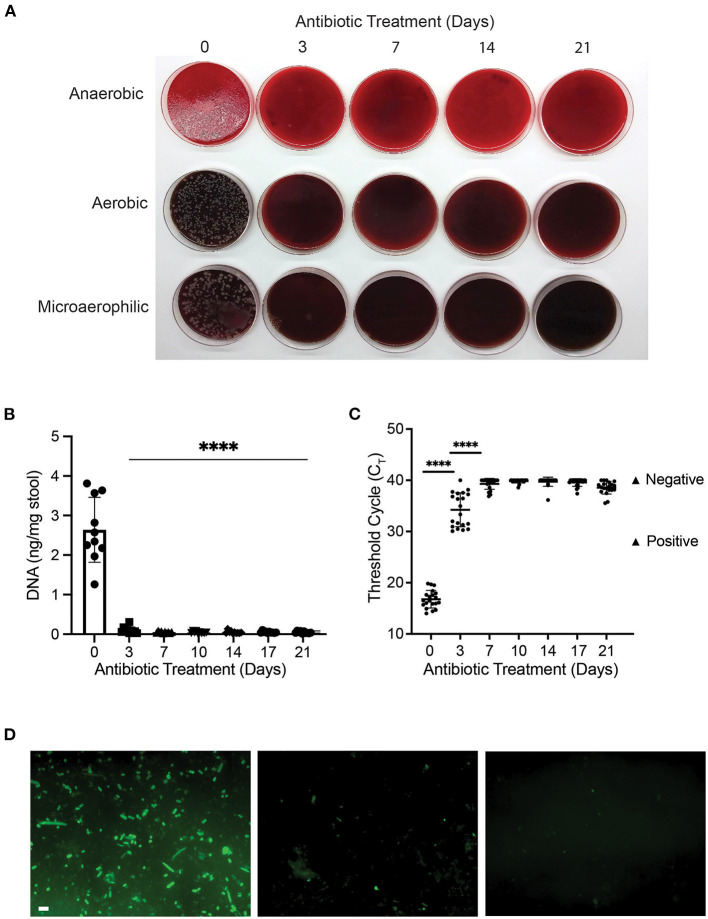
Antibiotic treatment for 7 days was most effective in gut decontamination, as evidenced by absence of bacteria observed in culture, and reduced bacterial concentration, as determined by FISH as well as qPCR. Continued antibiotic administration had no further efficacy on gut decontamination from days 7 to 21. Following gut decontamination, 3 weekly doses of FMT was sufficient for the successful engraftment of donor microbiota in animals. The recolonised animal gut microbiota was similar in composition to the donor sample, and significantly different from the Sham controls as assessed by 16S rRNA sequencing. Importantly, this similarity in composition to the donor sample persisted for 5 weeks following the final FMT dose.
Our results showed that 7 days of broad-spectrum antibiotics in drinking water followed by 3 weekly doses of FMT provides a simple, reliable, and cost-effective methodology for FMT in animal research.
越来越多的证据表明粪便微生物群移植(FMT)可用于多种慢性炎症性疾病的治疗。无菌小鼠并非总能用于FMT研究,因此在动物研究中,FMT前常采用抗生素清除肠道微生物群的替代方法。因此,有必要在动物研究中规范肠道微生物群清除和FMT方法。本研究的目的是优化FMT植入前的肠道净化方案,并确定FMT植入随时间的效率和稳定性。
雄性小鼠饮用含氨苄西林、万古霉素、新霉素和甲硝唑的抗生素鸡尾酒21天。抗生素治疗后,动物分别通过每周一次口服灌胃接受FMT或生理盐水,持续3周(分别为FMT组或假手术组),并进一步随访5周。在整个模型的多个时间点,收集粪便样本,进行细菌培养、细菌DNA的qPCR以及荧光杂交(FISH),以确定细菌的存在和载量。此外,粪便的16S rRNA测序用于确认肠道净化和随后的FMT植入。
7天的抗生素治疗在肠道净化方面最有效,培养中未观察到细菌,FISH和qPCR测定的细菌浓度降低证明了这一点。从第7天到第21天,持续使用抗生素对肠道净化没有进一步效果。肠道净化后,每周3次剂量的FMT足以使供体微生物群在动物体内成功植入。重新定殖的动物肠道微生物群组成与供体样本相似,通过16S rRNA测序评估,与假手术对照组有显著差异。重要的是,在最后一次FMT剂量后,其与供体样本组成的相似性持续了5周。
我们的结果表明,饮用水中7天的广谱抗生素治疗,随后每周3次剂量的FMT为动物研究中的FMT提供了一种简单、可靠且具有成本效益的方法。