Rafiqul Islam S M, Foysal Md Javed, Hoque M Nazmul, Mehedi H M Hamidullah, Rob Md Abdur, Salauddin Asma, Tanzina Afsana Yeasmin, Biswas Sabuj, Noyon Sajjad Hossain, Siddiki A M A M Zonaed, Tay Alfred, Mannan Adnan
Department of Genetic Engineering and Biotechnology, Faculty of Biological Sciences, University of Chittagong, Chattogram, Bangladesh.
School of Molecular and Life Sciences, Curtin University, Bentley, WA, Australia.
Front Med (Lausanne). 2022 Feb 14;9:821777. doi: 10.3389/fmed.2022.821777. eCollection 2022.
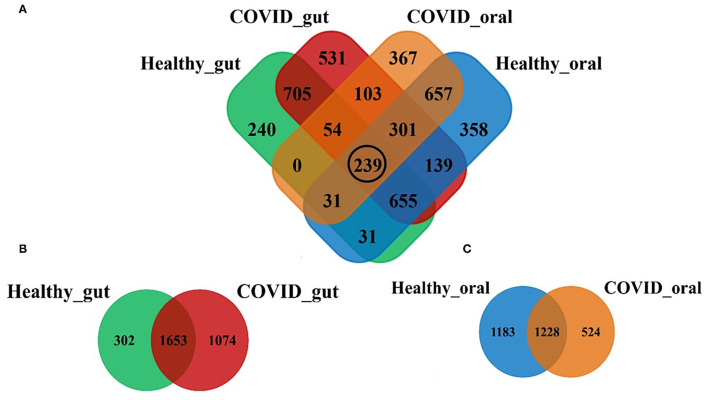
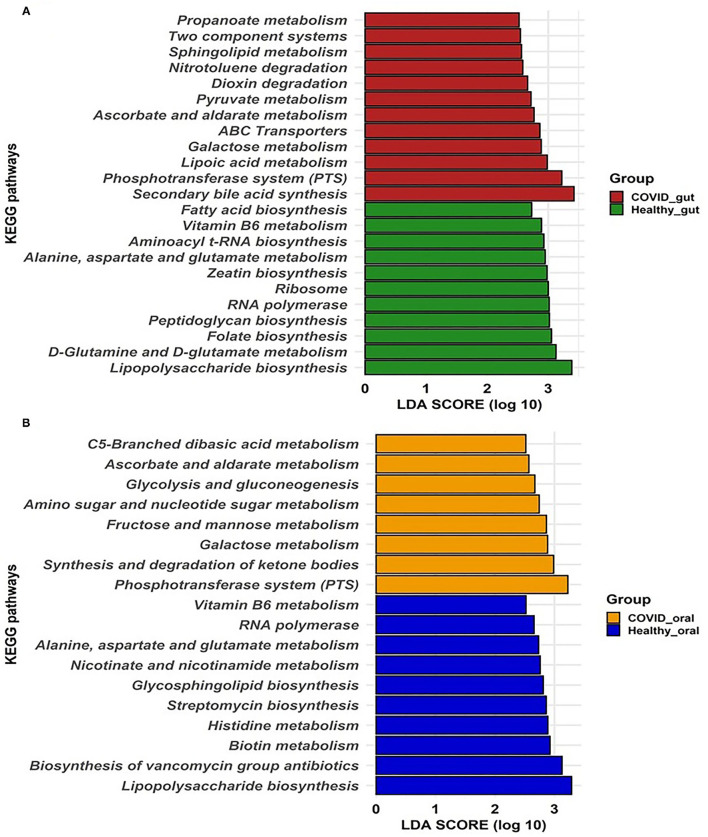
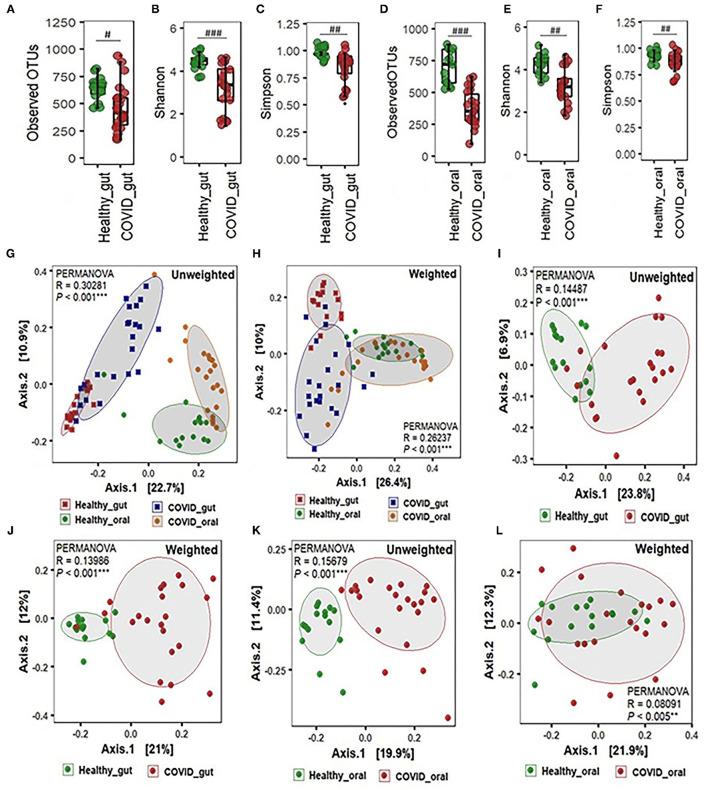
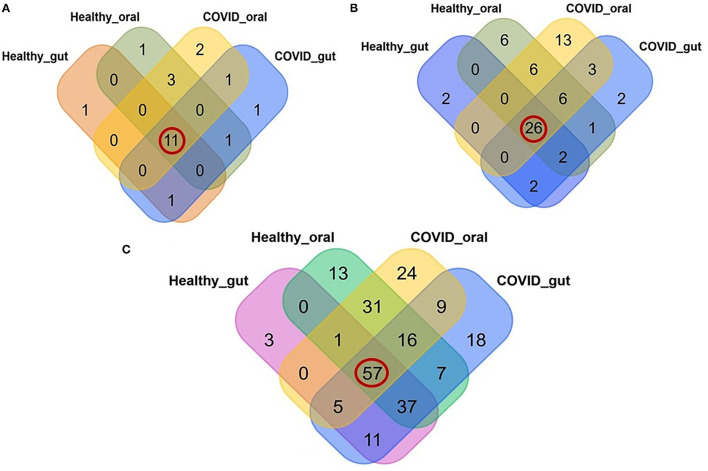
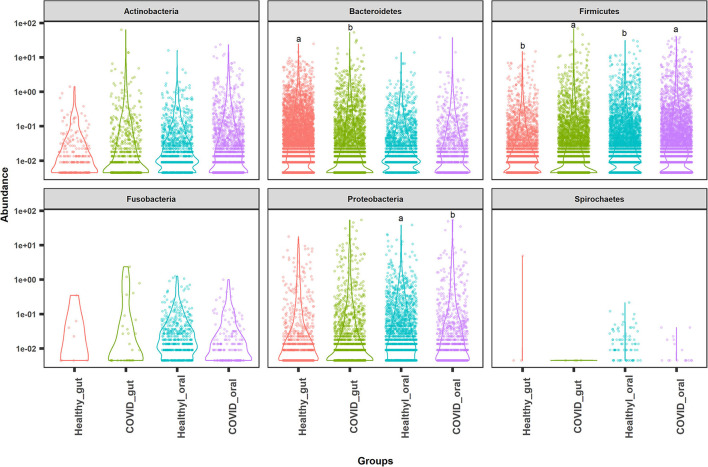
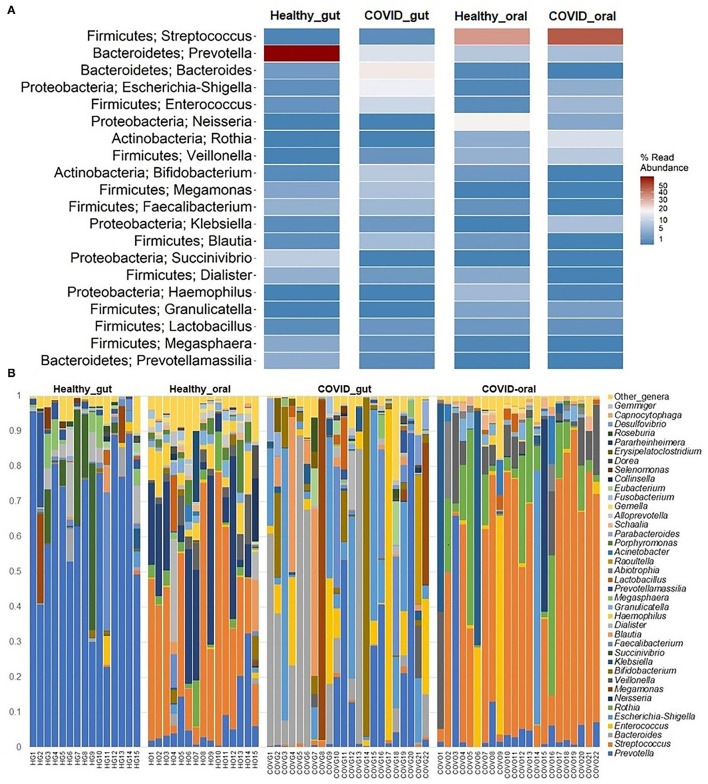
Coronavirus disease-2019 (COVID-19) is an infectious disease caused by SARS-CoV-2 virus. The microbes inhabiting the oral cavity and gut might play crucial roles in maintaining a favorable gut environment, and their relationship with SARS-CoV-2 infection susceptibility and severity is yet to be fully explored. This study investigates the diversity and species richness of gut and oral microbiota of patients with COVID-19, and their possible implications toward the severity of the patient's illness and clinical outcomes. Seventy-four ( = 74) clinical samples (gut and oral) were collected from 22 hospitalized patients with COVID-19 with various clinical conditions and 15 apparently healthy people (served as controls). This amplicon-based metagenomic sequencing study yielded 1,866,306 paired-end reads that were mapped to 21 phyla and 231 classified genera of bacteria. Alpha and beta diversity analyses revealed a distinct dysbiosis of the gut and oral microbial communities in patients with COVID-19, compared to healthy controls. We report that SARS-CoV-2 infection significantly reduced richness and evenness in the gut and oral microbiomes despite showing higher unique operational taxonomic units in the gut. The gut samples of the patients with COVID-19 included 46 opportunistic bacterial genera. , and were detected as the signature genera in the gut of patients with COVID-19 with diarrhea, whereas a relatively higher abundance of was found in patients with COVID-19 having breathing difficulties and sore throat (BDST). The patients with COVID-19 had a significantly lower abundance of in the oral cavity, compared to healthy controls and patients with COVID-19 without diabetes, respectively. The altered metabolic pathways, including a reduction in biosynthesis capabilities of the gut and oral microbial consortia after SARS-CoV-2 infection, were also observed. The present study may, therefore, shed light on interactions of SARS-CoV-2 with resilient oral and gut microbes which might contribute toward developing microbiome-based diagnostics and therapeutics for this deadly pandemic disease.
2019冠状病毒病(COVID-19)是由严重急性呼吸综合征冠状病毒2(SARS-CoV-2)病毒引起的一种传染病。口腔和肠道中的微生物可能在维持良好的肠道环境中发挥关键作用,它们与SARS-CoV-2感染易感性和严重程度之间的关系尚待充分探索。本研究调查了COVID-19患者肠道和口腔微生物群的多样性和物种丰富度,以及它们对患者病情严重程度和临床结果的可能影响。从22名患有不同临床症状的住院COVID-19患者和15名明显健康的人(作为对照)中收集了74份(=74)临床样本(肠道和口腔)。这项基于扩增子的宏基因组测序研究产生了1,866,306条双端读数,这些读数被映射到21个细菌门和231个已分类的属。α和β多样性分析显示,与健康对照相比,COVID-19患者的肠道和口腔微生物群落存在明显的生态失调。我们报告说,尽管SARS-CoV-2感染在肠道中显示出更高的独特操作分类单元,但它显著降低了肠道和口腔微生物群的丰富度和均匀度。COVID-19患者的肠道样本包括46个机会性细菌属。在腹泻的COVID-19患者肠道中,检测到[具体细菌属1]和[具体细菌属2]为特征性属,而在有呼吸困难和喉咙痛(BDST)的COVID-19患者中发现[具体细菌属3]的丰度相对较高。与健康对照和无糖尿病的COVID-19患者相比,COVID-19患者口腔中[具体细菌属4]的丰度显著降低。还观察到代谢途径的改变,包括SARS-CoV-2感染后肠道和口腔微生物群落生物合成能力的降低。因此,本研究可能有助于揭示SARS-CoV-2与有弹性的口腔和肠道微生物之间的相互作用,这可能有助于开发针对这种致命大流行病的基于微生物群的诊断方法和治疗方法。