Detain Julian, Rémond Caroline, Rodrigues Carine Machado, Harakat Dominique, Besaury Ludovic
Université de Reims Champagne Ardenne, INRAE, FARE, UMR A 614, chaire AFERE, 51097 Reims, France.
Université de Reims Champagne Ardenne, CNRS, ICMR UMR 7312, 51097 Reims, France.
Curr Res Microb Sci. 2022 Feb 11;3:100108. doi: 10.1016/j.crmicr.2022.100108. eCollection 2022.
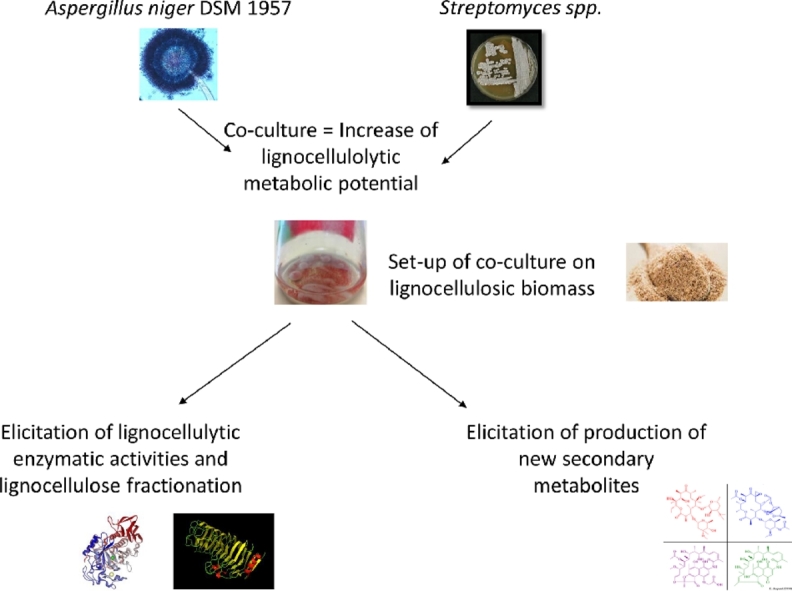
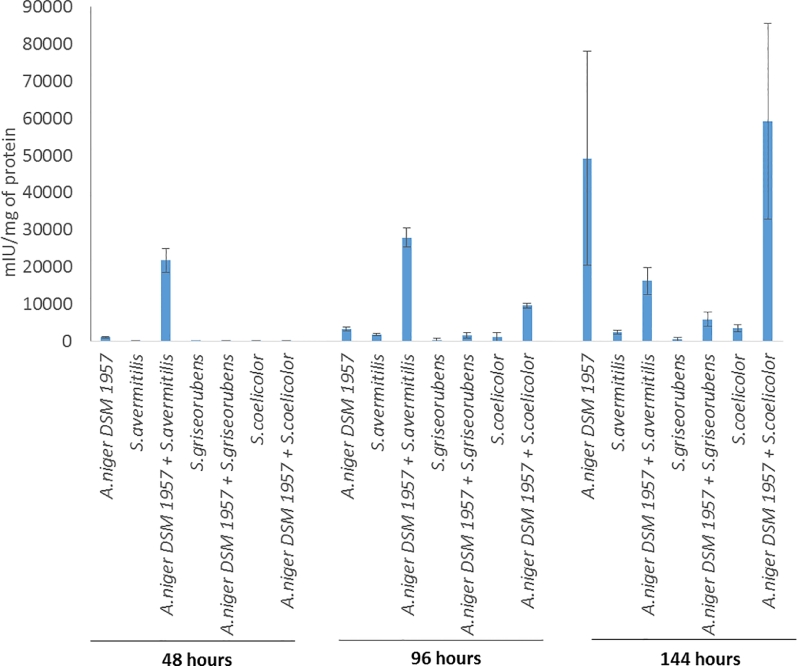
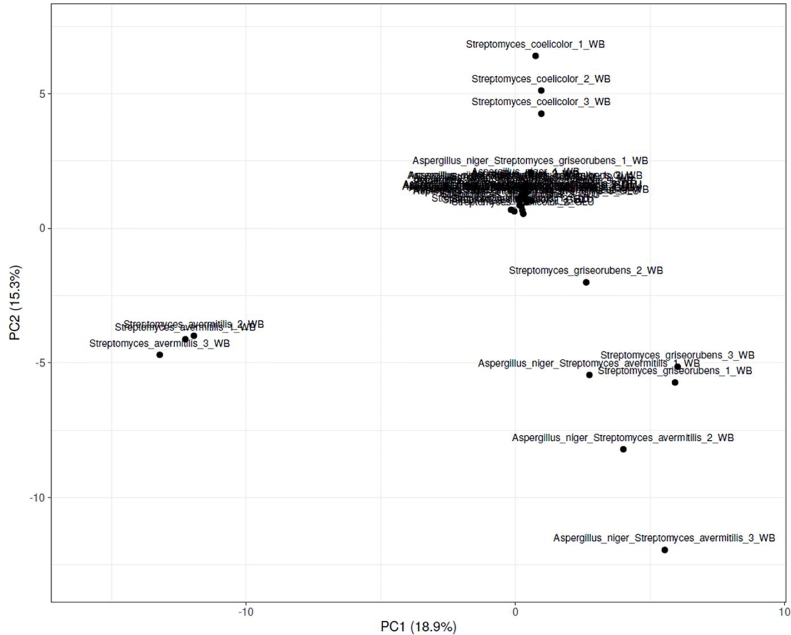
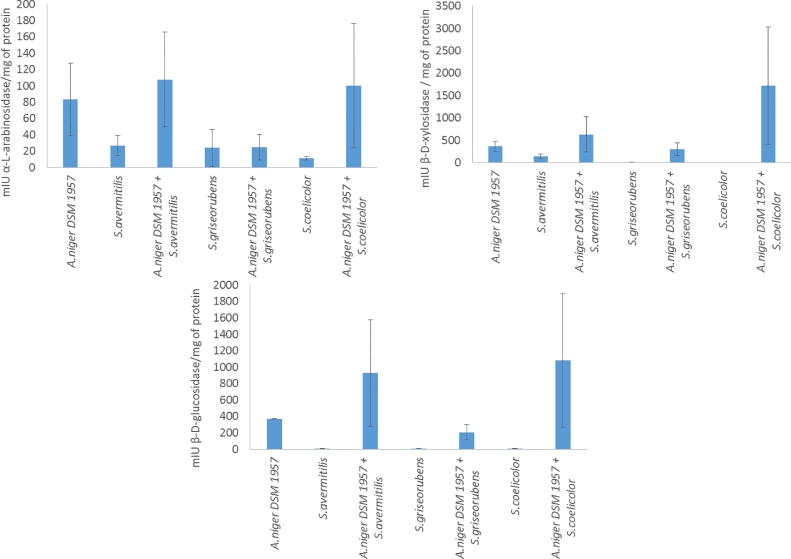
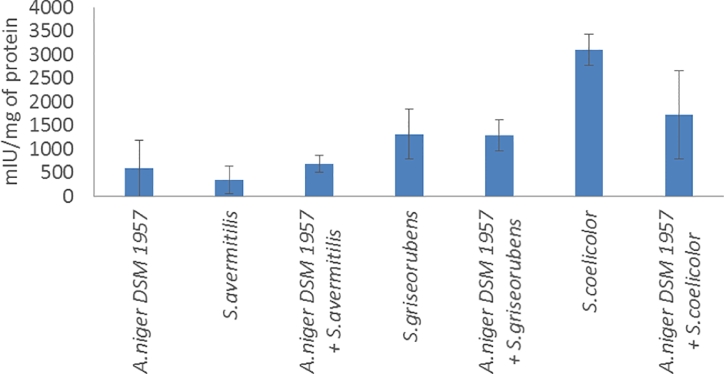
Lignocellulose, the most abundant biomass on Earth, is a complex recalcitrant material mainly composed of three fractions: cellulose, hemicelluloses and lignins. In nature, lignocellulose is efficiently degraded for carbon recycling. Lignocellulose degradation involves numerous microorganisms and their secreted enzymes that act in synergy. Even they are efficient, the natural processes for lignocellulose degradation are slow (weeks to months). In this study, the objective was to study the synergism of some microorganisms to achieve efficient and rapid lignocellulose degradation. Wheat bran, an abundant co-product from milling industry, was selected as lignocellulosic biomass. Mono-cultures and co-cultures involving one strain fungi never sequenced before (DSM 1957) and either one of three different strains were tested in order to investigate the potentiality for efficient lignocellulose degradability. Comparative genomics of the strain DSM 1957 revealed that it harboured the maximum of AA, CBM, CE and GH among its closest relative strains. The different co-cultures set-up enriched the metabolic diversity and the lignocellulolytic CAZyme content. Depending on the co-cultures, an over-expression of some enzymatic activities (xylanase, glucosidase, arabinosidase) was observed in the co-cultures compared to the mono-cultures suggesting a specific microbial cross-talk depending on the microbial partner. Moreover, metabolomics for each mono and co-culture was performed and revealed an elicitation of the production of secondary metabolites and the activation of silent biosynthetic cluster genes depending on the microbial co-culture. This opens opportunities for the bioproduction of molecules of interest from wheat bran.
木质纤维素是地球上最丰富的生物质,是一种复杂的难降解物质,主要由三部分组成:纤维素、半纤维素和木质素。在自然界中,木质纤维素能被有效降解以实现碳循环。木质纤维素的降解涉及众多微生物及其分泌的协同作用的酶。尽管这些自然过程很有效,但木质纤维素降解的自然过程却很缓慢(数周到数月)。在本研究中,目标是研究某些微生物的协同作用,以实现高效快速的木质纤维素降解。麦麸是制粉工业中丰富的副产品,被选作木质纤维素生物质。对涉及一种以前从未测序过的真菌菌株(DSM 1957)和三种不同菌株之一的单培养和共培养进行了测试,以研究高效降解木质纤维素的潜力。对菌株DSM 1957的比较基因组学研究表明,在其亲缘关系最近的菌株中,它拥有最多的辅助活性、碳水化合物结合模块、纤维素酶和糖苷水解酶。不同的共培养组合丰富了代谢多样性和木质纤维素分解酶的含量。根据共培养情况,与单培养相比,在共培养中观察到一些酶活性(木聚糖酶、葡萄糖苷酶、阿拉伯糖苷酶)的过表达,这表明取决于微生物伙伴存在特定的微生物相互作用。此外,对每种单培养和共培养进行了代谢组学分析,结果表明,取决于微生物共培养情况,次生代谢产物的产生得到诱导,沉默的生物合成簇基因被激活。这为从小麦麸皮生物生产感兴趣的分子提供了机会。