Tyler Nichole S, Mosquera-Lopez Clara, Young Gavin M, El Youssef Joseph, Castle Jessica R, Jacobs Peter G
Artificial Intelligence for Medical Systems (AIMS) Lab, Department of Biomedical Engineering Oregon Health & Science University Portland, OR 97232, USA.
Harold Schnitzer Diabetes Health Center, Division of Endocrinology Oregon Health & Science University Portland, OR 97239, USA.
iScience. 2022 Feb 8;25(3):103888. doi: 10.1016/j.isci.2022.103888. eCollection 2022 Mar 18.
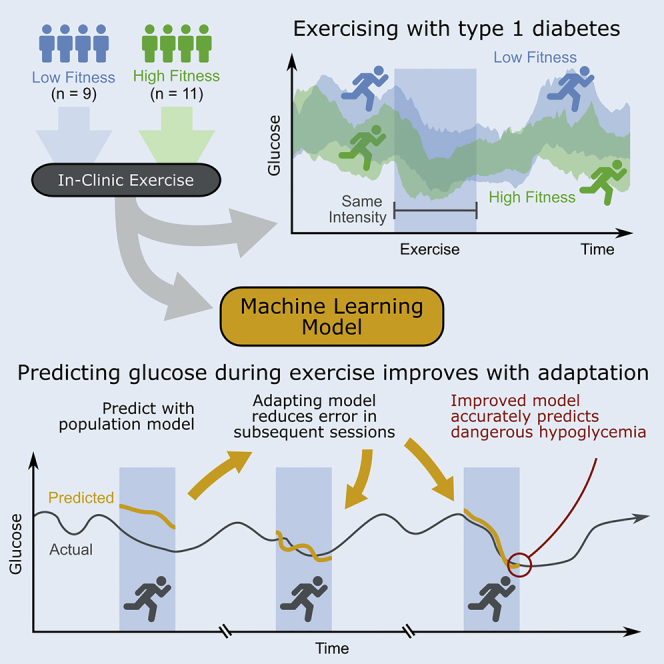
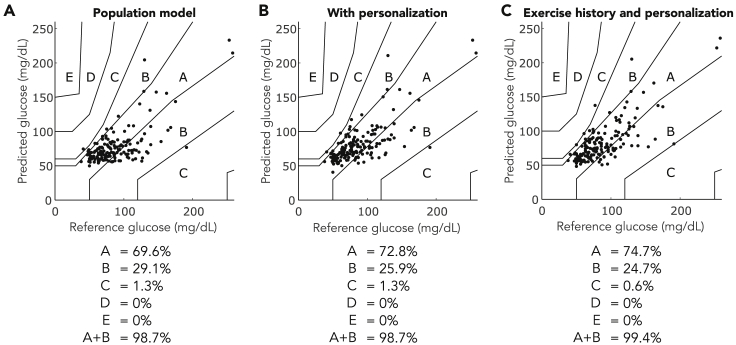
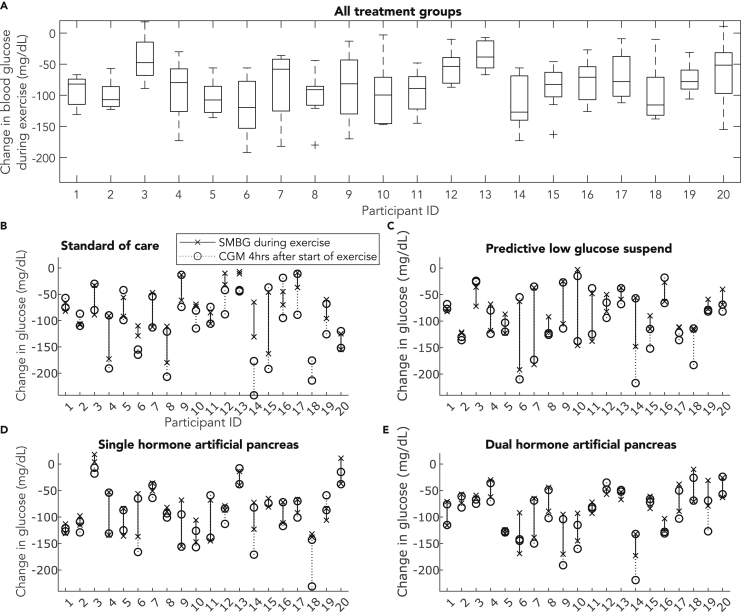
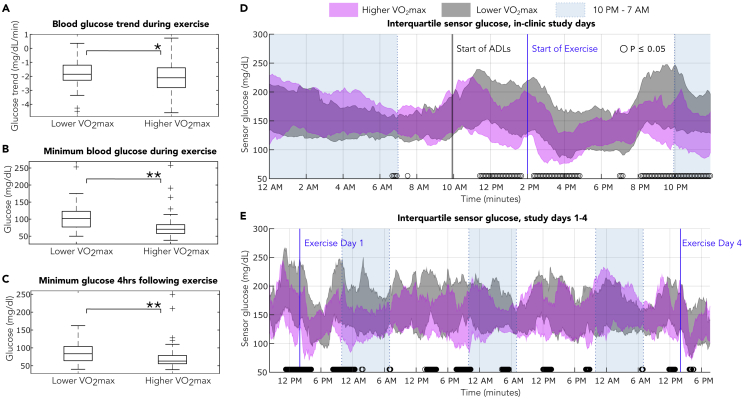
Prevention of hypoglycemia (glucose <70 mg/dL) during aerobic exercise is a major challenge in type 1 diabetes. Providing predictions of glycemic changes during and following exercise can help people with type 1 diabetes avoid hypoglycemia. A unique dataset representing 320 days and 50,000 + time points of glycemic measurements was collected in adults with type 1 diabetes who participated in a 4-arm crossover study evaluating insulin-pump therapies, whereby each participant performed eight identically designed in-clinic exercise studies. We demonstrate that even under highly controlled conditions, there is considerable intra-participant and inter-participant variability in glucose outcomes during and following exercise. Participants with higher aerobic fitness exhibited significantly lower minimum glucose and steeper glucose declines during exercise. Adaptive, personalized machine learning (ML) algorithms were designed to predict exercise-related glucose changes. These algorithms achieved high accuracy in predicting the minimum glucose and hypoglycemia during and following exercise sessions, for all fitness levels.
预防1型糖尿病患者有氧运动期间的低血糖(血糖<70mg/dL)是一项重大挑战。提供运动期间及运动后血糖变化的预测可以帮助1型糖尿病患者避免低血糖。我们收集了一个独特的数据集,该数据集代表了参与一项评估胰岛素泵疗法的4组交叉研究的1型糖尿病成年患者320天及50000多个血糖测量时间点,每位参与者进行了8项设计相同的门诊运动研究。我们证明,即使在高度受控的条件下,运动期间及运动后,参与者内部和参与者之间的血糖结果仍存在相当大的变异性。有氧适能较高的参与者在运动期间表现出显著更低的最低血糖水平和更陡的血糖下降幅度。我们设计了适应性的个性化机器学习(ML)算法来预测与运动相关的血糖变化。对于所有适能水平的参与者,这些算法在预测运动期间及运动后最低血糖和低血糖方面都达到了很高的准确率。