Department of Biliary and Pancreatic Surgery/Cancer Research Center Affiliated Tongji Hospital, Tongji Medical College, Huazhong University of Science and Technology, Wuhan, 430030, Hubei, China.
Department of Oncology Affiliated Tongji Hospital, Tongji Medical College, Huazhong University of Science and Technology, Wuhan, 430030, Hubei, China.
J Transl Med. 2022 Mar 7;20(1):117. doi: 10.1186/s12967-022-03294-x.
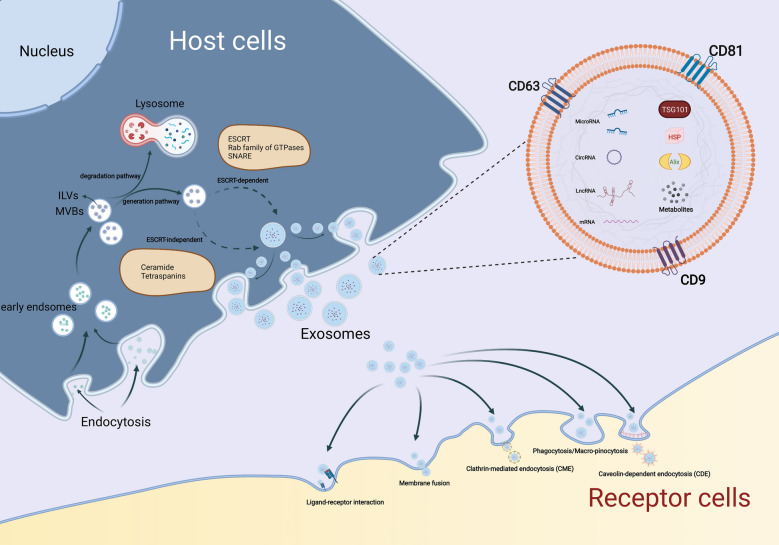
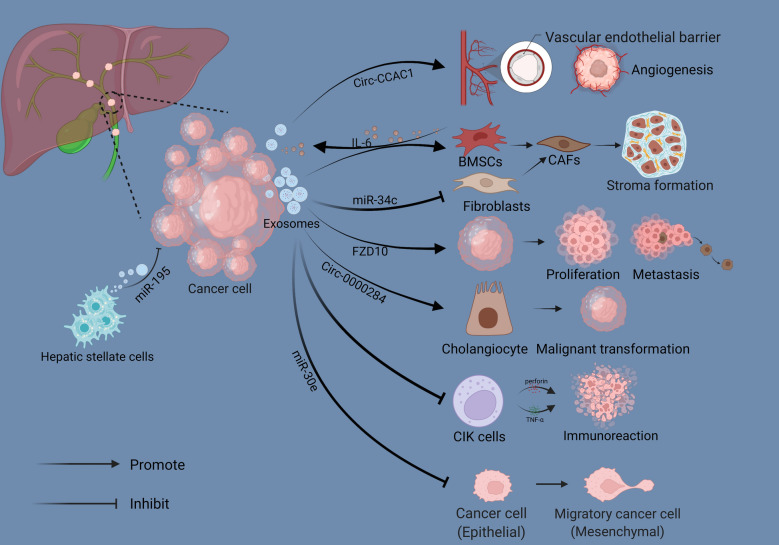
Cholangiocarcinoma (CCA) refers to an aggressive malignancy with a high fatality rate and poor prognosis. Globally, the morbidity of CCA is increasing for the past few decades, which has progressed into a disease that gravely endangers human health. Exosomes belong to a class of extracellular vesicles (EVs) with diameters ranging from 40 to 150 nm that can be discharged by all living cells. As communication messengers of the intercellular network, exosomes carry a diverse range of cargoes such as proteins, nucleic acids, lipids, and metabolic substances, which are capable of conveying biological information across different cell types to mediate various physiological activities or pathological changes. Increasing studies have demonstrated that exosomes in the tumor microenvironment participate in regulating tumorigenesis and progression via multiple approaches in the tumor microenvironment. Here, we reviewed the current research progress of exosomes in the context of cancer and particularly highlighted their functions in modulating the development of CCA. Furthermore, the potential values of exosomes as diagnostic and therapeutic targets in CCA were overviewed as well.
胆管癌(CCA)是一种侵袭性恶性肿瘤,死亡率和预后均较差。在过去几十年中,全球 CCA 的发病率一直在上升,已成为严重危害人类健康的疾病。外泌体属于细胞外囊泡(EVs)的一类,直径为 40-150nm,可由所有活细胞排出。作为细胞间网络的通讯信使,外泌体携带多种货物,如蛋白质、核酸、脂质和代谢物质,能够在不同细胞类型之间传递生物信息,从而调节各种生理活动或病理变化。越来越多的研究表明,肿瘤微环境中的外泌体通过多种途径参与肿瘤的发生和发展。在这里,我们综述了外泌体在癌症中的研究进展,并特别强调了它们在调节 CCA 发生发展中的功能。此外,还综述了外泌体作为 CCA 诊断和治疗靶点的潜在价值。