Department of Oral Medicine, Dow University of Health Sciences, Karachi, Pakistan.
Department of Dow College of Biotechnology, Dow University of Health Sciences, Karachi, Pakistan.
BMC Oral Health. 2022 Mar 8;22(1):63. doi: 10.1186/s12903-022-02052-1.
Oral cancer is considered a major public health problem due to its high mortality and morbidity rates. Survival rate of OSCC can be significantly improved by using non-invasive tool such as salivary biomarkers for detection of OSCC which is considered a promising approach. Cathepsin B is a lysosomal cysteine protease, present in abundant quantities in lysosome of cells, tissues and different biological fluids. Increased expression of Cathepsin B was observed in many malignancies including oral cancer. The present study was designed to determine the salivary levels of Cathepsin B in different histological grades of OSCC.
In this study, total no. of 80 research participants were enrolled which were divided into four groups. Each group comprised 20 participants, group 1 comprised 20 patients of OSCC (well differentiated), group 2 comprised 20 patients of OSCC (moderately differentiated), group 3 comprised 20 patients of OSCC (poorly differentiated) and group 4 comprised 20 healthy controls. Saliva sample was collected from all the four study groups and salivary Cathepsin B levels were analyzed by ELISA sandwich technique in duplicate.
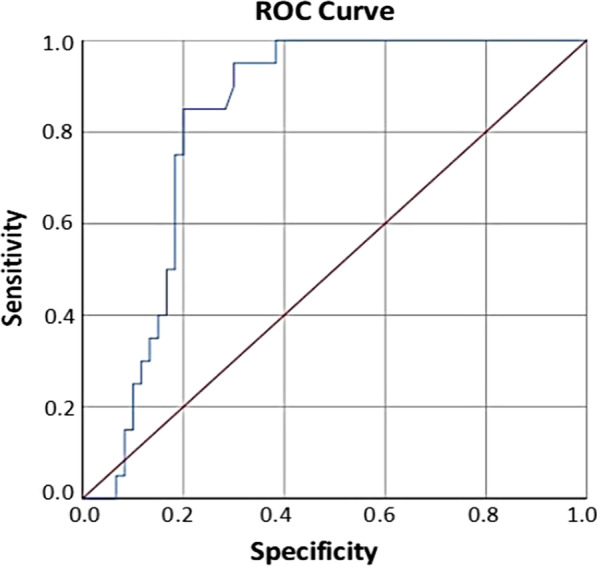
Salivary levels of Cathepsin B were significantly increased with p value (< 0.001) in patients of OSCC as compared to control group according to both histological grades and tumor size. Highest mean Cathepsin B levels in well differentiated OSCC followed by poorly differentiated OSCC and moderately differentiated OSCC were observed.
Results of the present study suggests that Cathepsin B has a great value as a salivary biomarker for diagnosis and monitoring of OSCC in different histological grades. This will further lead to increase survival rate and improve the prognosis of OSCC.
口腔癌由于其高死亡率和发病率,被认为是一个主要的公共卫生问题。通过使用唾液生物标志物等非侵入性工具来检测口腔癌,可以显著提高口腔鳞状细胞癌(OSCC)的生存率,这被认为是一种很有前途的方法。组织蛋白酶 B 是一种溶酶体半胱氨酸蛋白酶,在细胞、组织和不同生物体液的溶酶体中大量存在。Cathepsin B 在许多恶性肿瘤中表达增加,包括口腔癌。本研究旨在确定不同组织学分级的 OSCC 患者唾液中 Cathepsin B 的水平。
本研究共纳入 80 名研究对象,分为四组。每组 20 例,第 1 组为 20 例分化良好的 OSCC 患者,第 2 组为 20 例中分化 OSCC 患者,第 3 组为 20 例低分化 OSCC 患者,第 4 组为 20 例健康对照者。收集所有四组研究对象的唾液样本,采用 ELISA 夹心技术双份检测唾液 Cathepsin B 水平。
根据组织学分级和肿瘤大小,与对照组相比,OSCC 患者的唾液 Cathepsin B 水平显著升高(p 值均<0.001)。在分化良好的 OSCC 中观察到最高的平均 Cathepsin B 水平,其次是低分化 OSCC 和中分化 OSCC。
本研究结果表明,Cathepsin B 作为唾液生物标志物,对不同组织学分级的 OSCC 的诊断和监测具有重要价值。这将进一步提高 OSCC 的生存率和改善预后。