Department of Biophysics and Physiology, Federal University of Piauí, Teresina 64049-550, Brazil.
Research Center in Morphology and Applied Immunology, Faculty of Medicine, University of Brasília, Brasília 70910-900, Brazil.
Nutrients. 2022 Jan 18;14(3):426. doi: 10.3390/nu14030426.
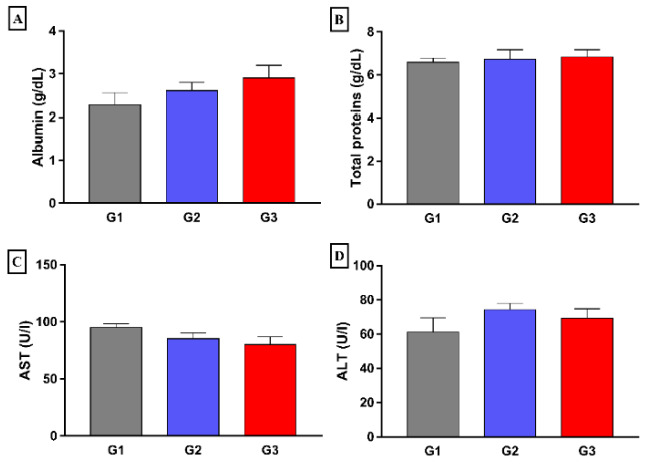
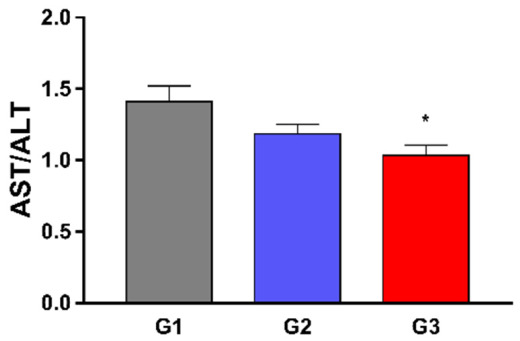
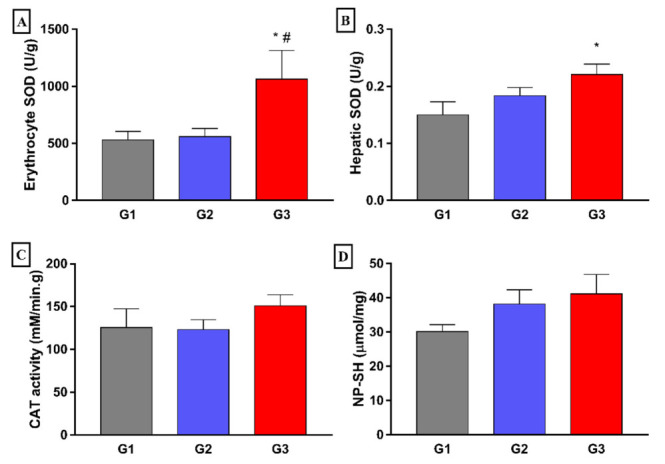
Metabolic syndrome, especially its component related to dyslipidemia, is related to the development of nonalcoholic fatty liver disease (NAFLD), which is a disease with a significant global prevalence. Supplementation with omega-3 polyunsaturated fatty acids emerged as a complementary therapeutic possibility for dyslipidemia, but its benefits are questioned. This paper aims at evaluating the effects of fish oil supplementation in rats with hypercholesterolemia induced by hypercholesterolemic diet (HD). The study design is based on an experimental model in which the animals were randomly divided into 3 groups: G1 (standard commercial feed + saline solution); G2 (hypercholesterolemic diet + saline solution) and G3 (hypercholesterolemic diet + fish oil) over a period of 16 weeks. Metabolic control parameters and oxidative stress biomarkers were evaluated according to standardized methodologies. The G3 group showed significantly lower values of plasma concentrations of TG, and hepatic myeloperoxidase as well as higher erythrocyte superoxide dismutase activity (p < 0.05). Regarding histopathological analysis, there was lipid accumulation in the liver of animals from group G2; meanwhile, hepatocytes reorganization and expressive reduction of lipid vacuoles and hepatic TG content was observed in group G3. This study demonstrated how fish oil supplementation reduced the plasma concentration and hepatic content of triglycerides, as well as liver tissue damage in histopathological analysis.
代谢综合征,特别是其与血脂异常相关的成分,与非酒精性脂肪性肝病(NAFLD)的发展有关,后者是一种具有显著全球流行率的疾病。ω-3 多不饱和脂肪酸的补充被认为是血脂异常的一种补充治疗可能性,但它的益处存在争议。本文旨在评估鱼油补充剂对高胆固醇饮食(HD)诱导的高胆固醇血症大鼠的影响。该研究设计基于实验模型,其中动物被随机分为 3 组:G1(标准商业饲料+生理盐水);G2(高胆固醇饮食+生理盐水)和 G3(高胆固醇饮食+鱼油),为期 16 周。根据标准化方法评估代谢控制参数和氧化应激生物标志物。G3 组的血浆 TG 浓度、肝髓过氧化物酶显著降低,红细胞超氧化物歧化酶活性显著升高(p<0.05)。关于组织病理学分析,G2 组动物的肝脏有脂质堆积;而 G3 组则观察到肝细胞重组以及脂质空泡和肝组织 TG 含量的表达减少。本研究表明,鱼油补充剂如何降低血浆浓度和肝内甘油三酯含量,以及组织病理学分析中的肝组织损伤。