Godea Lupei Silvia, Ciubotariu Diana, Danciu Mihai, Lupușoru Raoul Vasile, Ghiciuc Cristina Mihaela, Cernescu Irina, Gheţu Nicolae, Lupei Mihai, Lupușoru Cătălina Elena
Department of Pharmacology, Faculty of Medicine, Grigore T. Popa University of Medicine and Pharmacy, Iaşi, Romania.
Department of Pathology, Faculty of Medicine, Grigore T. Popa University of Medicine and Pharmacy, Iaşi, Romania.
Lipids Health Dis. 2020 Jul 6;19(1):162. doi: 10.1186/s12944-020-01339-y.
Dietary n polyunsaturated fatty acids (PUFAs) have a role in preventing cardiovascular and hepatic diseases. However, their effects might differ significantly depending on individual dietary patterns. The aim of the present study was to evaluate the effects of dietary supplementation with ω-3 fatty acids (FA), administered in different schedules, on hepatic and aortic histological structure, lipid profile, and body weight (BW) in male Wistar rats under standard (SD), high-fat diet (HFD) and mixed feeding conditions.
PUFA treatment consisted of the administration of 50 mg/kg fish oil (FO) daily by oral gavage. HFD was obtained by adding a suspension of 4% cholesterol, thiouracil and cholic acid to the animals' drinking water. The rats were maintained on the diets for 6 weeks, and different schedules of PUFA administration were used. At 14, 28, and 42 days, the morphology of liver and aortic samples and the levels of total cholesterol (TC), high-density lipoprotein cholesterol (HDL), low-density lipoprotein cholesterol (LDL), and triglycerides (TG) were assessed.
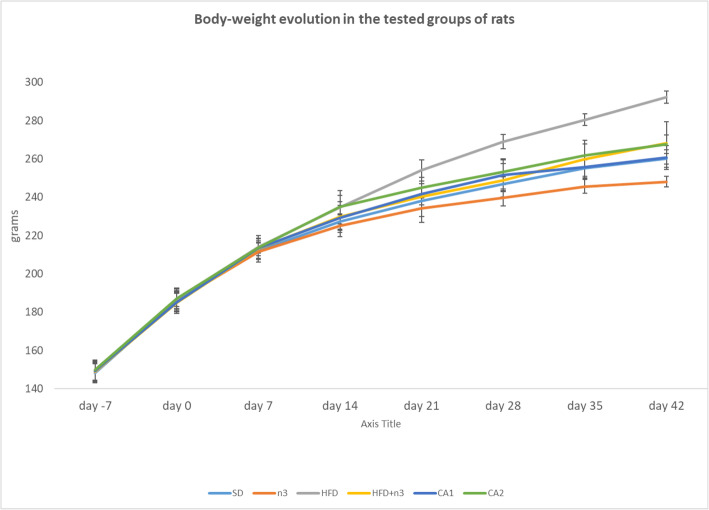
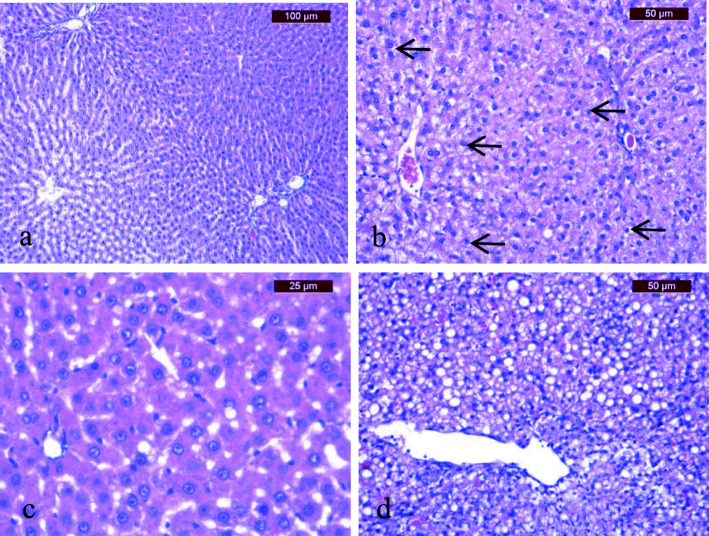
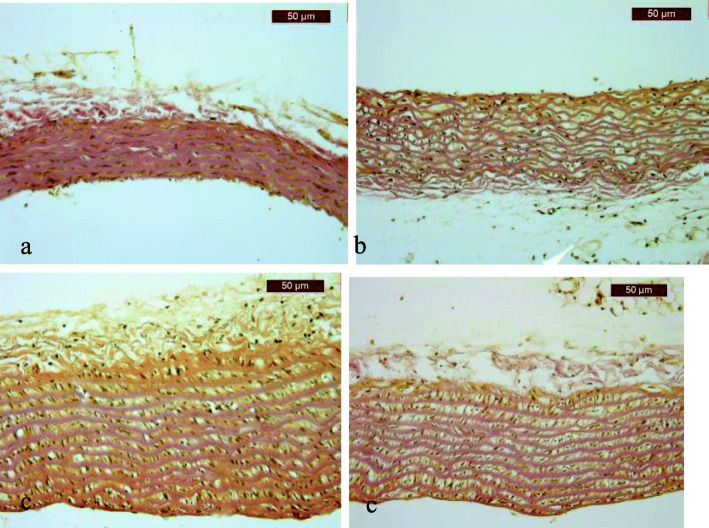
The HFD groups exhibited significant hyperlipidemia and aortic inflammation, with progression to atherogenesis after 6 weeks. Administration of PUFAs slightly attenuated the aortic changes in these groups and reduced the liver's tendency to steatosis. FO-induced metabolic improvement was more evident in SD than in HFD rats. For instance, after the first 2 weeks, SD animals that received PUFAs had significantly increased HDL levels vs. controls (62.375 ± 4.10 vs. 52.625 ± 8.38 mg/dL, P < 0.05), but HFD rats did not, and decreased TG levels were observed exclusively in the SD rats (57.6 ± 4.09 vs. 66 ± 4.69 mg/dL, P < 0.05). After 6 weeks of n PUFA administration, LDL was significantly lower in the SD rats than in controls (13.67 ± 4.13 vs. 30.83 ± 2.86 mg/dL, P < 0.001), but the decrease in the HFD rats, although significant (49.17 ± 5.85 mg/dL vs. 57.17 ± 4.96 g/dL, P < 0.05), was not as marked. In the mixed-diet groups, administration of 50 mg/kg/day FO for 14 days under SD conditions following 4 weeks of HFD slightly decreased TG (86.625 ± 11.67 vs. 73 ± 4.52 mg/dL, P < 0.05) and increased HDL (45.875 ± 5.28 vs. 56 ± 3.16 mg/dL). However, in these animals, n-3 PUFA administration had no effect on LDL or TC. Administration of half of the above dose failed to improve any biochemical parameters. FO protected against excessive weight gain mainly under SD conditions.
The results show that FO confers more protection against cardiovascular risk factors (increased LDL and TG, decreased HDL) and liver lipid accumulation when given to rats consuming regular diets than when given to rats consuming a high-fat diet. This argues that priority should be given to consumption of a healthy diet rather than to the use of supplements. The effectiveness of n-3 PUFAs might be reduced in the case of hyperlipidic intake or after consumption of a high-fat diet.
膳食中的n-多不饱和脂肪酸(PUFAs)在预防心血管疾病和肝脏疾病方面发挥着作用。然而,其效果可能因个体饮食模式的不同而有显著差异。本研究的目的是评估在标准饮食(SD)、高脂饮食(HFD)和混合喂养条件下,以不同给药方案给予ω-3脂肪酸(FA)对雄性Wistar大鼠肝脏和主动脉组织学结构、血脂谱及体重(BW)的影响。
PUFA治疗包括每日经口灌胃给予50mg/kg鱼油(FO)。通过在动物饮用水中添加4%胆固醇、硫脲和胆酸的悬浮液来获得HFD。大鼠维持这些饮食6周,并采用不同的PUFA给药方案。在第14、28和42天,评估肝脏和主动脉样本的形态以及总胆固醇(TC)、高密度脂蛋白胆固醇(HDL)、低密度脂蛋白胆固醇(LDL)和甘油三酯(TG)的水平。
HFD组表现出显著的高脂血症和主动脉炎症,6周后进展为动脉粥样硬化。给予PUFAs可轻微减轻这些组的主动脉变化,并降低肝脏脂肪变性的倾向。FO诱导的代谢改善在SD大鼠中比在HFD大鼠中更明显。例如,在最初2周后,接受PUFAs的SD动物的HDL水平相对于对照组显著升高(62.375±4.10 vs. 52.625±8.38mg/dL,P<0.05),但HFD大鼠没有,并且仅在SD大鼠中观察到TG水平降低(57.6±4.09 vs. 66±4.69mg/dL,P<0.05)。给予n-3 PUFA 6周后,SD大鼠的LDL显著低于对照组(13.67±4.13 vs. 30.83±2.86mg/dL,P<0.001),但HFD大鼠的LDL降低虽显著(49.17±5.85mg/dL vs. 57.17±4.96mg/dL,P<0.05),但不明显。在混合饮食组中,在HFD喂养4周后,在SD条件下给予50mg/kg/天的FO 14天,可轻微降低TG(86.625±11.67 vs. 73±4.52mg/dL,P<0.05)并升高HDL(45.875±5.28 vs. 56±3.16mg/dL)。然而,在这些动物中,给予n-3 PUFA对LDL或TC没有影响。给予上述剂量的一半未能改善任何生化参数。FO主要在SD条件下防止体重过度增加。
结果表明,与给予高脂饮食的大鼠相比,给予正常饮食的大鼠时,FO对心血管危险因素(LDL和TG升高、HDL降低)和肝脏脂质蓄积具有更强的保护作用。这表明应优先选择健康饮食而非使用补充剂。在高脂摄入或食用高脂饮食后,n-3 PUFAs的有效性可能会降低。