Department of Pulmonary and Critical Care Medicine, Xijing Hospital, Air-Force Medical University, Xi'an, China.
Department of Immunology, Basic Medicine School, Air-Force Medical University, Xi'an, China.
Front Immunol. 2022 Feb 25;13:846402. doi: 10.3389/fimmu.2022.846402. eCollection 2022.
Increasing evidence shows that the ubiquitin-proteasome system has a crucial impact on lung adenocarcinoma. However, reliable prognostic signatures based on ubiquitination and immune traits have not yet been established.
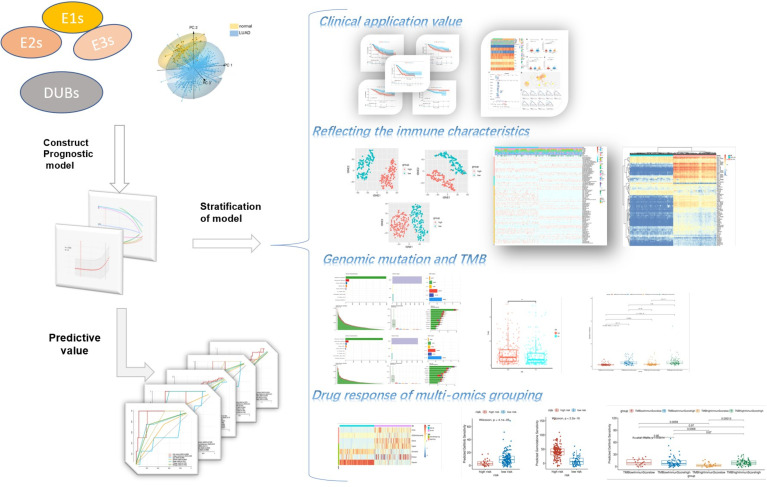
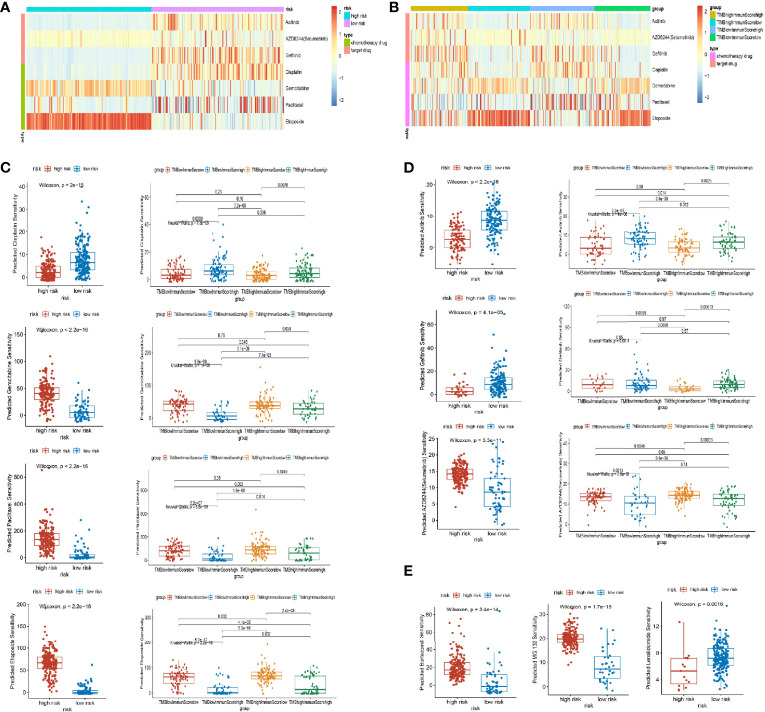
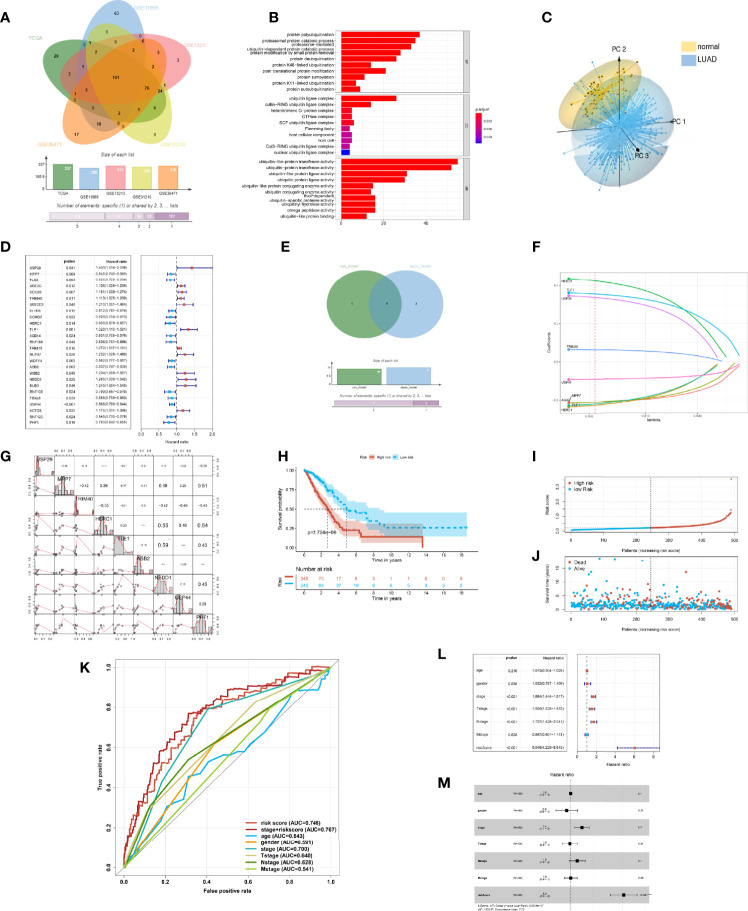
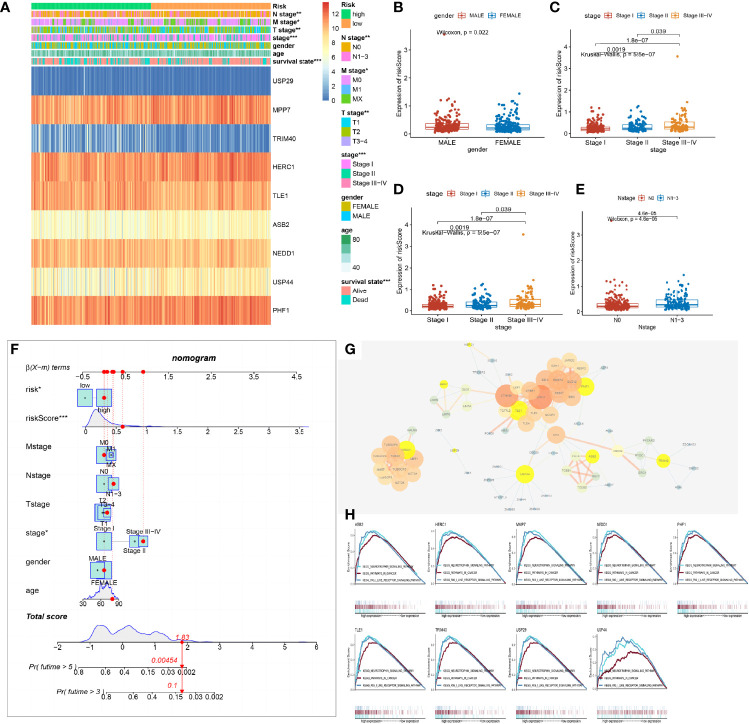
Bioinformatics was performed to analyze the characteristic of ubiquitination in lung adenocarcinoma. Principal component analysis was employed to identify the difference between lung adenocarcinoma and adjacent tissue. The ubiquitin prognostic risk model was constructed by multivariate Cox regression and least absolute shrinkage and selection operator regression based on the public database The Cancer Genome Atlas, with evaluation of the time-dependent receiver operating characteristic curve. A variety of algorithms was used to analyze the immune traits of model stratification. Meanwhile, the drug response sensitivity for subgroups was predicted by the "pRRophetic" package based on the database of the Cancer Genome Project.
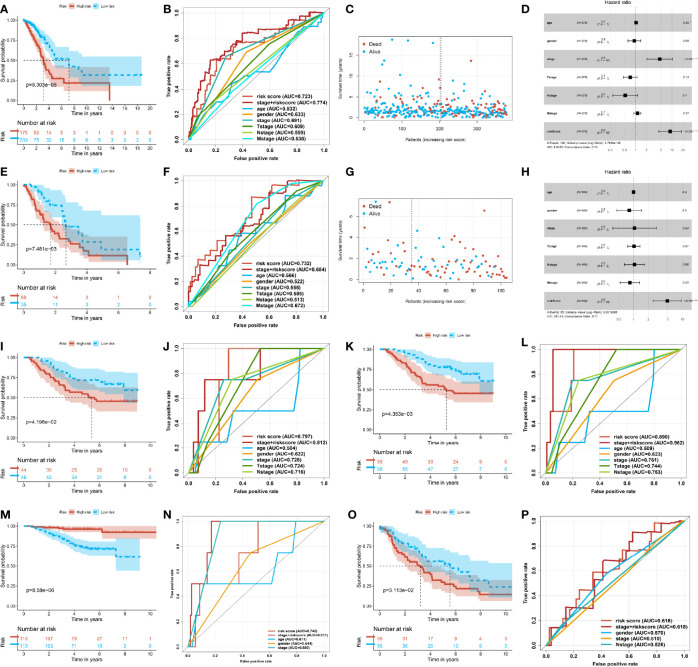
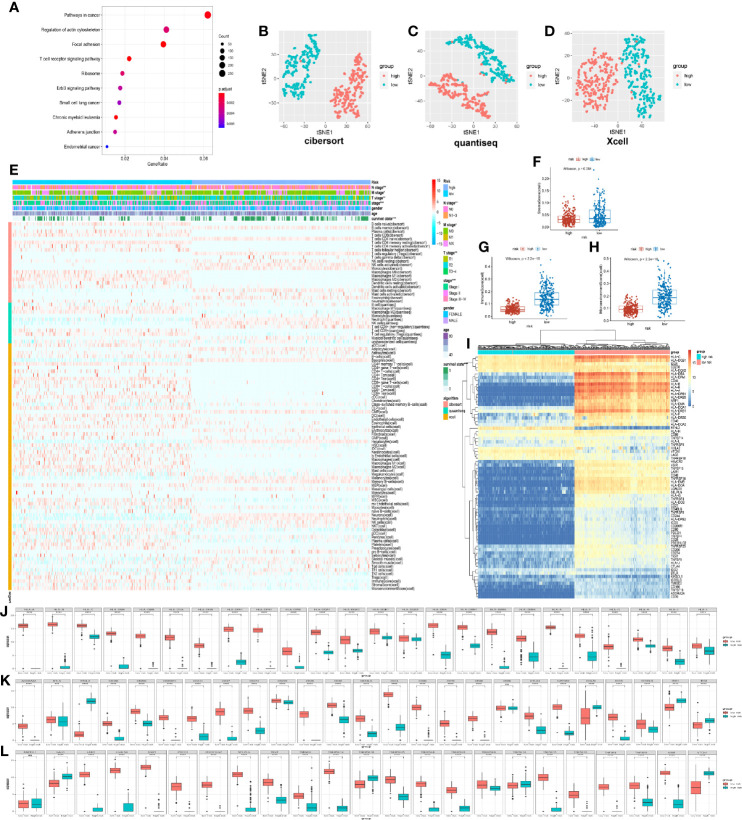
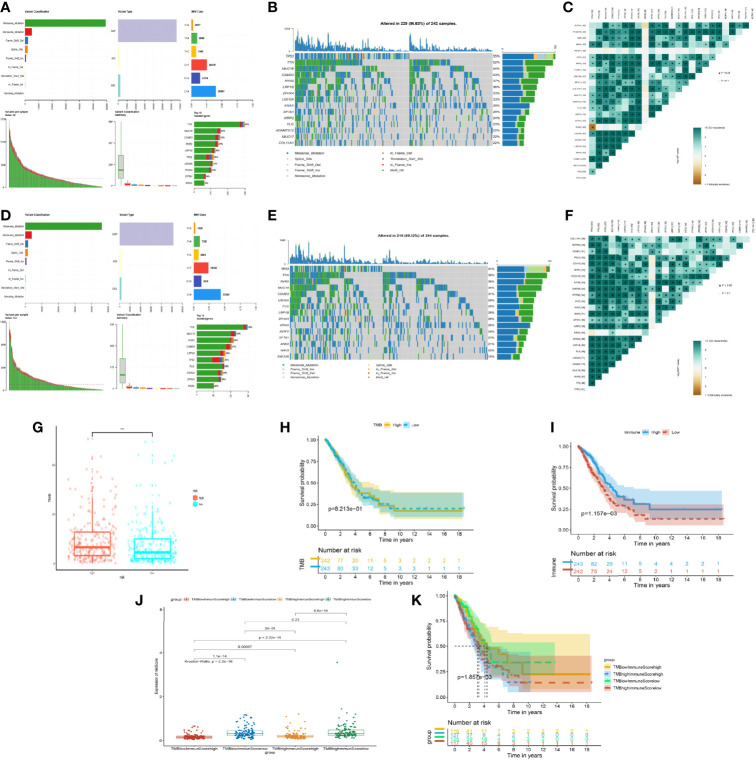
The expression of ubiquitin genes was different in the tumor and in the adjacent tissue. The ubiquitin model was superior to the clinical indexes, and four validation datasets verified the prognostic effect. Additionally, the stratification of the model reflected distinct immune landscapes and mutation traits. The low-risk group was infiltrating plenty of immune cells and highly expressed major histocompatibility complex and immune genes, which illustrated that these patients could benefit from immune treatment. The high-risk group showed higher mutation and tumor mutation burden. Integrating the tumor mutation burden and the immune score revealed the patient's discrepancy between survival and drug response. Finally, we discovered that the drug targeting ubiquitin and proteasome would be a beneficial prospective treatment for lung adenocarcinoma.
The ubiquitin trait could reflect the prognosis of lung adenocarcinoma, and it might shed light on the development of novel ubiquitin biomarkers and targeted therapy for lung adenocarcinoma.
越来越多的证据表明,泛素-蛋白酶体系统对肺腺癌有重要影响。然而,基于泛素化和免疫特征的可靠预后标志物尚未建立。
采用生物信息学方法分析肺腺癌泛素化特征。采用主成分分析(PCA)方法识别肺腺癌与癌旁组织的差异。基于公共数据库 The Cancer Genome Atlas(TCGA),采用多变量 Cox 回归和最小绝对收缩和选择算子(LASSO)回归构建泛素预后风险模型,并评估时间依赖性接受者操作特征曲线(ROC)。采用多种算法分析模型分层的免疫特征。同时,基于癌症基因组计划数据库,利用“pRRophetic”包预测亚组的药物反应敏感性。
肿瘤和癌旁组织中泛素基因的表达存在差异。泛素模型优于临床指标,4 个验证数据集验证了其预后效果。此外,模型的分层反映了不同的免疫景观和突变特征。低危组浸润了大量免疫细胞,高表达主要组织相容性复合体和免疫基因,表明这些患者可能受益于免疫治疗。高危组表现出更高的突变和肿瘤突变负荷。整合肿瘤突变负荷和免疫评分揭示了患者生存和药物反应之间的差异。最后,我们发现靶向泛素和蛋白酶体的药物可能是肺腺癌的一种有益的治疗方法。
泛素特征可以反映肺腺癌的预后,可能为肺腺癌新的泛素生物标志物和靶向治疗的发展提供线索。