Lorenz Center, Massachusetts Institute of Technology, Cambridge, MA, 02139, USA.
Department of Earth, Atmospheric, and Planetary Sciences, Massachusetts Institute of Technology, Cambridge, MA, 02139, USA.
Nat Commun. 2022 Mar 14;13(1):1328. doi: 10.1038/s41467-022-28996-0.
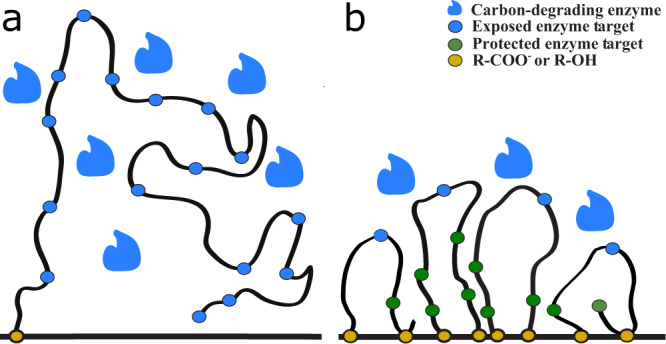
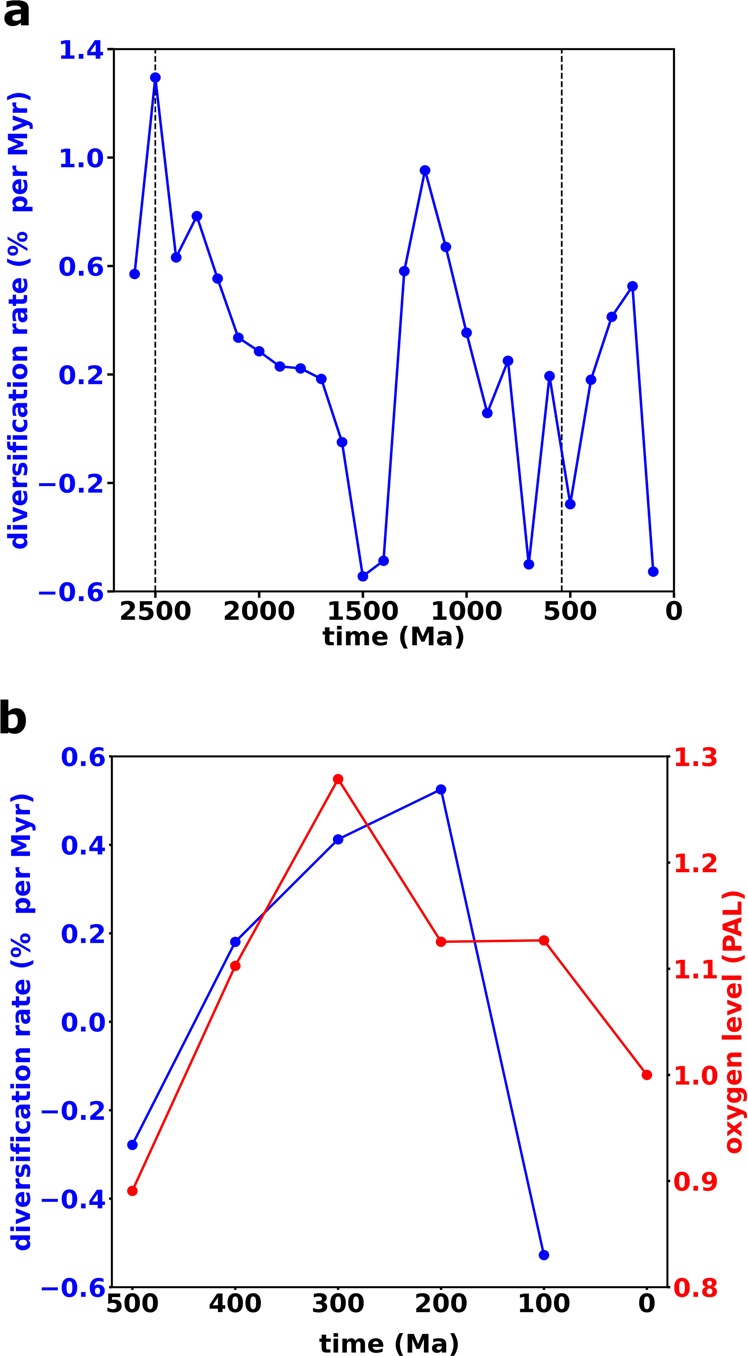
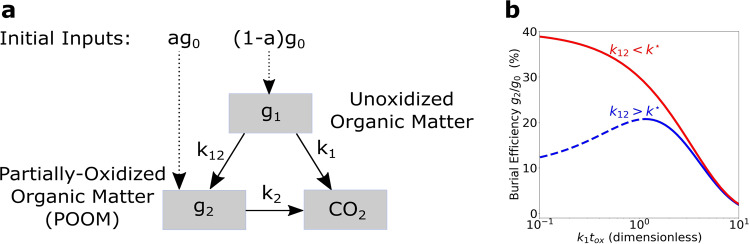
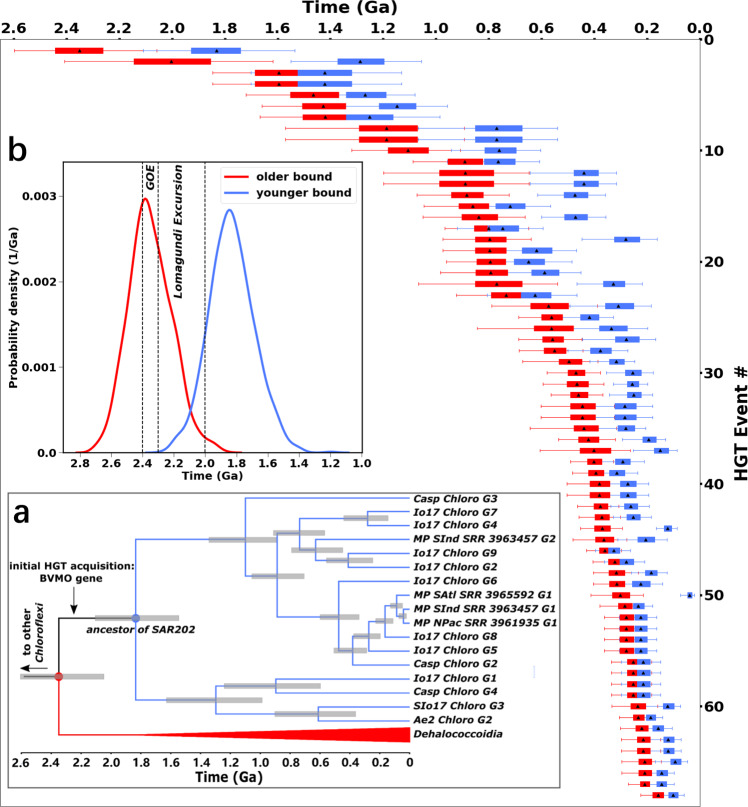
The burial of organic carbon, which prevents its remineralization via oxygen-consuming processes, is considered one of the causes of Earth's oxygenation. Yet, higher levels of oxygen are thought to inhibit burial. Here we propose a resolution of this conundrum, wherein Earth's initial oxygenation is favored by oxidative metabolisms generating partially oxidized organic matter (POOM), increasing burial via interaction with minerals in sediments. First, we introduce the POOM hypothesis via a mathematical argument. Second, we reconstruct the evolutionary history of one key enzyme family, flavin-dependent Baeyer-Villiger monooxygenases, that generates POOM, and show the temporal consistency of its diversification with the Proterozoic and Phanerozoic atmospheric oxygenation. Finally, we propose that the expansion of oxidative metabolisms instigated a positive feedback, which was amplified by the chemical changes to minerals on Earth's surface. Collectively, these results suggest that Earth's oxygenation is an autocatalytic transition induced by a combination of biological innovations and geological changes.
有机碳的埋藏会阻止其通过需氧过程再矿化,这被认为是地球富氧化的原因之一。然而,较高的氧气水平被认为会抑制埋藏。在这里,我们提出了一个解决这个难题的方案,其中地球的初始富氧化过程得益于产生部分氧化有机物(POOM)的氧化代谢,通过与沉积物中的矿物质相互作用增加埋藏。首先,我们通过数学论证介绍了 POOM 假说。其次,我们重建了产生 POOM 的黄素依赖型 Baeyer-Villiger 单加氧酶这一关键酶家族的进化历史,并展示了其多样化与元古代和显生宙大气富氧化的时间一致性。最后,我们提出,氧化代谢的扩张引发了正反馈,而地球表面矿物质的化学变化又放大了这种正反馈。总的来说,这些结果表明,地球的富氧化是由生物创新和地质变化共同引发的自动催化转变。