Baz-Valle Eneko, Balsalobre-Fernández Carlos, Alix-Fages Carlos, Santos-Concejero Jordan
Department of Physical Education and Sport, University of the Basque Country UPV/EHU, Vitoria-Gasteiz, Spain.
Applied Biomechanics and Sports Technology research group, Autonomous University of Madrid, Madrid Spain.
J Hum Kinet. 2022 Feb 10;81:199-210. doi: 10.2478/hukin-2022-0017. eCollection 2022 Jan.
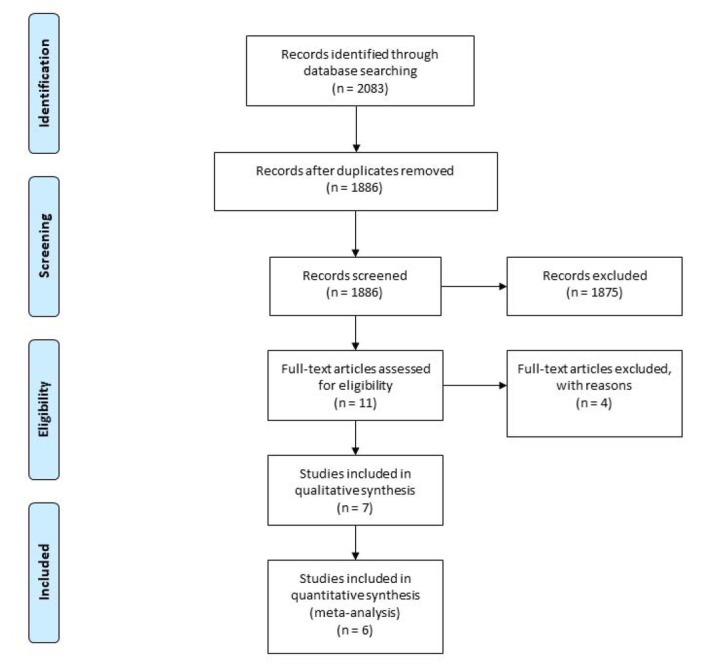
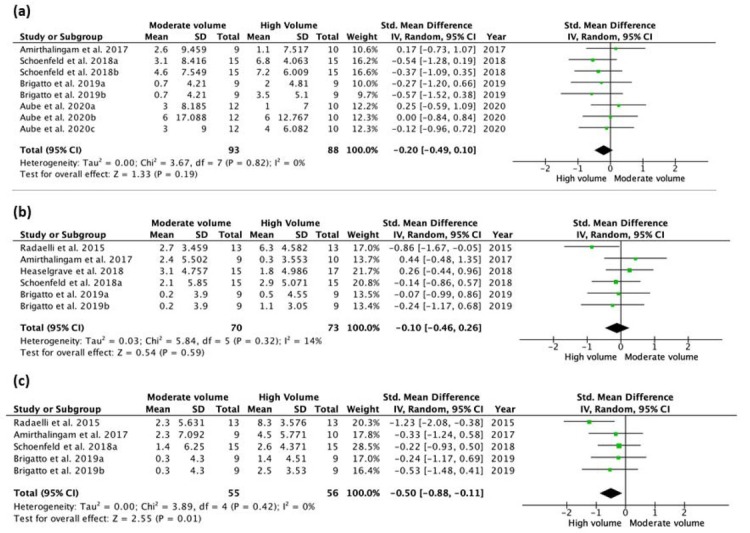
The main goal of this study was to compare responses to moderate and high training volumes aimed at inducing muscle hypertrophy. A literature search on 3 databases (Pubmed, Scopus and Chocrane Library) was conducted in January 2021. After analyzing 2083 resultant articles, studies were included if they met the following inclusion criteria: a) studies were randomized controlled trials (with the number of sets explicitly reported), b) interventions lasted at least six weeks, c) participants had a minimum of one year of resistance training experience, d) participants' age ranged from 18 to 35 years, e) studies reported direct measurements of muscle thickness and/or the cross-sectional area, and f) studies were published in peer-review journals. Seven studies met the inclusion criteria and were included in the qualitative analysis, whereas just six were included in the quantitative analysis. All participants were divided into three groups: "low" (<12 weekly sets), "moderate" (12-20 weekly sets) and "high" volume (>20 weekly sets). According to the results of this meta-analysis, there were no differences between moderate and high training volume responses for the quadriceps (p = 0.19) and the biceps brachii (p = 0.59). However, it appears that a high training volume is better to induce muscle mass gains in the triceps brachii (p = 0.01). According to the results of this review, a range of 12-20 weekly sets per muscle group may be an optimum standard recommendation for increasing muscle hypertrophy in young, trained men.
本研究的主要目标是比较针对诱导肌肉肥大的中等训练量和高训练量的反应。2021年1月在3个数据库(PubMed、Scopus和Cochrane图书馆)上进行了文献检索。在分析了2083篇所得文章后,符合以下纳入标准的研究被纳入:a)研究为随机对照试验(明确报告组数),b)干预持续至少六周,c)参与者至少有一年的抗阻训练经验,d)参与者年龄在18至35岁之间,e)研究报告了肌肉厚度和/或横截面积的直接测量值,f)研究发表在同行评审期刊上。七项研究符合纳入标准并被纳入定性分析,而只有六项被纳入定量分析。所有参与者分为三组:“低”(每周<12组)、“中等”(每周12 - 20组)和“高”训练量(每周>20组)。根据这项荟萃分析的结果,股四头肌(p = 0.19)和肱二头肌(p = 0.59)的中等训练量和高训练量反应之间没有差异。然而,高训练量似乎更有利于肱三头肌增加肌肉量(p = 0.01)。根据本综述的结果,对于年轻的、有训练基础的男性,每个肌肉群每周12 - 20组的训练量范围可能是增加肌肉肥大的最佳标准建议。