Guan Zhiyuan, Liu Shengfu, Luo Liying, Wu Zhong, Lu Shan, Guan Zhiqiang, Tao Kun
Department of Orthopedics, The Shanghai tenth People's Hospital of Tongji University, Shanghai, China.
Nanjing Medical University, Nanjing, China.
Front Cell Dev Biol. 2022 Mar 1;10:847513. doi: 10.3389/fcell.2022.847513. eCollection 2022.
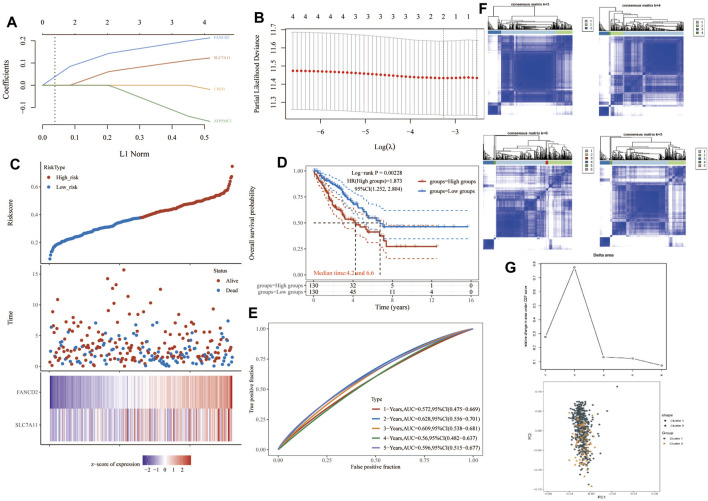
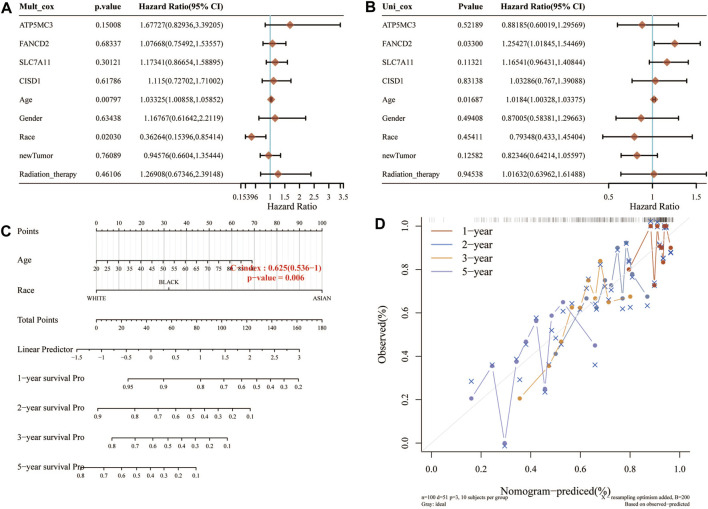
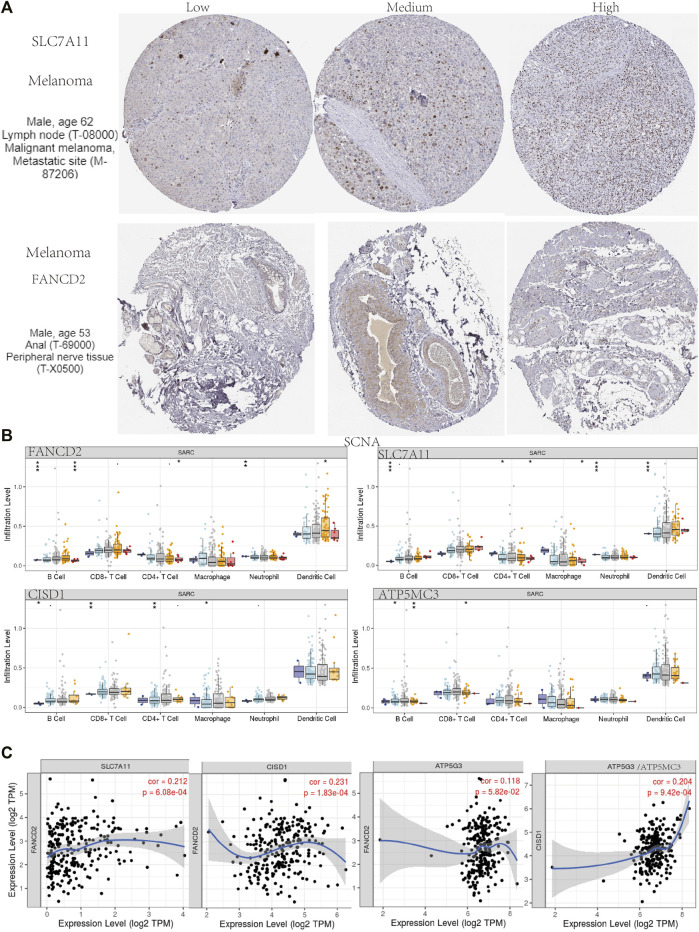
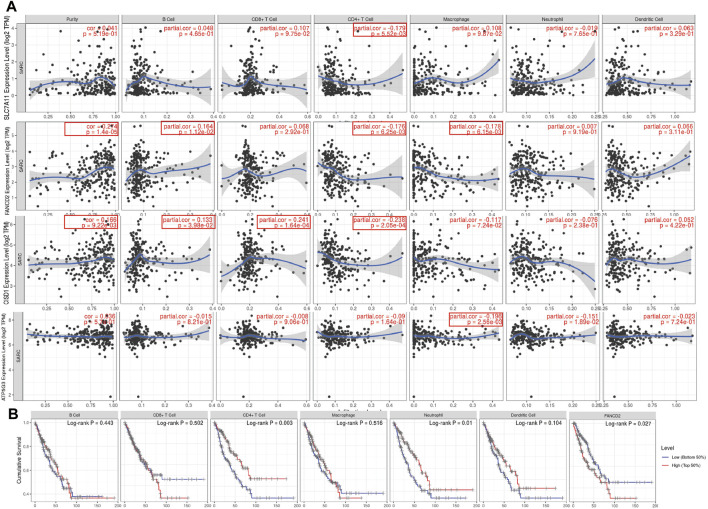
Sarcomas are seen as mixed-up nature with genetic and transcriptional heterogeneity and poor prognosis. Although the genes involved in ferroptosis are still unclear, iron loss is considered to be the core of glioblastoma, tumor progression, and tumor microenvironment. Here, we developed and tested the prognosis of SARC, which is a genetic marker associated with iron residues. The ferroptosis-related gene expression, one-way Cox analysis, and least-selection absolute regression algorithm (LASSO) are used to track prognostic-related genes and create risk assessment models. Finally, immune system infiltration and immune control point analysis are used to study the characteristics of the tumor microenvironment related to risk assessment. Moreover, LncRNA-miRNA-mRNA network was contributed in our studies. We determined the biomarker characteristics associated with iron degradation in gene 32 and developed a risk assessment model. ROC analysis showed that its model was accurately predicted, with 1, 2, 3, 4, and 5 years of overall survival in TCGA cohort of SARC patients. A comparative analysis of settings found that overall survival (OS) was lower in the high-risk than that in the low-risk group. The nomogram survival prediction model also helped to predict the OS of SARC patients. The nomogram survival prediction model has strong predictive power for the overall survival of SARC patients in TCGA dataset. GSEA analysis shows that high-risk groups are rich in inflammation, cancer-related symptoms, and pathological processes. High risk is related to immune cell infiltration and immune checkpoint. Our prediction model is based on SARC ferritin-related genes, which may support SARC prediction and provide potential attack points.
肉瘤具有基因和转录异质性以及预后不良的复杂特性。尽管参与铁死亡的基因仍不清楚,但铁流失被认为是胶质母细胞瘤、肿瘤进展和肿瘤微环境的核心。在此,我们开发并测试了SARC的预后情况,SARC是一种与铁残留相关的基因标志物。利用铁死亡相关基因表达、单因素Cox分析和最小绝对收缩与选择算子(LASSO)算法来追踪预后相关基因并创建风险评估模型。最后,通过免疫系统浸润和免疫检查点分析来研究与风险评估相关的肿瘤微环境特征。此外,我们的研究构建了lncRNA-miRNA-mRNA网络。我们确定了与32号基因中铁降解相关的生物标志物特征,并开发了一个风险评估模型。ROC分析表明,其模型预测准确,在TCGA队列的SARC患者中可预测1、2、3、4和5年的总生存期。不同组别的比较分析发现,高风险组的总生存期(OS)低于低风险组。列线图生存预测模型也有助于预测SARC患者的OS。列线图生存预测模型对TCGA数据集中SARC患者的总生存期具有很强的预测能力。GSEA分析表明,高风险组富含炎症、癌症相关症状和病理过程。高风险与免疫细胞浸润和免疫检查点有关。我们的预测模型基于SARC铁蛋白相关基因,这可能有助于SARC的预测并提供潜在的攻击靶点。