
抗坏血酸2-葡萄糖苷预处理增强骨髓间充质干细胞促进伤口愈合的能力。
Ascorbic acid 2-glucoside preconditioning enhances the ability of bone marrow mesenchymal stem cells in promoting wound healing.
作者信息
Yi Yi, Wu Min, Zhou Xiaomei, Xiong Mingchen, Tan Yufang, Yu Honghao, Liu Zeming, Wu Yiping, Zhang Qi
机构信息
Department of Plastic Surgery, Tongji Hospital, Tongji Medical College, Huazhong University of Science and Technology, 1095 Jiefang Avenue, Wuhan, 430030, Hubei, China.
出版信息
Stem Cell Res Ther. 2022 Mar 21;13(1):119. doi: 10.1186/s13287-022-02797-0.
BACKGROUND
Nowadays, wound is associated with a complicated repairing process and still represents a significant biomedical burden worldwide. Bone marrow mesenchymal stem cells (BMSCs) possess multidirectional differentiation potential and secretory function, emerging as potential cellular candidates in treating wounds. Ascorbic acid 2-glucoside (AA2G) is a well-known antioxidant and its function in BMSC-promoting wound healing is worth exploring.
METHODS
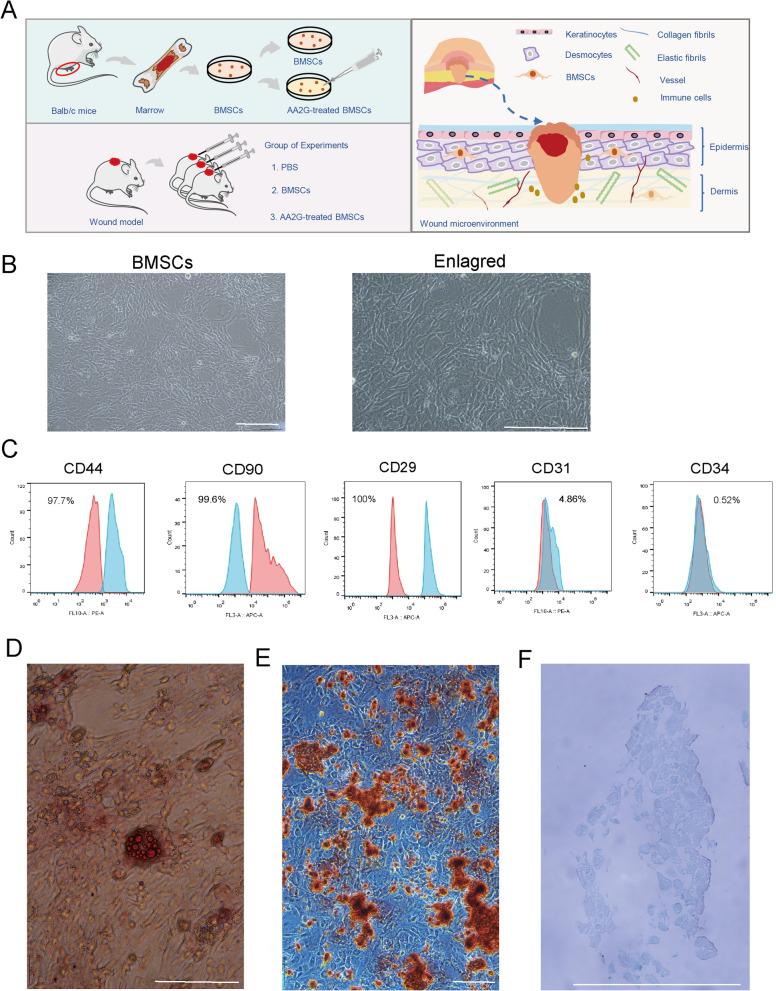
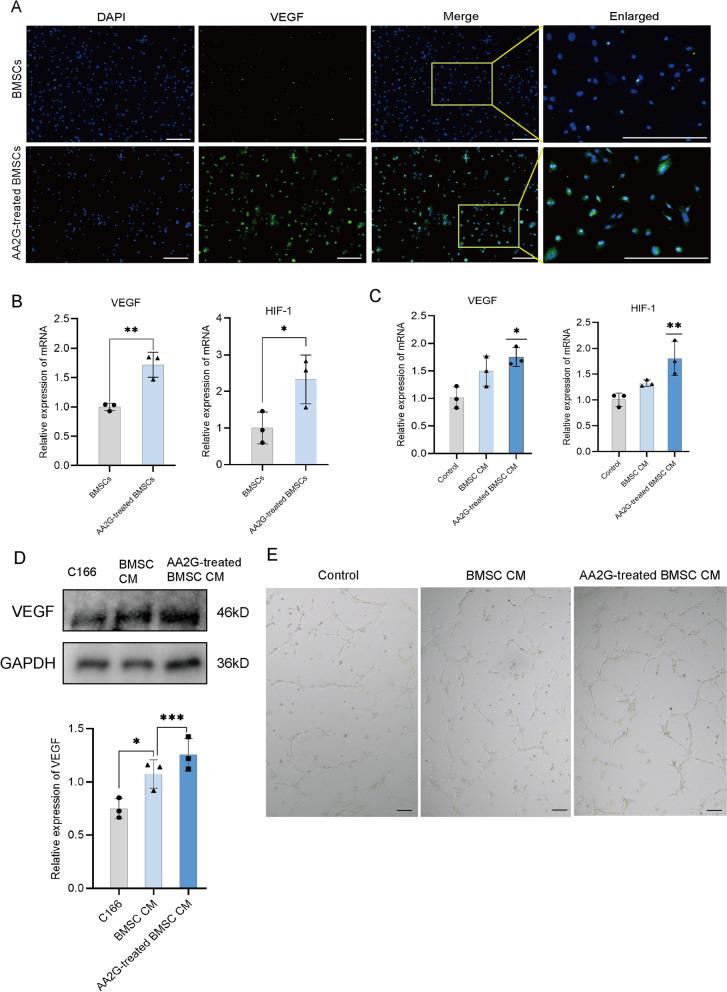
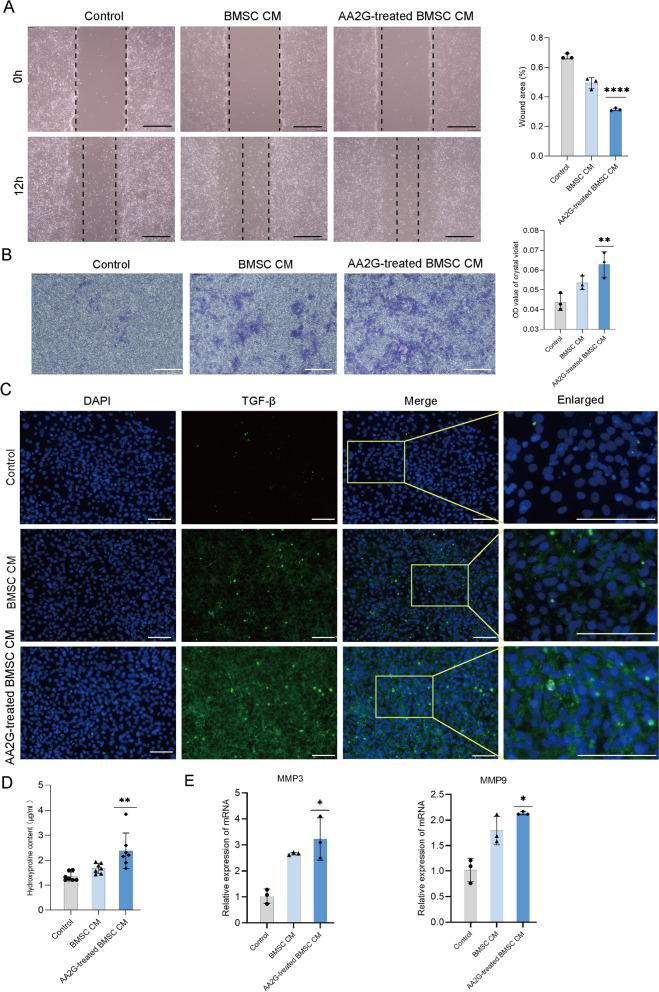
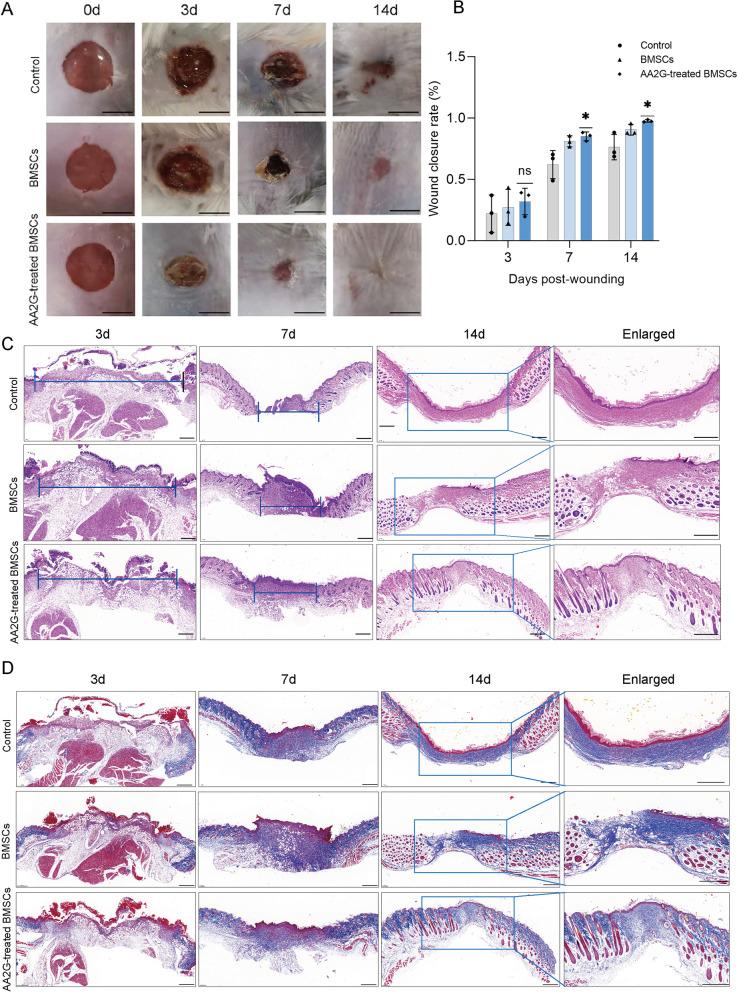
The in vitro cell proliferation, migration, and angiogenesis of BMSCs and AA2G-treated BMSCs were detected by flow cytometry, EDU staining, scratch assay, transwell assay, and immunofluorescence (IF). Besides, the collagen formation effect of AA2G-treated BMSCs conditioned medium (CM) on NIH-3T3 cells was evaluated by hydroxyproline, qRT-PCR and IF staining detection. Next, in the wound healing mouse model, the histological evaluation of wound tissue in PBS, BMSCs, and AA2G-treated BMSCs group were further investigated. Lastly, western blot and ELISA were used to detect the expression levels of 5-hmc, TET2 and VEGF protein, and PI3K/AKT pathway activation in BMSCs treated with or without AA2G.
RESULTS
The in vitro results indicated that AA2G-treated BMSCs exhibited stronger proliferation and improved the angiogenesis ability of vascular endothelial cells. In addition, the AA2G-treated BMSCs CM enhanced migration and collagen formation of NIH-3T3 cells. In vivo, the AA2G-treated BMSCs group had a faster wound healing rate and a higher degree of vascularization in the new wound, compared with the PBS and BMSCs group. Moreover, AA2G preconditioning might enhance the demethylation process of BMSCs by regulating TET2 and up-regulating VEGF expression by activating the PI3K/AKT pathway.
CONCLUSIONS
AA2G-treated BMSCs promoted wound healing by promoting angiogenesis and collagen deposition, thereby providing a feasible strategy to reinforce the biofunctionability of BMSCs in treating wounds.
背景
如今,伤口与复杂的修复过程相关联,并且在全球范围内仍然是一个重大的生物医学负担。骨髓间充质干细胞(BMSCs)具有多向分化潜能和分泌功能,成为治疗伤口的潜在细胞候选者。抗坏血酸2-葡萄糖苷(AA2G)是一种著名的抗氧化剂,其在促进BMSC伤口愈合中的作用值得探索。
方法
通过流式细胞术、EDU染色、划痕试验、Transwell试验和免疫荧光(IF)检测BMSCs和经AA2G处理的BMSCs的体外细胞增殖、迁移和血管生成。此外,通过羟脯氨酸、qRT-PCR和IF染色检测评估经AA2G处理的BMSCs条件培养基(CM)对NIH-3T3细胞的胶原形成作用。接下来,在伤口愈合小鼠模型中,进一步研究PBS、BMSCs和经AA2G处理的BMSCs组伤口组织的组织学评估。最后,使用蛋白质免疫印迹法和酶联免疫吸附测定法检测经或未经AA2G处理的BMSCs中5-hmc、TET2和VEGF蛋白的表达水平以及PI3K/AKT途径的激活情况。
结果
体外结果表明,经AA2G处理的BMSCs表现出更强的增殖能力,并改善了血管内皮细胞的血管生成能力。此外,经AA2G处理的BMSCs CM增强了NIH-3T3细胞的迁移和胶原形成。在体内,与PBS和BMSCs组相比,经AA2G处理的BMSCs组伤口愈合速度更快,新伤口的血管化程度更高。此外,AA2G预处理可能通过调节TET2增强BMSCs的去甲基化过程,并通过激活PI3K/AKT途径上调VEGF表达。
结论
经AA2G处理的BMSCs通过促进血管生成和胶原沉积促进伤口愈合,从而为增强BMSCs在治疗伤口中的生物功能提供了一种可行的策略。



 Zotero 插件