Romano Federica, Iaderosa Giovanni, Corana Matteo, Perotto Stefano, Baima Giacomo, Di Scipio Federica, Abbadessa Giuliana, Mariani Giulia Maria, Aimetti Mario, Berta Giovanni Nicolao
Department of Surgical Sciences, C.I.R. Dental School, Section of Periodontology, University of Turin, 10126 Turin, Italy.
Department of Clinical and Biological Sciences, University of Turin, 10043 Orbassano, Italy.
Biomedicines. 2022 Mar 17;10(3):687. doi: 10.3390/biomedicines10030687.
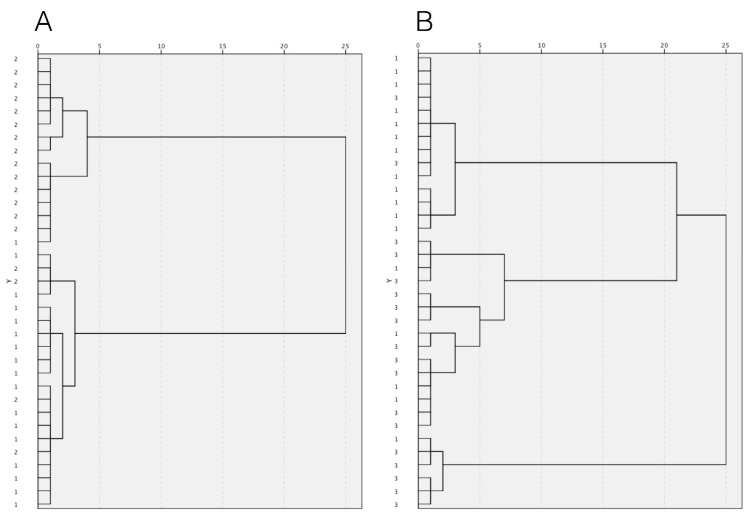
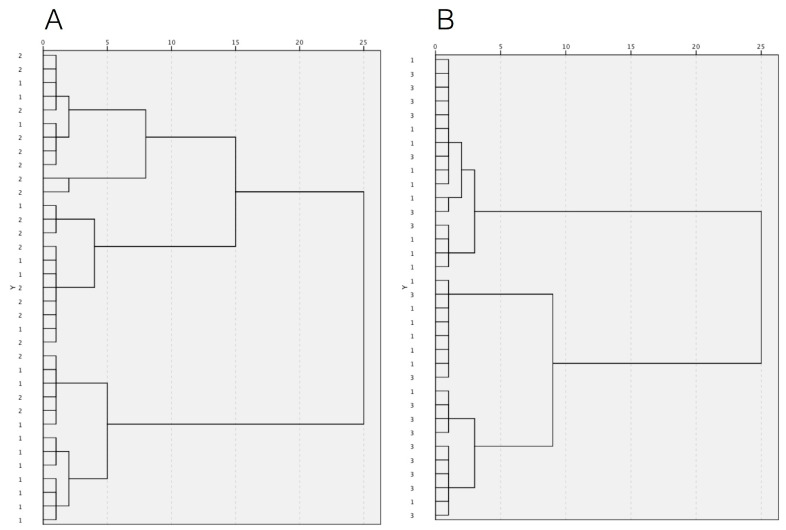
Although increasing evidence is emerging on the contribution of chemical elements in periodontal health, no studies have concomitantly evaluated the ionic profile in gingival crevicular fluid (GCF) and saliva in relation to the underlying periodontal status. Our hypothesis is that these biofluids have distinctive ionic content. Therefore, the aim of this cross-sectional study was to analyze the elemental composition of GCF and saliva in order to explore which biological matrix and which combination of elements could discriminate between periodontitis and periodontal health. Twelve ions were analyzed in GCF and unstimulated saliva from 54 subjects (18 periodontally healthy, 18 untreated severe periodontitis and 18 treated severe periodontitis) using inductively coupled plasma-mass spectrometry (ICP-MS) and inductively coupled plasma-optical emission spectroscopy (ICP-OES). These analytical techniques were able to determine levels of sodium (Na), potassium (K), calcium (Ca) and magnesium (Mg), while the other elements were below the detection threshold. Na and K ions were detected at elevated concentration in untreated periodontitis compared with treated periodontitis and healthy periodontium. Ca was increased in untreated periodontitis, but the difference was not significant. In saliva, only Na was significantly associated with periodontitis. The combination of Na and K in GCF enabled the correct assignment of a subject to the periodontitis or healthy group. Based on these preliminary results, GCF demonstrated higher clustering potential than saliva.
尽管越来越多的证据表明化学元素对牙周健康有影响,但尚无研究同时评估龈沟液(GCF)和唾液中的离子谱与潜在牙周状况的关系。我们的假设是这些生物流体具有独特的离子含量。因此,本横断面研究的目的是分析GCF和唾液的元素组成,以探索哪种生物基质以及哪些元素组合可以区分牙周炎和牙周健康。使用电感耦合等离子体质谱法(ICP-MS)和电感耦合等离子体发射光谱法(ICP-OES)分析了54名受试者(18名牙周健康者、18名未经治疗的重度牙周炎患者和18名经治疗的重度牙周炎患者)的GCF和未刺激唾液中的12种离子。这些分析技术能够测定钠(Na)、钾(K)、钙(Ca)和镁(Mg)的水平,而其他元素低于检测阈值。与经治疗的牙周炎和健康牙周组织相比,未经治疗的牙周炎中Na和K离子浓度升高。未经治疗的牙周炎中Ca增加,但差异不显著。在唾液中,只有Na与牙周炎显著相关。GCF中Na和K的组合能够正确地将受试者归入牙周炎组或健康组。基于这些初步结果,GCF显示出比唾液更高的聚类潜力。