Department of Health Management and Policy, University of Michigan School of Public Health, 1420 Washington Heights, Ann Arbor, Michigan 48109, United States of America; European Observatory on Health Systems and Policies, Eurostation, Place Victor Horta/Victor Hortaplein, 40/30, 1060 Brussels, Belgium.
Department of Health Management and Policy, University of Michigan School of Public Health, 1420 Washington Heights, Ann Arbor, Michigan 48109, United States of America.
Health Policy. 2022 May;126(5):408-417. doi: 10.1016/j.healthpol.2022.03.004. Epub 2022 Mar 11.
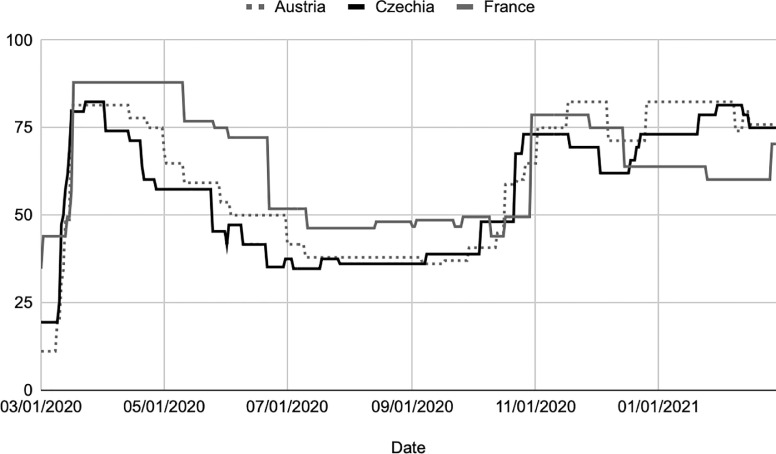
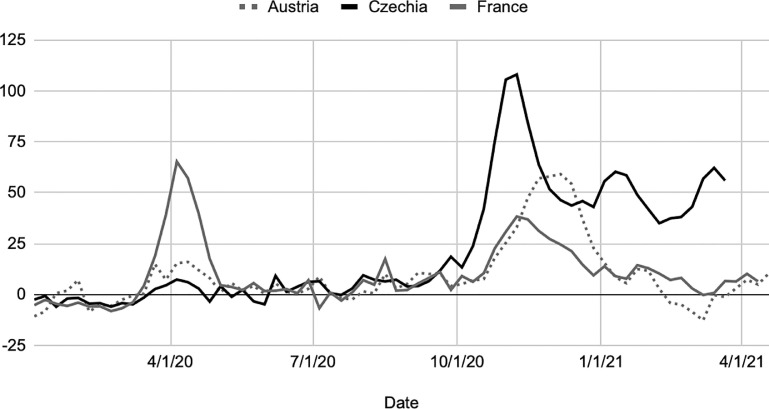
COVID-19 led to significant and dynamic shifts in power relations within and between governments, teaching us how governments make health policies and how health crises affect government. We focus on centralization and decentralization within and between governments: within government, meaning the extent to which the head of government controls policy; and between governments, meaning the extent to which the central government pre-empts or controls local and regional government. Political science literature suggests that shifting patterns of centralization and decentralization can be explained by leading politicians' efforts to gain credit for popular actions and outcomes and deflect blame for unpopular ones. We test this hypothesis in two ways: by coding the Health Systems Response Monitor's data on government responses, and through case studies of the governance of COVID-19 in Austria, Czechia and France. We find that credit and blame do substantially explain the timing and direction of changes in centralization and decentralization. In the first wave, spring 2020, heads of government centralized and raised their profile in order to gain credit for decisive action, but they subsequently tried to decentralize in order to avoid blame for repeated restrictions on life or surges of infection. These findings should shape advice on governance for pandemic response.
COVID-19 导致政府内部和政府之间的权力关系发生了重大而动态的变化,让我们了解了政府如何制定卫生政策以及卫生危机如何影响政府。我们关注政府内部和政府之间的集中化和分散化:政府内部,是指政府首脑控制政策的程度;政府之间,是指中央政府先发制人或控制地方和地区政府的程度。政治学文献表明,集中化和分散化模式的转变可以用主要政治家为受欢迎的行动和结果争取信誉、为不受欢迎的行动转移责任的努力来解释。我们通过两种方式检验这一假设:对卫生系统应对监测器关于政府应对措施的数据进行编码,以及对奥地利、捷克共和国和法国 COVID-19 治理的案例研究。我们发现,信誉和责任确实在很大程度上解释了集中化和分散化的时间和方向的变化。在 2020 年春季的第一波疫情中,各国政府首脑集中权力并提高了自己的知名度,以获得果断行动的信誉,但随后他们试图分散权力,以避免因反复限制生活或感染激增而受到指责。这些发现应该为大流行应对的治理提供建议。