Department of Nutrition and Food Hygiene, School of Public Health, Peking University, No. 38 Xueyuan Road, Beijing 100083, China.
PKUHSC-China Feihe Joint Research Institute of Nutrition and Healthy Lifespan Development, No. 38 Xueyuan Road, Beijing 100083, China.
Nutrients. 2022 Mar 14;14(6):1229. doi: 10.3390/nu14061229.
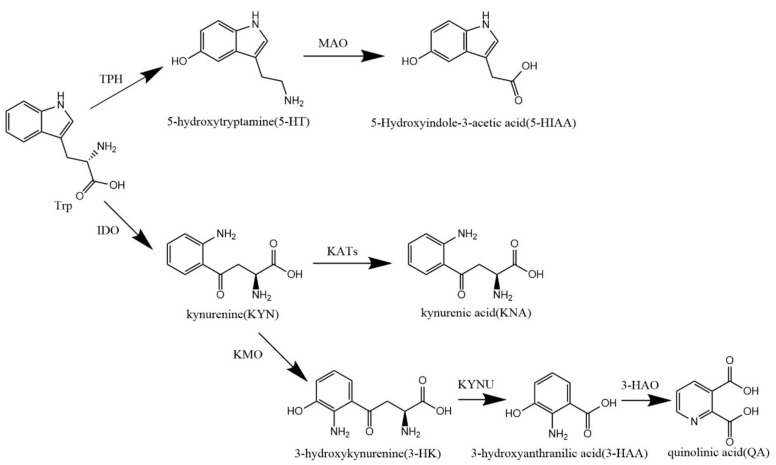
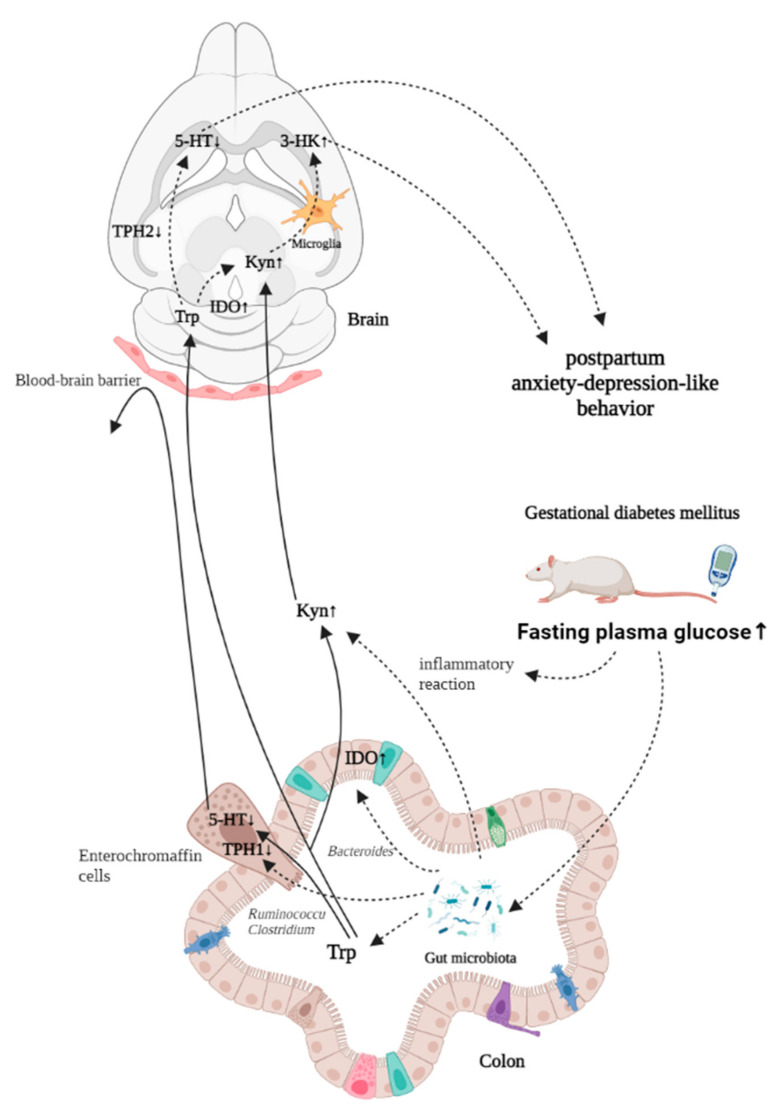
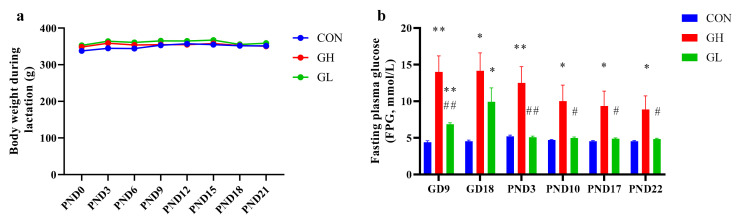
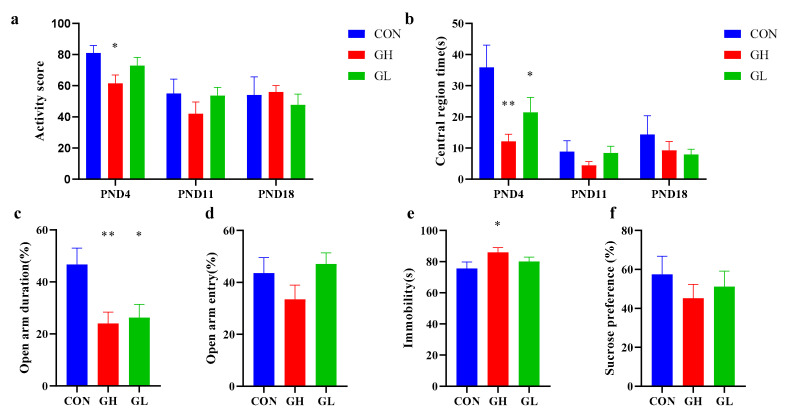
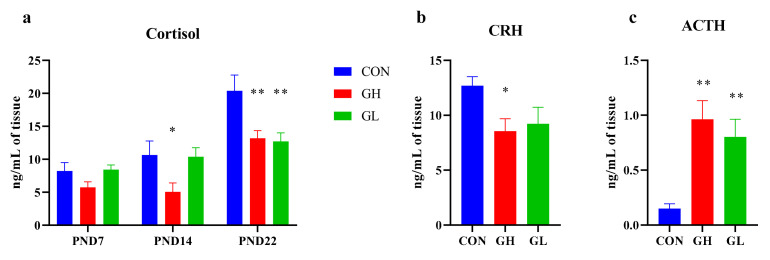
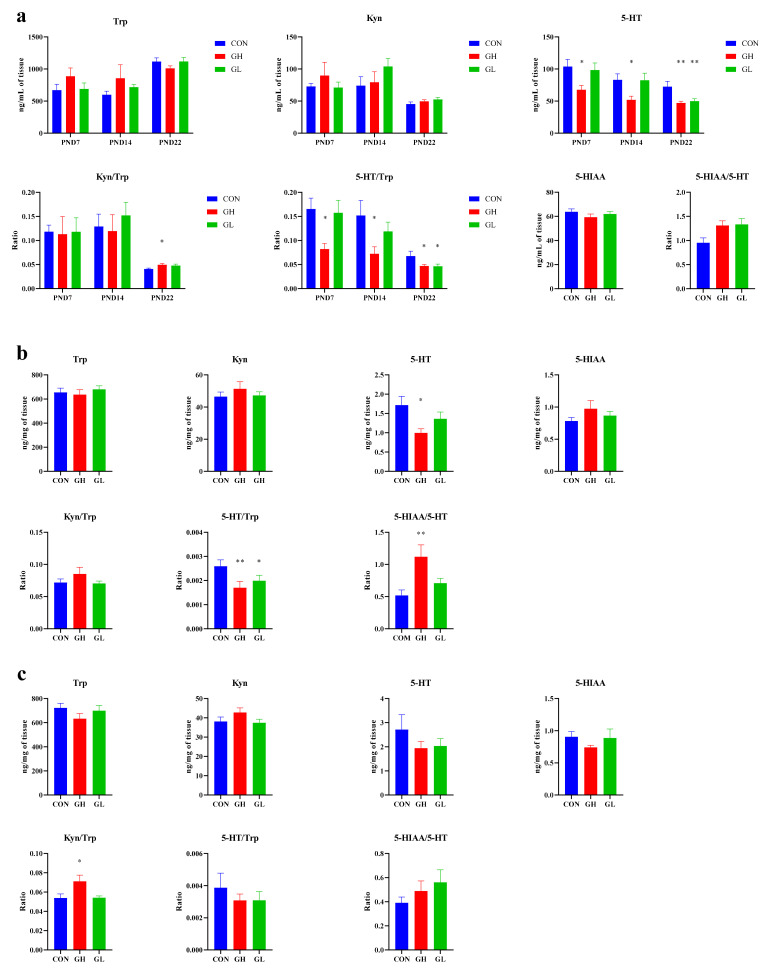
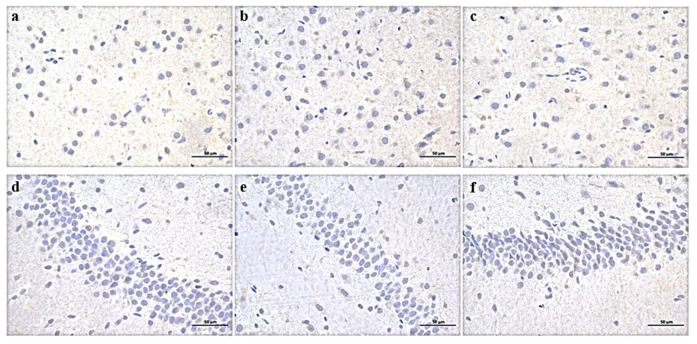
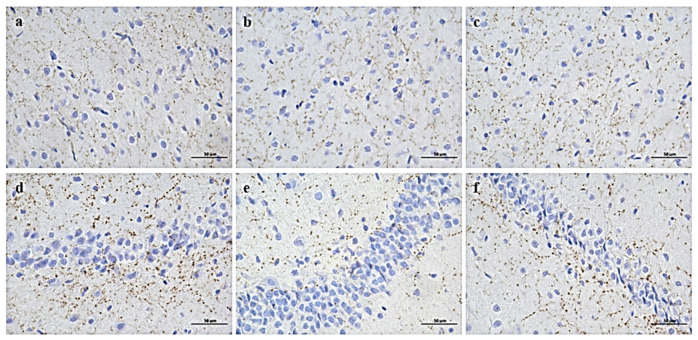
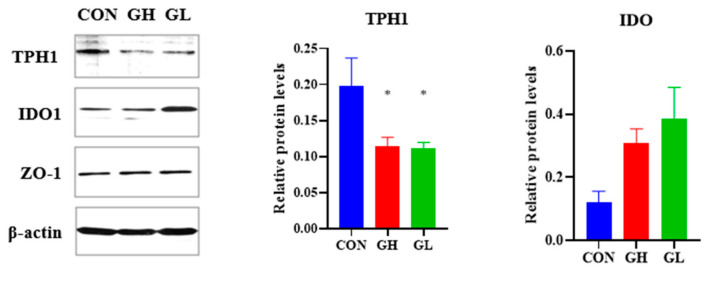
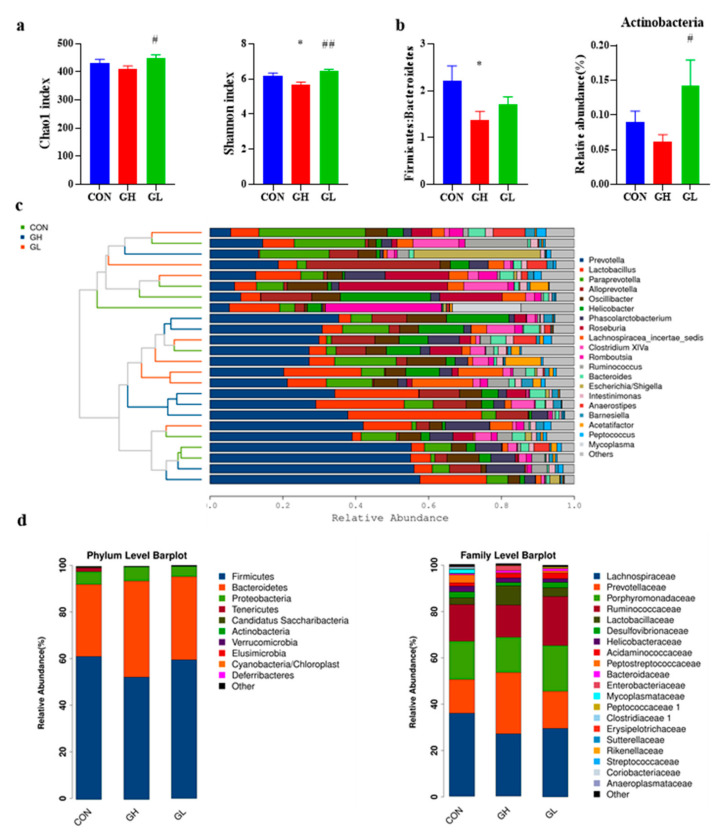
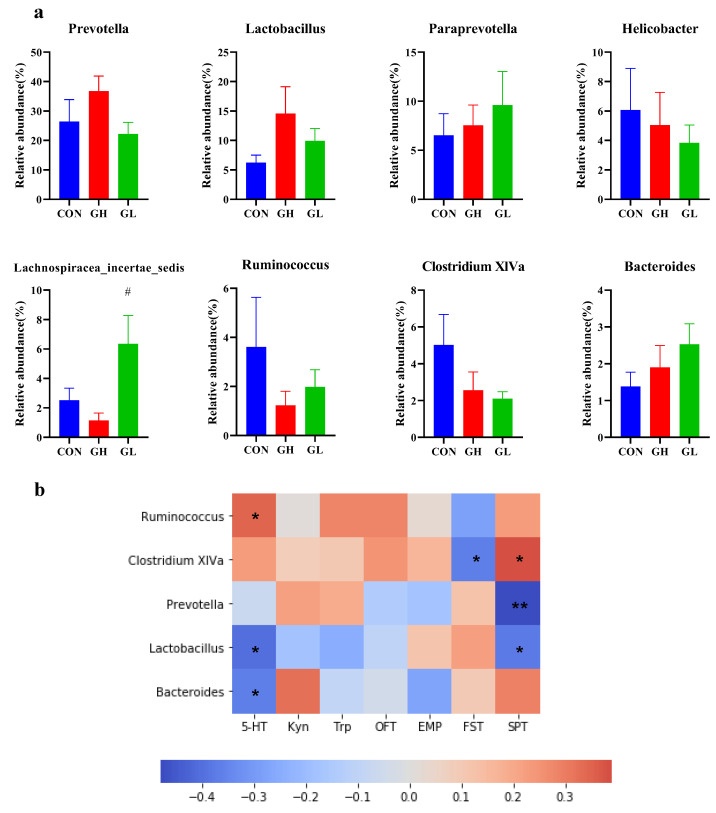
Recent studies have reported a strong association between gestational diabetes mellitus (GDM) and postpartum depression (PPD), but little is known about the underlying physiological mechanism. In this study, a GDM rat model was used to evaluate the direct effect of GDM on PPD and to explore the mechanism. After parturition, the GDM dams were divided into two groups: blood glucose not recovered group (GH group) and blood glucose recovered group (GL group). Fasting plasma glucose (FPG), cortisol (COR) and serotonin (5-hydroxytryptamine, 5-HT) metabolism were continuously monitored during the lactation period, until postnatal day 21. PPD was evaluated by behavioral tests. At the endpoint, the expression of the key enzymes of Trp metabolic pathway in colon and brain tissues was analyzed by immunohistochemistry and western blot. The microbe composition of colonic contents was determined by 16S rDNA gene sequencing. The results showed that GDM induced postpartum depression-like behavior in rats. The HPA axis hormone did not show the typical stress state of depression, but the level of 5-HT decreased significantly in serum, prefrontal cortex and hippocampus, and the Kyn/Trp ratio increased significantly in serum and prefrontal cortex, implying the switch of the tryptophan (Trp) metabolism from the 5-HT pathway to the kynurenine (Kyn) pathway. The expression of Indoleamine 2,3-dioxygenase (IDO), a key rate-limiting enzyme in Kyn metabolism, was up-regulated in the colon and brain, which was an important reason for this switch. This switch was accelerated by a decrease in the expression of tryptophan hydroxylase (TPH), a key enzyme of the 5-HT production pathway, in the colon. GDM dams displayed significant changes in gut microbiome profiles, which were correlated with depression. The ratio of to decreased. and were negatively correlated with 5-HT level and positively correlated with Kyn level, whereas XlVa and were positively correlated with 5-HT level. These results suggest that GDM disrupts both the Trp pathway and the composition of the gut microbiota, which provide a putative physiological basis for PPD.
最近的研究报告称,妊娠期糖尿病(GDM)与产后抑郁症(PPD)之间存在很强的关联,但对于潜在的生理机制知之甚少。在这项研究中,使用 GDM 大鼠模型来评估 GDM 对 PPD 的直接影响,并探讨其机制。分娩后,GDM 母鼠分为两组:血糖未恢复组(GH 组)和血糖恢复组(GL 组)。在哺乳期内连续监测空腹血糖(FPG)、皮质醇(COR)和 5-羟色胺(5-HT)代谢,直到产后第 21 天。通过行为测试评估 PPD。在终点时,通过免疫组织化学和 Western blot 分析结肠和脑组织中色氨酸代谢途径关键酶的表达。通过 16S rDNA 基因测序确定结肠内容物的微生物组成。结果表明,GDM 诱导大鼠产后抑郁样行为。HPA 轴激素并未表现出典型的抑郁应激状态,但血清、前额叶皮层和海马体中的 5-HT 水平显著降低,血清和前额叶皮层中的 Kyn/Trp 比值显著升高,提示色氨酸(Trp)代谢从 5-HT 途径向犬尿氨酸(Kyn)途径的转换。Kyn 代谢的关键限速酶吲哚胺 2,3-双加氧酶(IDO)在结肠和大脑中的表达上调,这是这种转换的重要原因。这种转换加速了结肠中 5-HT 产生途径的关键酶色氨酸羟化酶(TPH)表达的下降。GDM 母鼠的肠道微生物组谱发生了显著变化,与抑郁有关。 与 的比值下降。 和 与 5-HT 水平呈负相关,与 Kyn 水平呈正相关,而 XlVa 和 与 5-HT 水平呈正相关。这些结果表明,GDM 破坏了色氨酸途径和肠道微生物群的组成,为 PPD 提供了一个潜在的生理基础。