Marasco Ramona, Fusi Marco, Mosqueira Maria, Booth Jenny Marie, Rossi Federico, Cardinale Massimiliano, Michoud Grégoire, Rolli Eleonora, Mugnai Gianmarco, Vergani Lorenzo, Borin Sara, De Philippis Roberto, Cherif Ameur, Daffonchio Daniele
Biological and Environmental Sciences and Engineering Division (BESE), King Abdullah University of Science and Technology (KAUST), Thuwal, Kingdom of Saudi Arabia.
Joint Nature Conservation Committee, Monkstone House, City Road, Peterborough, PE1 1JY, UK.
Environ Microbiome. 2022 Apr 1;17(1):14. doi: 10.1186/s40793-022-00407-3.
In hot deserts daily/seasonal fluctuations pose great challenges to the resident organisms. However, these extreme ecosystems host unique microenvironments, such as the rhizosheath-root system of desert speargrasses in which biological activities and interactions are facilitated by milder conditions and reduced fluctuations. Here, we examined the bacterial microbiota associated with this structure and its surrounding sand in the desert speargrass Stipagrostis pungens under the contrasting environmental conditions of summer and winter in the Sahara Desert.
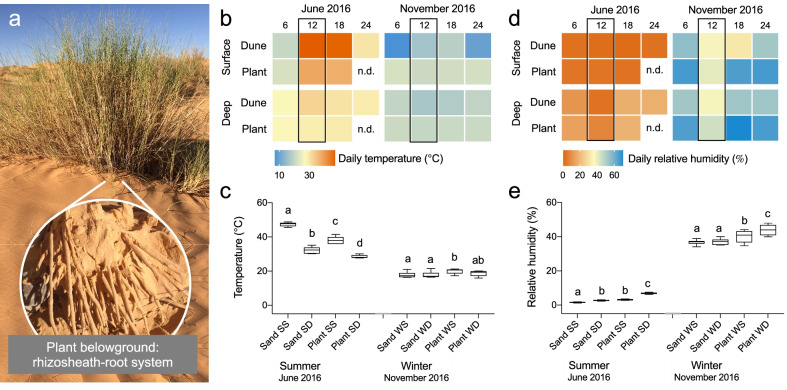
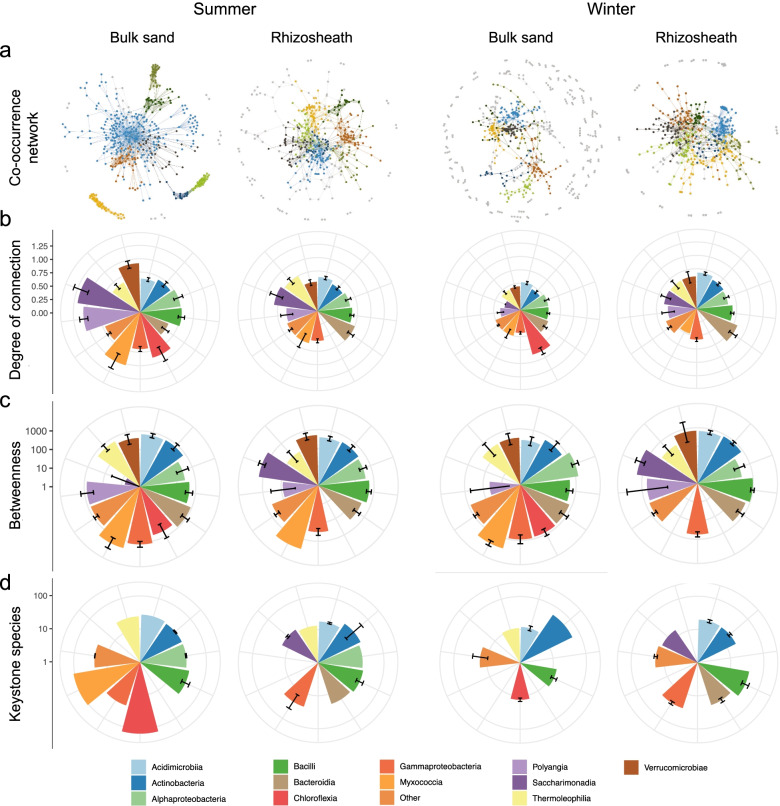
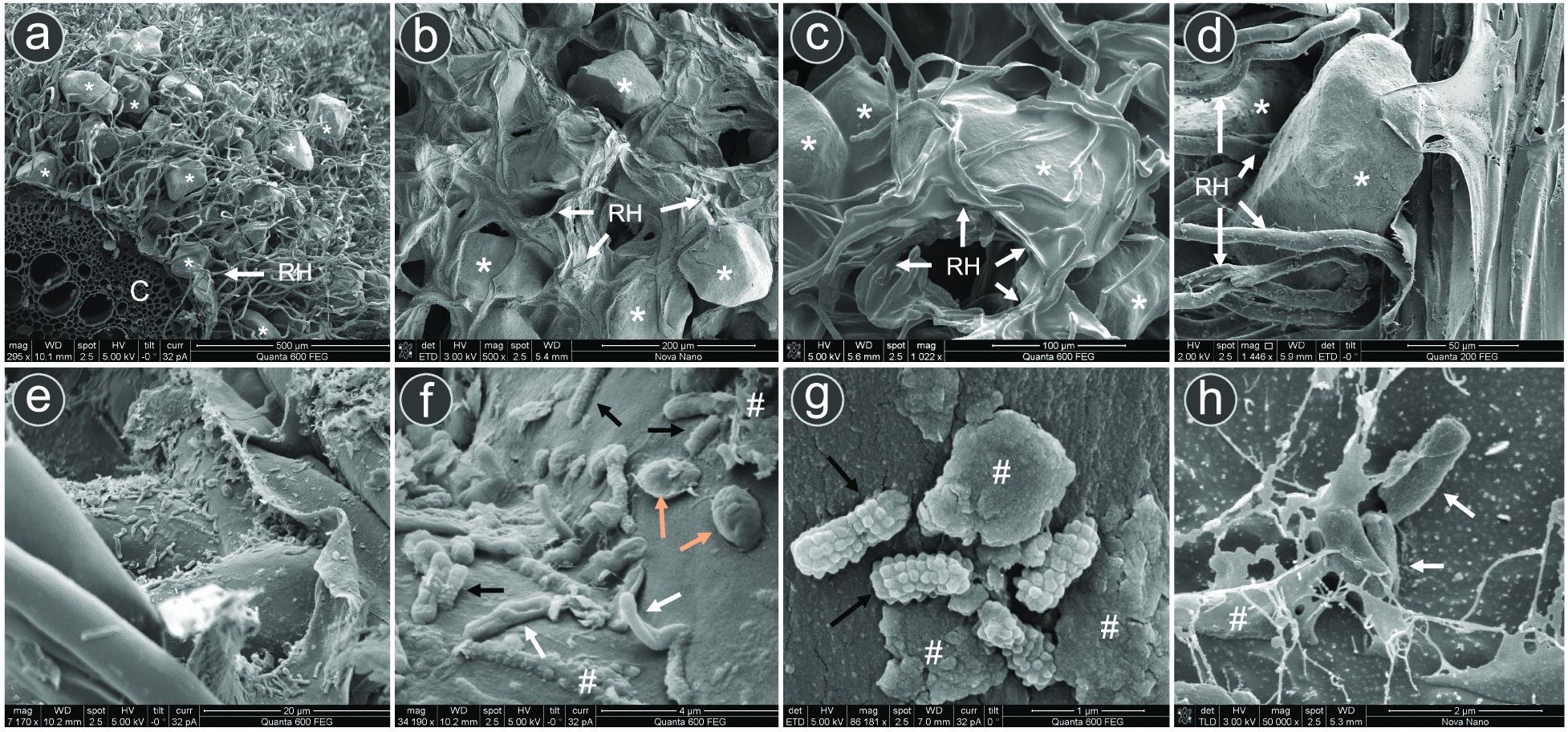
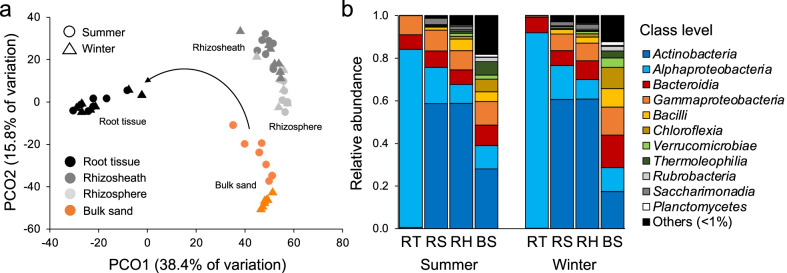
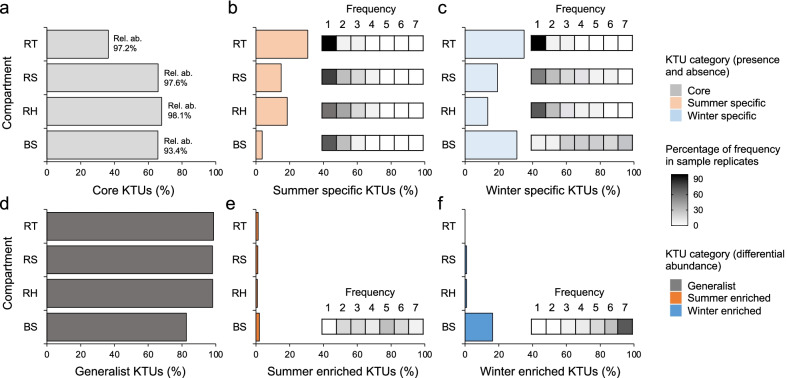
The belowground rhizosheath-root system has higher nutrient and humidity contents, and cooler temperatures than the surrounding sand. The plant responds to the harsh environmental conditions of the summer by increasing the abundance and diversity of extracellular polymeric substances (EPS) compared to the winter. On the contrary, the bacterial community associated with the rhizosheath-root system and its interactome remain stable and, unlike the bulk sand, are unaffected by the seasonal environmental variations. The rhizosheath-root system bacterial communities are consistently dominated by Actinobacteria and Alphaproteobacteria and form distinct bacteria communities from those of bulk sand in the two seasons. The microbiome-stabilization mediated by the plant host acts to consistently retain beneficial bacteria with multiple plant growth promoting functions, including those capable to produce EPS, which increase the sand water holding capacity ameliorating the rhizosheath micro-environment.
Our results reveal the capability of plants in desert ecosystems to stabilize their below ground microbial community under seasonal contrasting environmental conditions, minimizing the heterogeneity of the surrounding bulk sand and contributing to the overall holobiont resilience under poly-extreme conditions.
在炎热的沙漠中,每日/季节性波动对当地生物构成了巨大挑战。然而,这些极端生态系统拥有独特的微环境,例如沙漠矛草的根际鞘 - 根系,其中较温和的条件和较小的波动促进了生物活动和相互作用。在此,我们研究了撒哈拉沙漠夏季和冬季对比环境条件下,与沙漠矛草(Stipagrostis pungens)的这种结构及其周围沙子相关的细菌微生物群。
地下根际鞘 - 根系比周围沙子具有更高的养分和湿度含量,且温度更低。与冬季相比,植物通过增加细胞外聚合物(EPS)的丰度和多样性来应对夏季的恶劣环境条件。相反,与根际鞘 - 根系及其相互作用组相关的细菌群落保持稳定,并且与大量沙子不同,不受季节性环境变化的影响。根际鞘 - 根系细菌群落始终以放线菌和α - 变形菌为主导,并且在两个季节中与大量沙子形成不同的细菌群落。由植物宿主介导的微生物群落稳定作用能够持续保留具有多种促进植物生长功能的有益细菌,包括那些能够产生EPS的细菌,EPS可增加沙子的持水能力,改善根际鞘微环境。
我们的结果揭示了沙漠生态系统中的植物在季节性对比环境条件下稳定其地下微生物群落的能力,最大限度地减少周围大量沙子的异质性,并有助于在多极端条件下整体共生体的恢复力。