Luo Jiajun, Walker Matthew, Xiao Yinbo, Donnelly Hannah, Dalby Matthew J, Salmeron-Sanchez Manuel
Centre for the Cellular Microenvironment, University of Glasgow, Glasgow, G12 8LT, UK.
Bioact Mater. 2021 Dec 21;15:145-159. doi: 10.1016/j.bioactmat.2021.11.024. eCollection 2022 Sep.
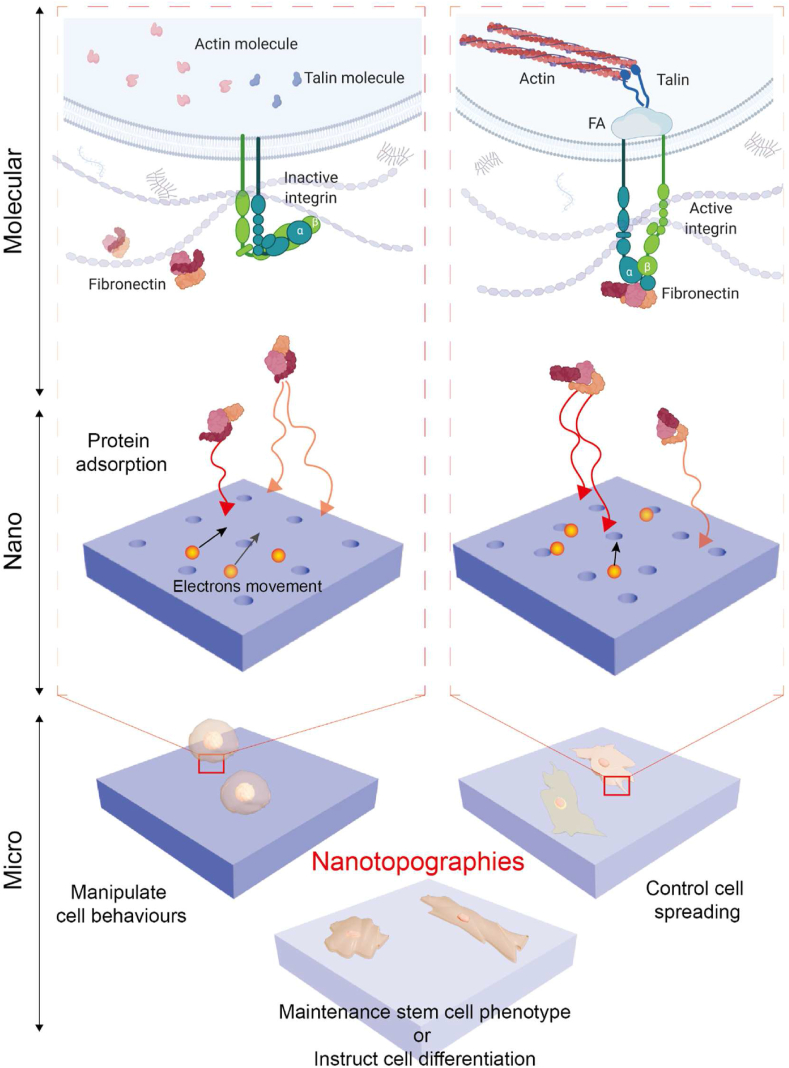
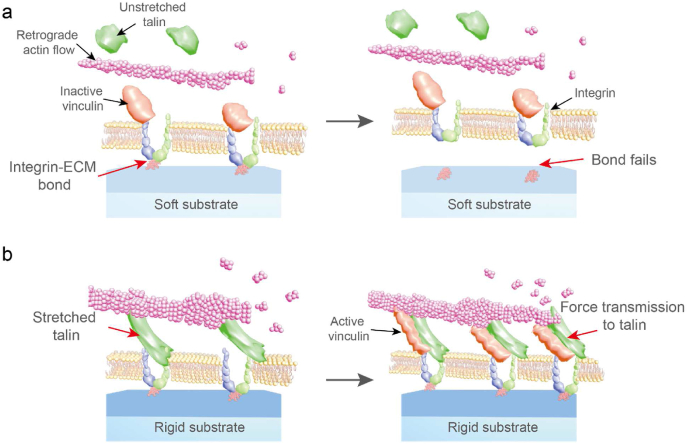
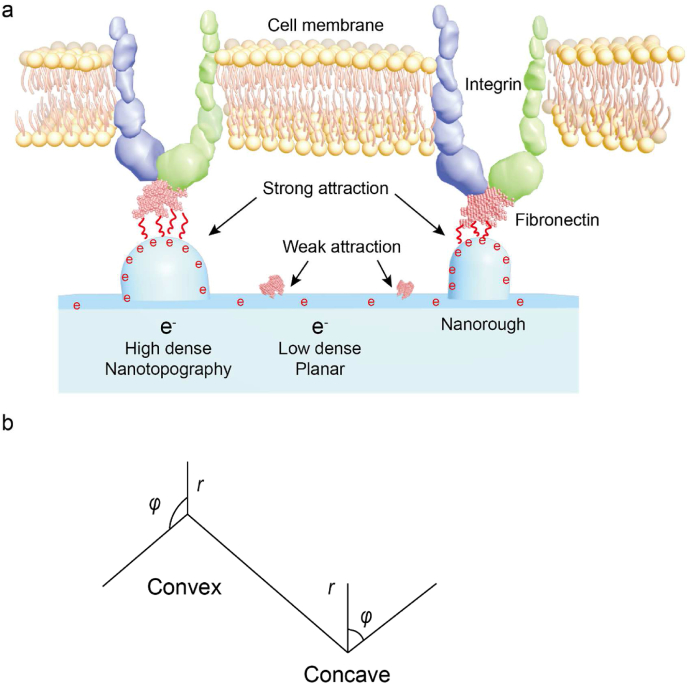
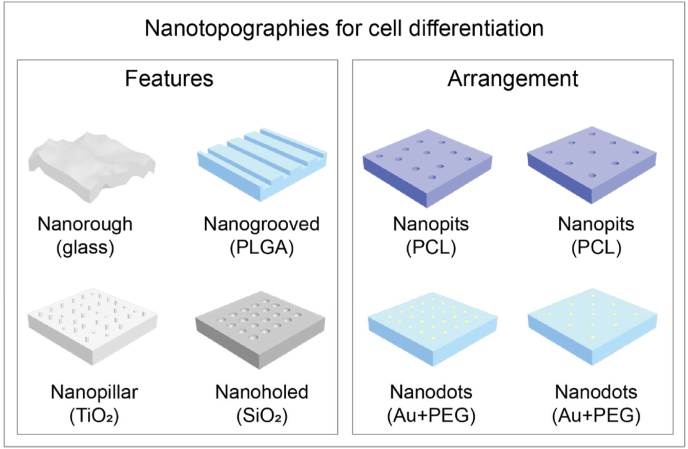
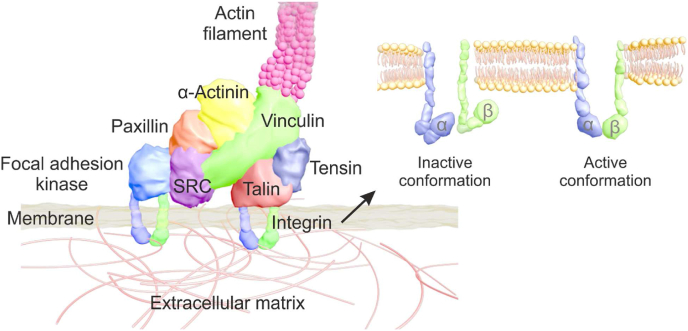
Nanotopography presents an effective physical approach for biomaterial cell manipulation mediated through material-extracellular matrix interactions. The extracellular matrix that exists in the cellular microenvironment is crucial for guiding cell behaviours, such as determination of integrin ligation and interaction with growth factors. These interactions with the extracellular matrix regulate downstream mechanotransductive pathways, such as rearrangements in the cytoskeleton and activation of signal cascades. Protein adsorption onto nanotopography strongly influences the conformation and distribution density of extracellular matrix and, therefore, subsequent cell responses. In this review, we first discuss the interactive mechanisms of protein physical adsorption on nanotopography. Secondly, we summarise advances in creating nanotopographical features to instruct desired cell behaviours. Lastly, we focus on the cellular mechanotransductive pathways initiated by nanotopography. This review provides an overview of the current state-of-the-art designs of nanotopography aiming to provide better biomedical materials for the future.
纳米拓扑结构为通过材料与细胞外基质相互作用介导的生物材料细胞操控提供了一种有效的物理方法。细胞微环境中存在的细胞外基质对于引导细胞行为至关重要,例如整合素连接的确定以及与生长因子的相互作用。这些与细胞外基质的相互作用调节下游机械转导途径,如细胞骨架的重排和信号级联的激活。蛋白质吸附到纳米拓扑结构上会强烈影响细胞外基质的构象和分布密度,进而影响后续的细胞反应。在本综述中,我们首先讨论蛋白质在纳米拓扑结构上的物理吸附的相互作用机制。其次,我们总结了创造纳米拓扑特征以指导所需细胞行为方面的进展。最后,我们关注由纳米拓扑结构引发的细胞机械转导途径。本综述概述了纳米拓扑结构的当前最新设计,旨在为未来提供更好的生物医学材料。