Wei Shuai, Hu Qian, Ma Jianxiong, Dai Xiu, Sun Yu, Han Gonghai, Meng Haoye, Xu Wenjing, Zhang Lei, Ma Xinlong, Peng Jiang, Wang Yu
Tianjin Hospital, Tianjin University, No. 406 Jiefang South Road, Hexi District, Tianjin, 300211, China.
Institute of Orthopedics, The First Medical Center, Chinese PLA General Hospital, Beijing Key Lab of Regenerative Medicine in Orthopedics, Key Laboratory of Musculoskeletal Trauma and War Injuries PLA, No.28 Fuxing Road, Haidian District, Beijing 100853, China.
Bioact Mater. 2022 Mar 18;18:300-320. doi: 10.1016/j.bioactmat.2022.03.014. eCollection 2022 Dec.
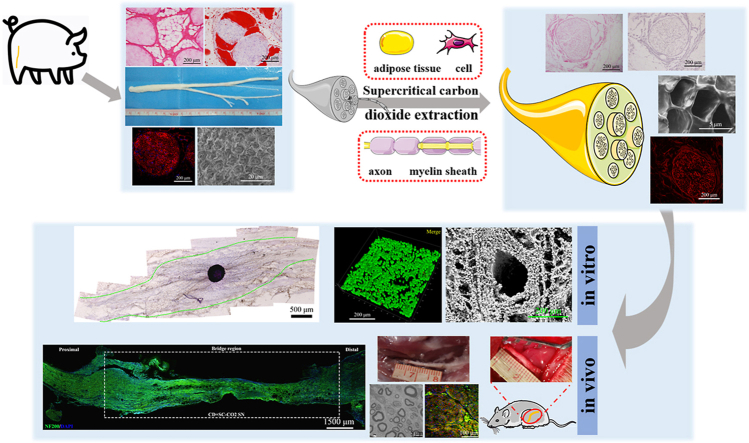
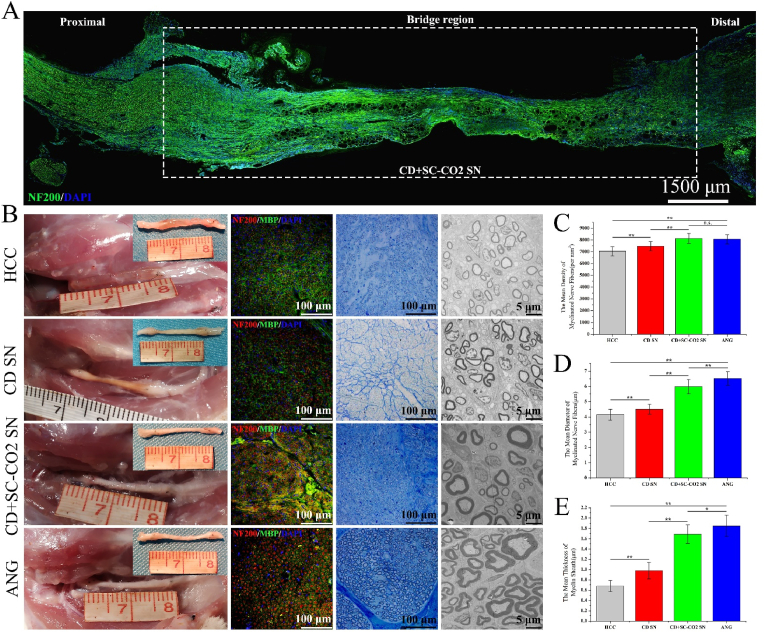
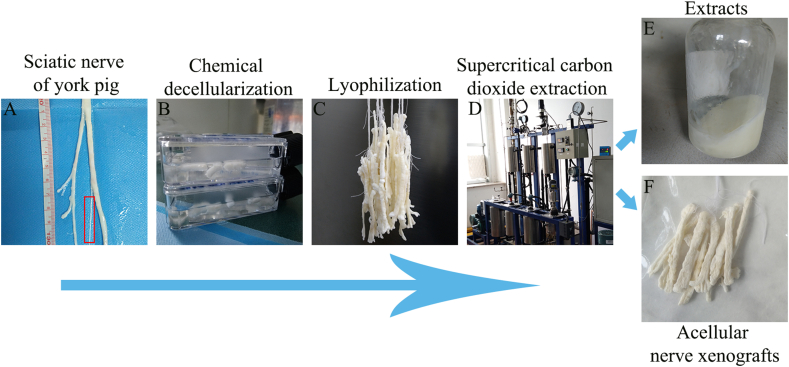
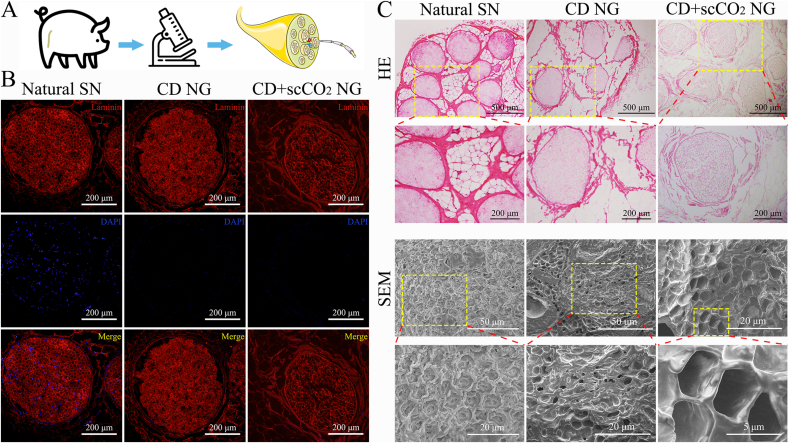
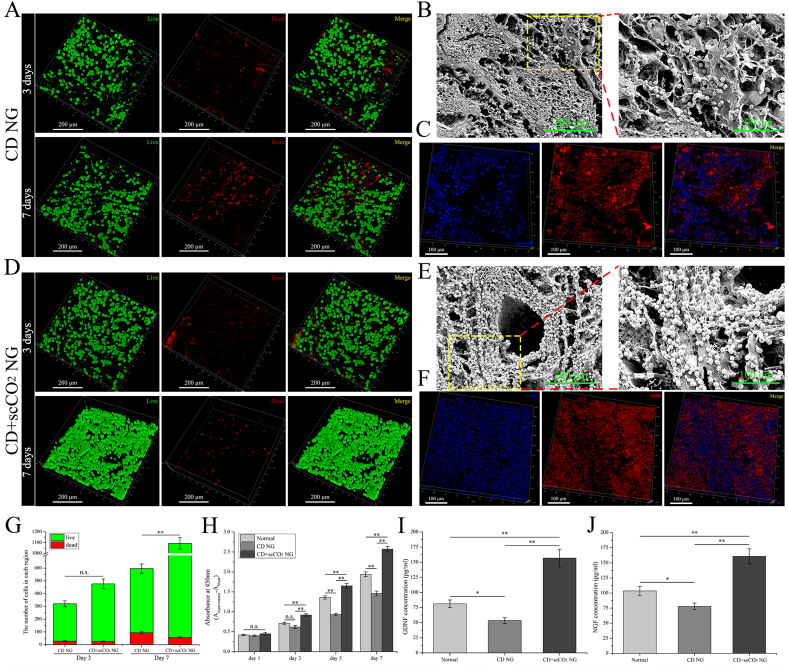
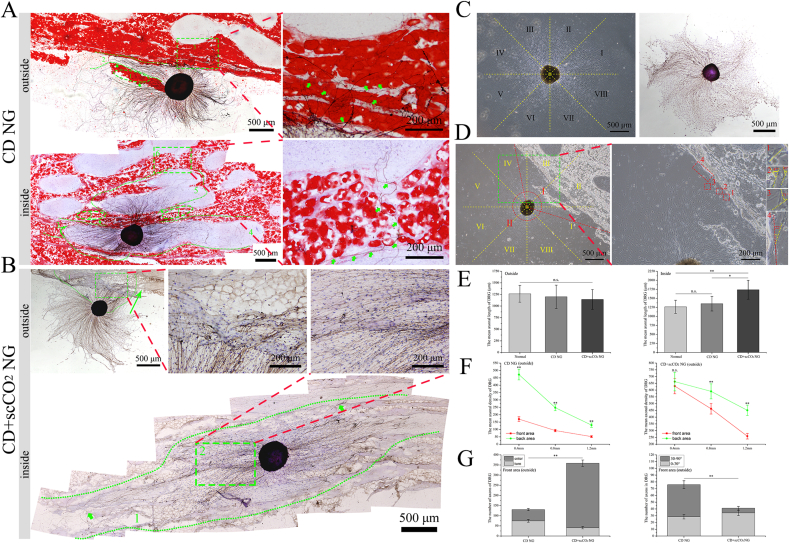
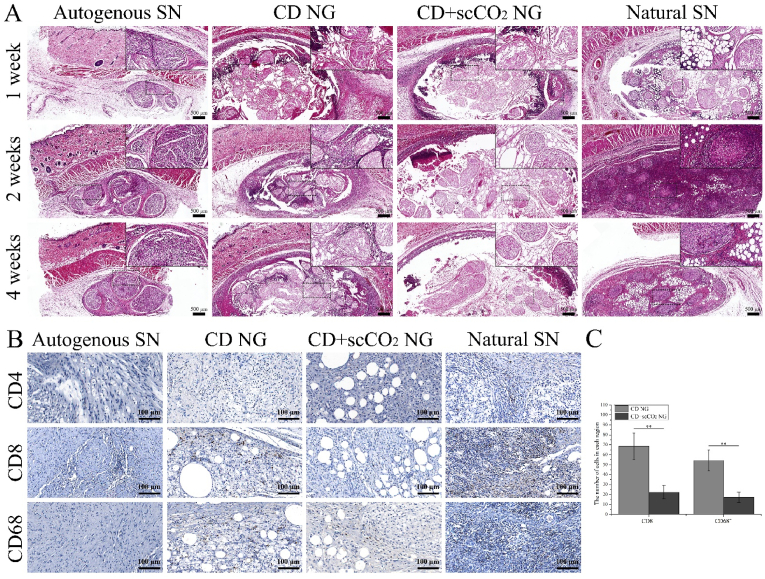
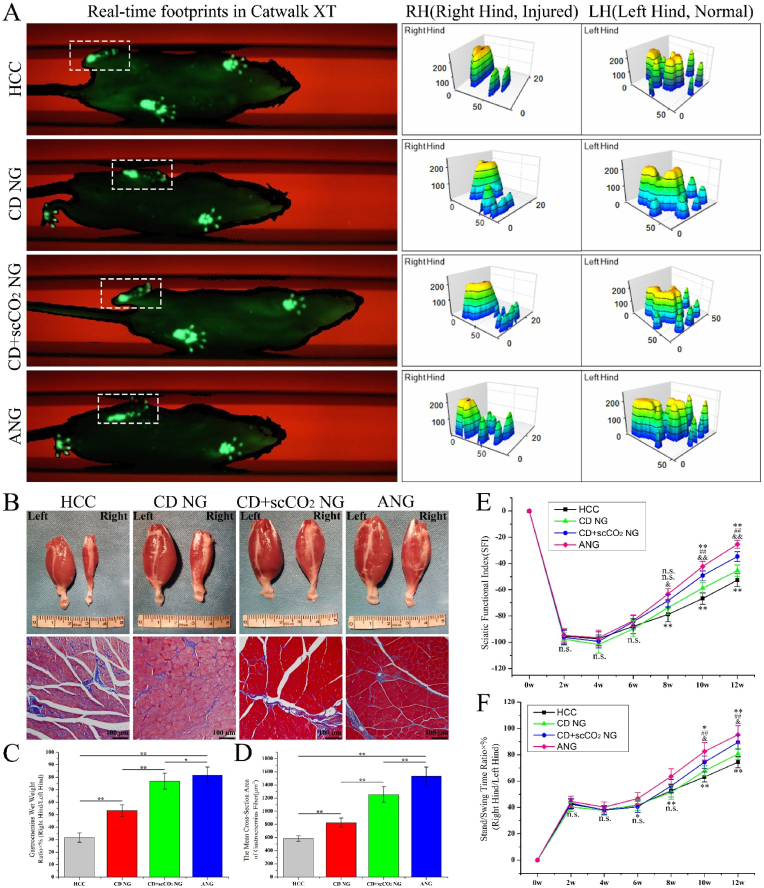
Compared to conventional artificial nerve guide conduits (NGCs) prepared using natural polymers or synthetic polymers, acellular nerve grafts (ACNGs) derived from natural nerves with eliminated immune components have natural bionic advantages in composition and structure that polymer materials do not have. To further optimize the repair effect of ACNGs, in this study, we used a composite technology based on supercritical carbon dioxide (scCO) extraction to process the peripheral nerve of a large mammal, the Yorkshire pig, and obtained an innovative Acellular nerve xenografts (ANXs, namely, CD + scCO NG). After scCO extraction, the fat and DNA content in CD + scCO NG has been removed to the greatest extent, which can better supported cell adhesion and proliferation, inducing an extremely weak inflammatory response. Interestingly, the protein in the CD + scCO NG was primarily involved in signaling pathways related to axon guidance. Moreover, compared with the pure chemical decellularized nerve graft (CD NG), the DRG axons grew naturally on the CD + scCO NG membrane and extended long distances. In vivo studies further revealed that the regenerated nerve axons had basically crossed the CD + scCO NG 3 weeks after surgery. 12 weeks after surgery, CD + scCO2 NG was similar to autologous nerves in improving the quality of nerve regeneration, target muscle morphology and motor function recovery and was significantly better than hollow NGCs and CD NG. Therefore, we believe that the fully decellularized and fat-free porcine ACNGs may be the most promising "bridge" for repairing human nerve defects at this stage and for some time to come.
与使用天然聚合物或合成聚合物制备的传统人工神经导管(NGC)相比,源自天然神经且免疫成分已消除的脱细胞神经移植物(ACNG)在组成和结构上具有天然聚合物材料所没有的天然仿生优势。为了进一步优化ACNG的修复效果,在本研究中,我们采用基于超临界二氧化碳(scCO₂)萃取的复合技术处理大型哺乳动物约克郡猪的周围神经,获得了一种创新性的脱细胞神经异种移植物(ANX,即CD + scCO₂ NG)。经过scCO₂萃取后,CD + scCO₂ NG中的脂肪和DNA含量已被最大程度去除,这能够更好地支持细胞黏附和增殖,引发极其微弱的炎症反应。有趣的是,CD + scCO₂ NG中的蛋白质主要参与与轴突导向相关的信号通路。此外,与纯化学脱细胞神经移植物(CD NG)相比,背根神经节(DRG)轴突在CD + scCO₂ NG膜上自然生长并延伸很长距离。体内研究进一步表明,术后3周再生神经轴突已基本穿过CD + scCO₂ NG。术后12周,CD + scCO₂ NG在改善神经再生质量、靶肌肉形态和运动功能恢复方面与自体神经相似,且明显优于中空的NGC和CD NG。因此,我们认为完全脱细胞且无脂肪的猪ACNG可能是现阶段及未来一段时间内修复人类神经缺损最有前景的“桥梁”。