Yang Jing, Hou Lingling, Wang Jinfeng, Xiao Liwen, Zhang Jinyang, Yin Nanlin, Yao Su, Cheng Kun, Zhang Wen, Shi Zhonghua, Wang Jing, Jiang Hai, Huang Nana, You Yanxia, Lin Mingmei, Shang Ruiyan, Wei Yuan, Zhao Yangyu, Zhao Fangqing
Department of Obstetrics and Gynecology, Peking University Third Hospital, Beijing, China.
Beijing Institutes of Life Science, Chinese Academy of Sciences, Beijing, China.
Gut. 2022 Dec;71(12):2451-2462. doi: 10.1136/gutjnl-2021-326482. Epub 2022 Apr 6.
Fetal growth restriction (FGR) is a devastating pregnancy complication that increases the risk of perinatal mortality and morbidity. This study aims to determine the combined and relative effects of genetic and intrauterine environments on neonatal microbial communities and to explore selective FGR-induced gut microbiota disruption, metabolic profile disturbances and possible outcomes.
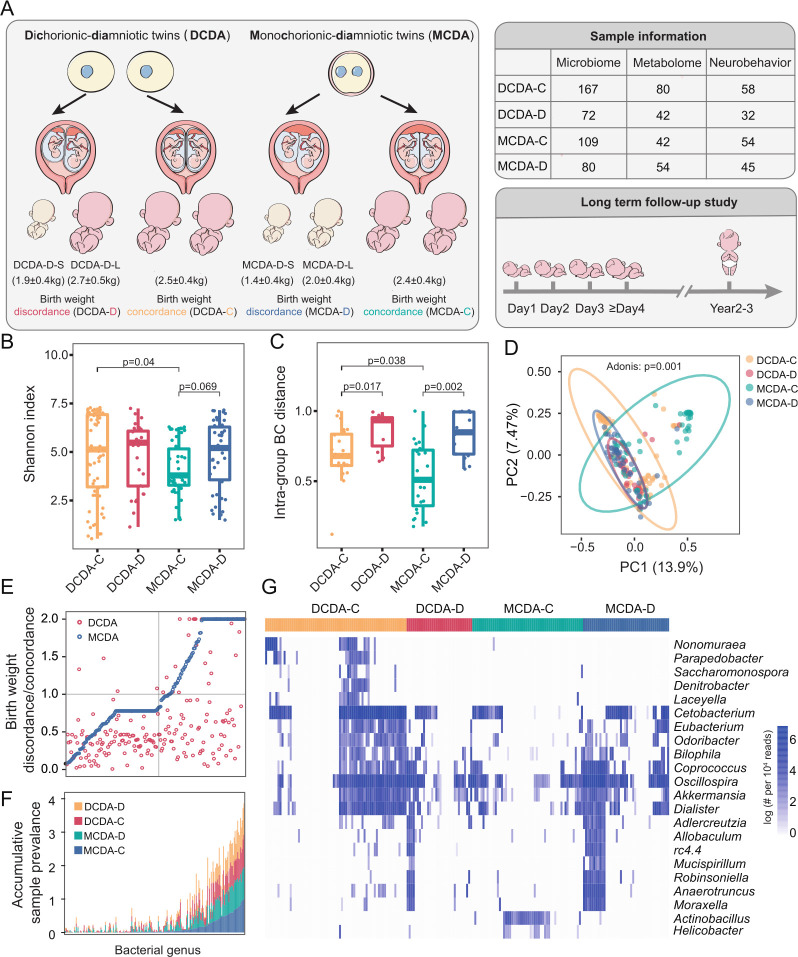
We profiled and compared the gut microbial colonisation of 150 pairs of twin neonates who were classified into four groups based on their chorionicity and discordance of fetal birth weight. Gut microbiota dysbiosis and faecal metabolic alterations were determined by 16S ribosomal RNA and metagenomic sequencing and metabolomics, and the long-term effects were explored by surveys of physical and neurocognitive development conducted after 2~3 years of follow-up.
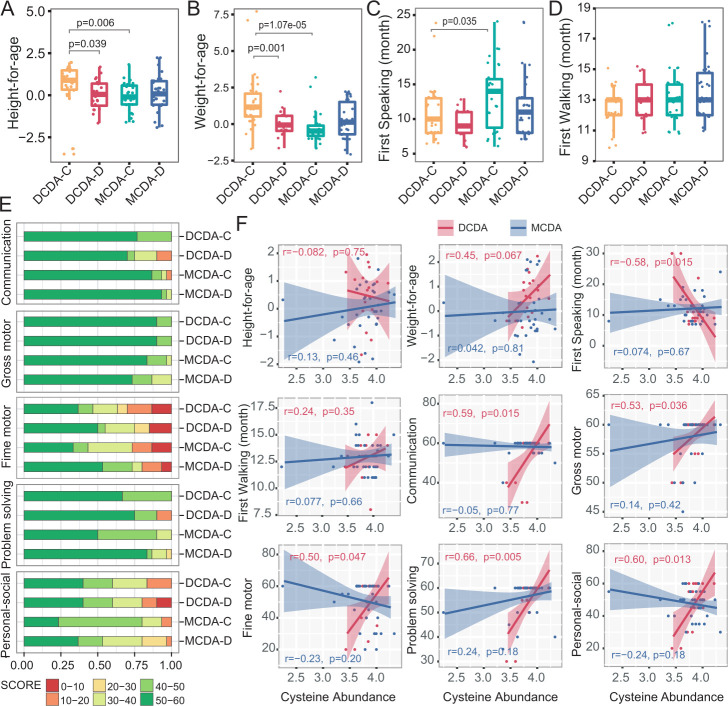
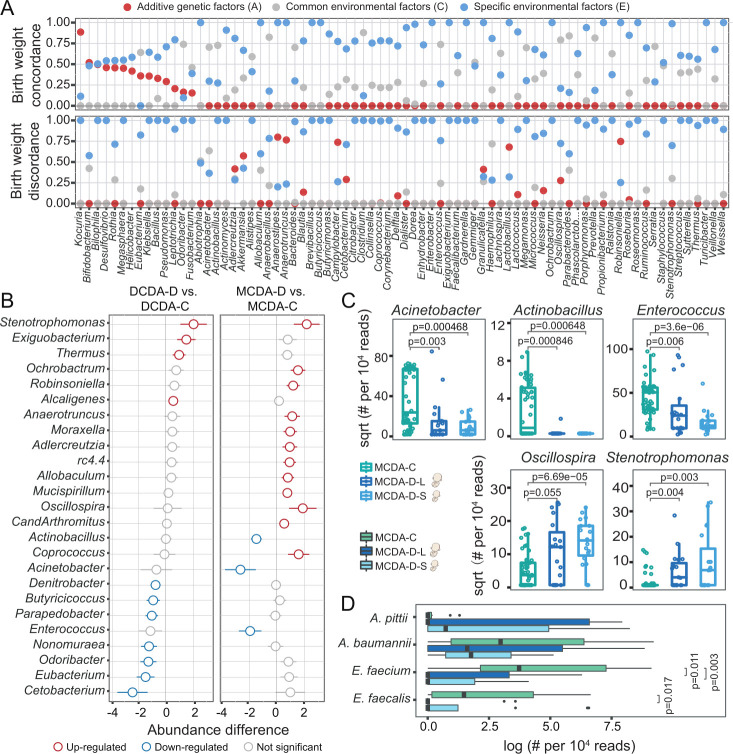
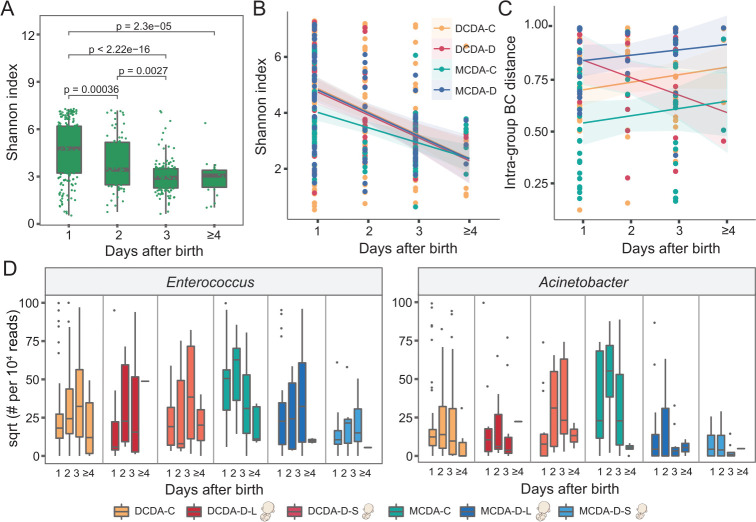
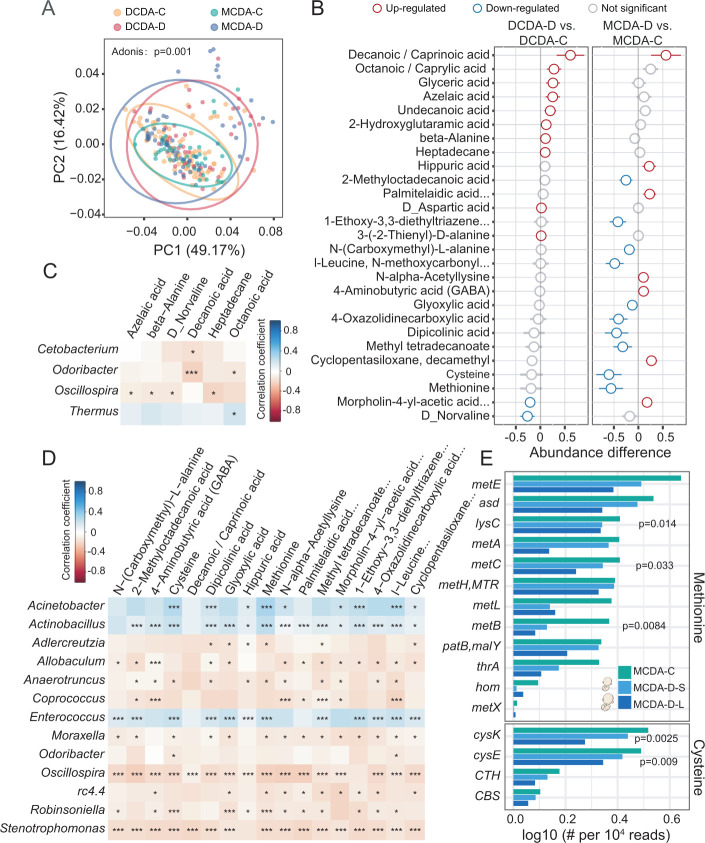
Adverse intrauterine environmental factors related to selective FGR dominate genetics in their effects of elevating bacterial diversity and altering the composition of early-life gut microbiota, and this effect is positively related to the severity of selective FGR in twins. The influence of genetic factors on gut microbes diminishes in the context of selective FGR. Gut microbiota dysbiosis in twin neonates with selective FGR and faecal metabolic alterations features decreased abundances of and and downregulated methionine and cysteine levels. Correlation analysis indicates that the faecal cysteine level in early life is positively correlated with the physical and neurocognitive development of infants.
Dysbiotic microbiota profiles and pronounced metabolic alterations are associated with selective FGR affected by adverse intrauterine environments, emphasising the possible effects of dysbiosis on long-term neurobehavioural development.
胎儿生长受限(FGR)是一种严重的妊娠并发症,会增加围产期死亡率和发病率。本研究旨在确定遗传和子宫内环境对新生儿微生物群落的综合及相对影响,并探索选择性FGR引起的肠道微生物群破坏、代谢谱紊乱及可能的后果。
我们对150对双胞胎新生儿的肠道微生物定植情况进行了分析和比较,这些双胞胎根据绒毛膜性和胎儿出生体重的不一致性分为四组。通过16S核糖体RNA和宏基因组测序以及代谢组学确定肠道微生物群失调和粪便代谢改变,并通过对随访2至3年后进行的身体和神经认知发育调查来探索长期影响。
与选择性FGR相关的不良子宫内环境因素在增加细菌多样性和改变早期肠道微生物群组成的影响方面比遗传因素更占主导,且这种影响与双胞胎中选择性FGR的严重程度呈正相关。在选择性FGR的情况下,遗传因素对肠道微生物的影响会减弱。患有选择性FGR的双胞胎新生儿的肠道微生物群失调和粪便代谢改变表现为 和 的丰度降低以及蛋氨酸和半胱氨酸水平下调。相关性分析表明,早期粪便中的半胱氨酸水平与婴儿的身体和神经认知发育呈正相关。
微生物群失调特征和明显的代谢改变与受不良子宫内环境影响的选择性FGR相关,强调了失调对长期神经行为发育的可能影响。