Luo Hui, Song Yizuo, Zhang Jian-An, Liu Yi, Chen Fengyun, Wang Zhiwei, Zhu Xueqiong
Center for Uterine Cancer Diagnosis & Therapy Research of Zhejiang Province. Department of Obstetrics and Gynecology, the Second Affiliated Hospital of Wenzhou Medical University, Wenzhou, 325027, Zhejiang, China.
Cell Death Discov. 2022 Apr 8;8(1):176. doi: 10.1038/s41420-022-00987-6.
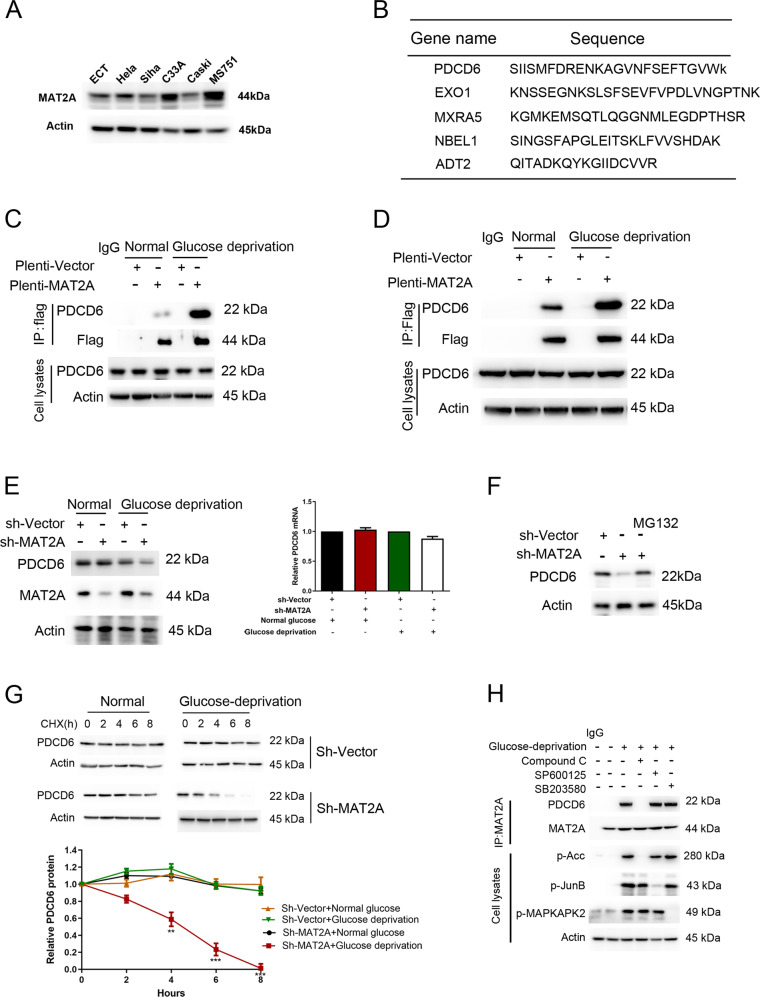
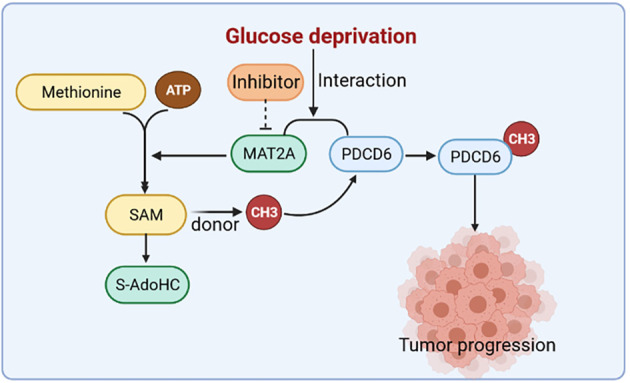
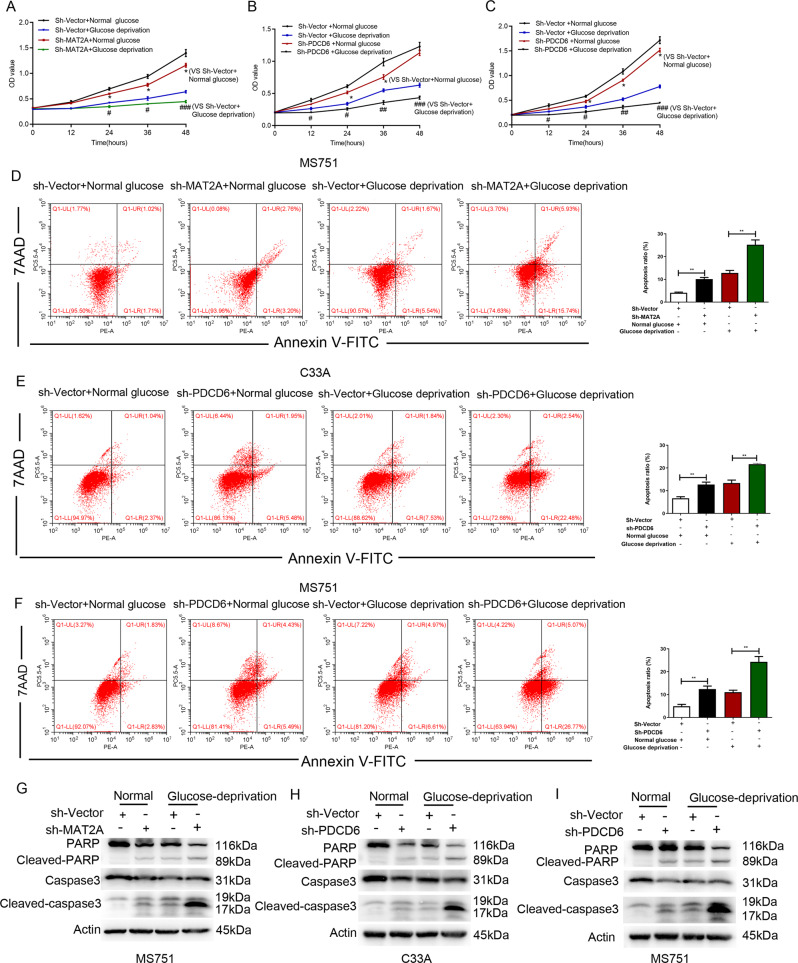
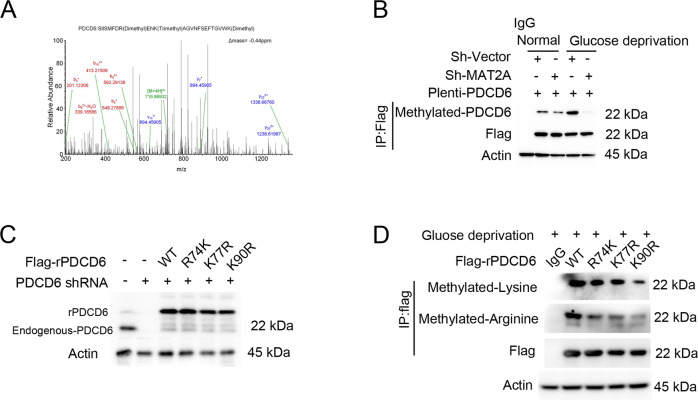
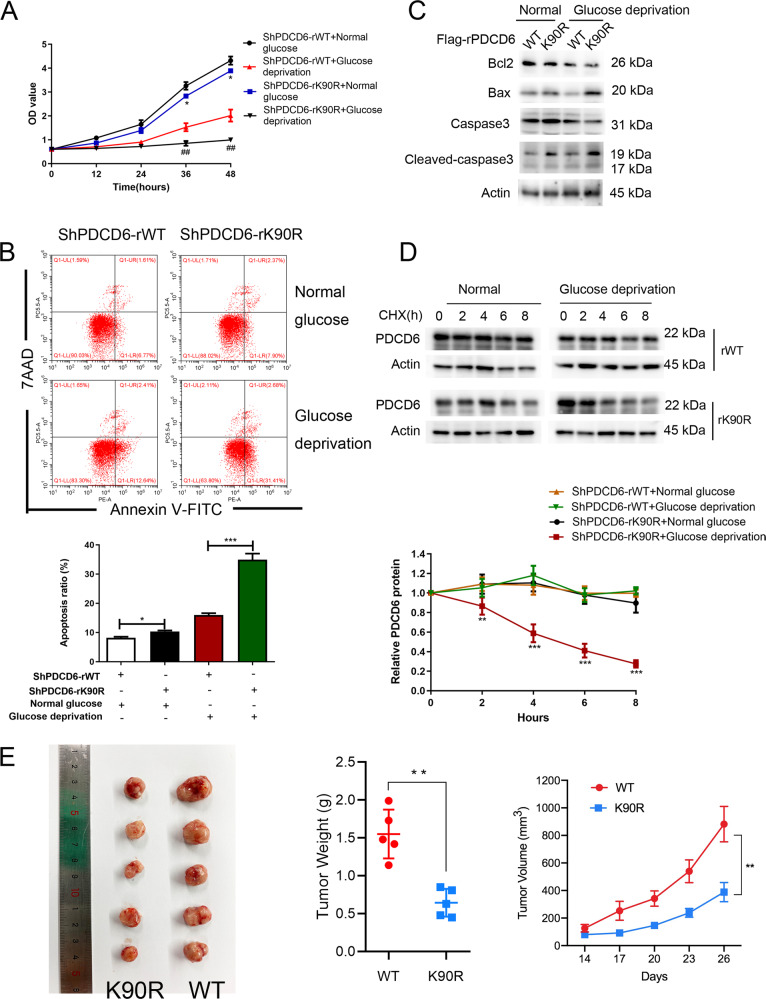
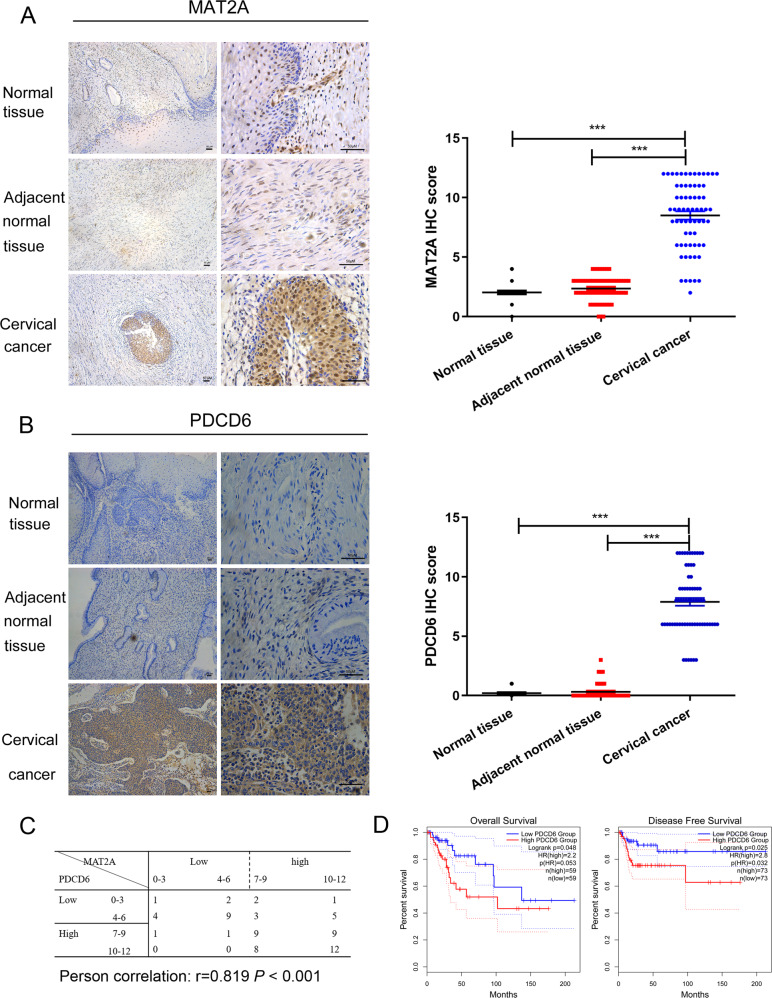
The underlying mechanisms of methionine adenosyltransferase 2 A (MAT2A)-mediated cervical cancer progression under nutrient stress are largely elusive. Therefore, our study aims to investigate molecular mechanism by which MAT2A-indcued cervical oncogenesis. The interaction between MAT2A and programmed cell death protein 6 (PDCD6) in cervical cancer cell lines was detected by immunoprecipitation, immunoblotting and mass spectrometric analysis. A panel of inhibitors that are linked to stress responsive kinases were utilized to detect related pathways by immunoblotting. Cell proliferation and apoptosis were investigated by CCK-8 and flow cytometry. Apoptosis related protein level of Bcl-2, Bax and Caspase-3 was also analyzed in cells with PDCD6 K90 methylation mutation. The association between MAT2A and PDCD6 was detected by immunohistochemistry and clinicopathological characteristics were further analyzed. We found that the interaction between MAT2A and PDCD6 is mediated by AMPK activation and facilitates PDCD6 K90 methylation and further promotes protein stability of PDCD6. Physiologically, expression of PDCD6 K90R leads to increased apoptosis and thus suppresses growth of cervical cancer cells under glucose deprivation. Furthermore, the clinical analysis indicates that the MAT2A protein level is positively associated with the PDCD6 level, and the high level of PDCD6 significantly correlates with poor prognosis and advanced stages of cervical cancer patients. We conclude that MAT2A facilitates PDCD6 methylation to promote cervical cancer growth under glucose deprivation, suggesting the regulatory role of MAT2A in cellular response to nutrient stress and cervical cancer progression.
蛋氨酸腺苷转移酶2A(MAT2A)在营养应激下介导宫颈癌进展的潜在机制在很大程度上尚不清楚。因此,我们的研究旨在探讨MAT2A诱导宫颈癌发生的分子机制。通过免疫沉淀、免疫印迹和质谱分析检测宫颈癌细胞系中MAT2A与程序性细胞死亡蛋白6(PDCD6)之间的相互作用。利用一组与应激反应激酶相关的抑制剂通过免疫印迹检测相关途径。通过CCK-8和流式细胞术研究细胞增殖和凋亡。还分析了具有PDCD6 K90甲基化突变的细胞中Bcl-2、Bax和Caspase-3的凋亡相关蛋白水平。通过免疫组织化学检测MAT2A与PDCD6之间的关联,并进一步分析临床病理特征。我们发现MAT2A与PDCD6之间的相互作用是由AMPK激活介导的,促进了PDCD6 K90甲基化,并进一步促进了PDCD6的蛋白质稳定性。在生理上,PDCD6 K90R的表达导致细胞凋亡增加,从而在葡萄糖剥夺条件下抑制宫颈癌细胞的生长。此外,临床分析表明,MAT2A蛋白水平与PDCD6水平呈正相关,PDCD6的高水平与宫颈癌患者的预后不良和晚期显著相关。我们得出结论,MAT2A促进PDCD6甲基化以在葡萄糖剥夺条件下促进宫颈癌生长这表明MAT2A在细胞对营养应激的反应和宫颈癌进展中的调节作用。