Desdouits Marion, Piquet Jean-Côme, Wacrenier Candice, Le Mennec Cécile, Parnaudeau Sylvain, Jousse Sarah, Rocq Sophie, Bigault Lionel, Contrant Maud, Garry Pascal, Chavanon Fabienne, Gabellec Raoul, Lamort Laure, Lebrun Luc, Le Gall Patrik, Meteigner Claire, Schmitt Anne, Seugnet Jean Luc, Serais Ophélie, Peltier Cécile, Bressolette-Bodin Céline, Blanchard Yannick, Le Guyader Françoise S
Ifremer, laboratoire de Microbiologie, SG2M/LSEM, BP 21105, 44311 Nantes, France.
ANSES, Génétique Virale et Biosécurité, Ploufragan, France.
Sci Total Environ. 2021 Jul 15;778:146270. doi: 10.1016/j.scitotenv.2021.146270. Epub 2021 Mar 8.
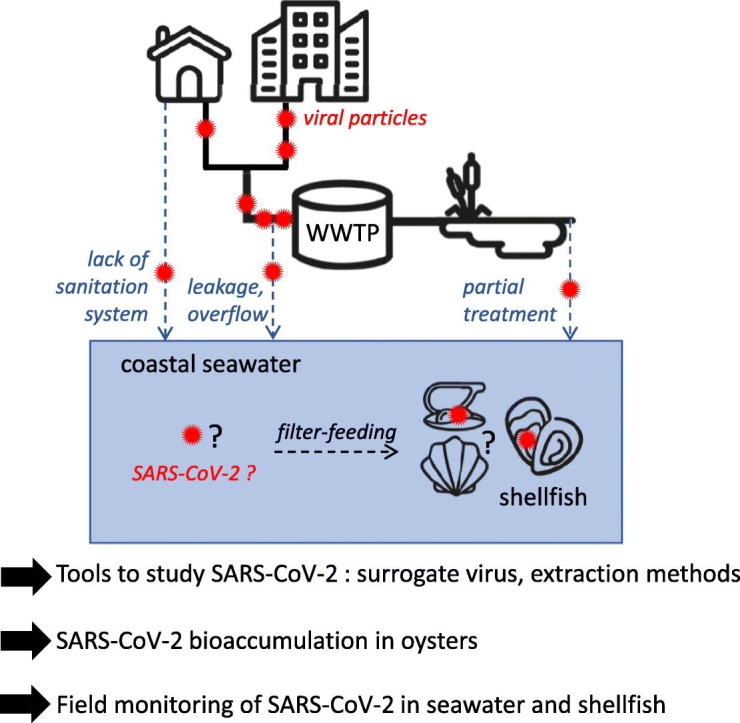
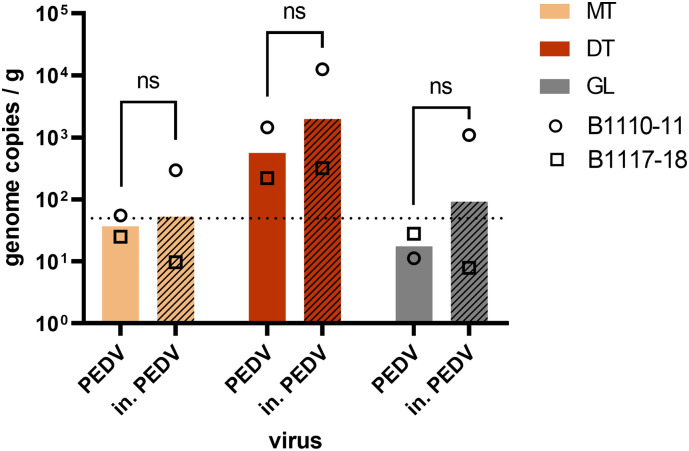
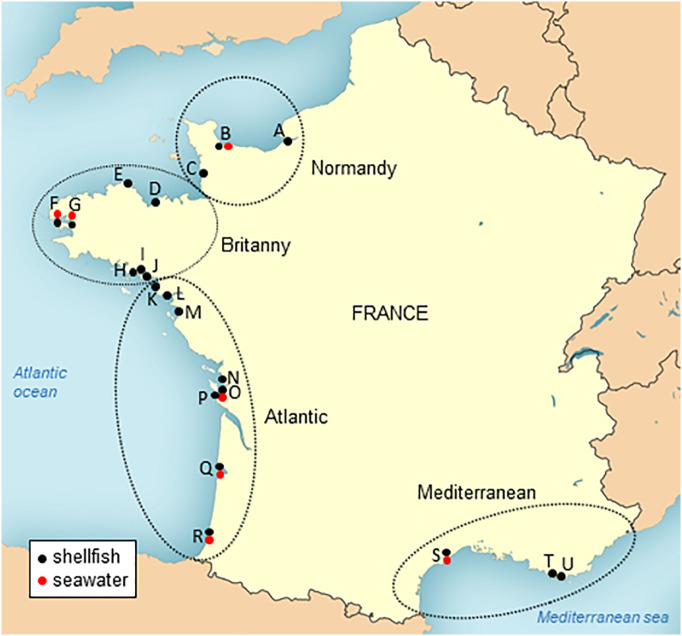
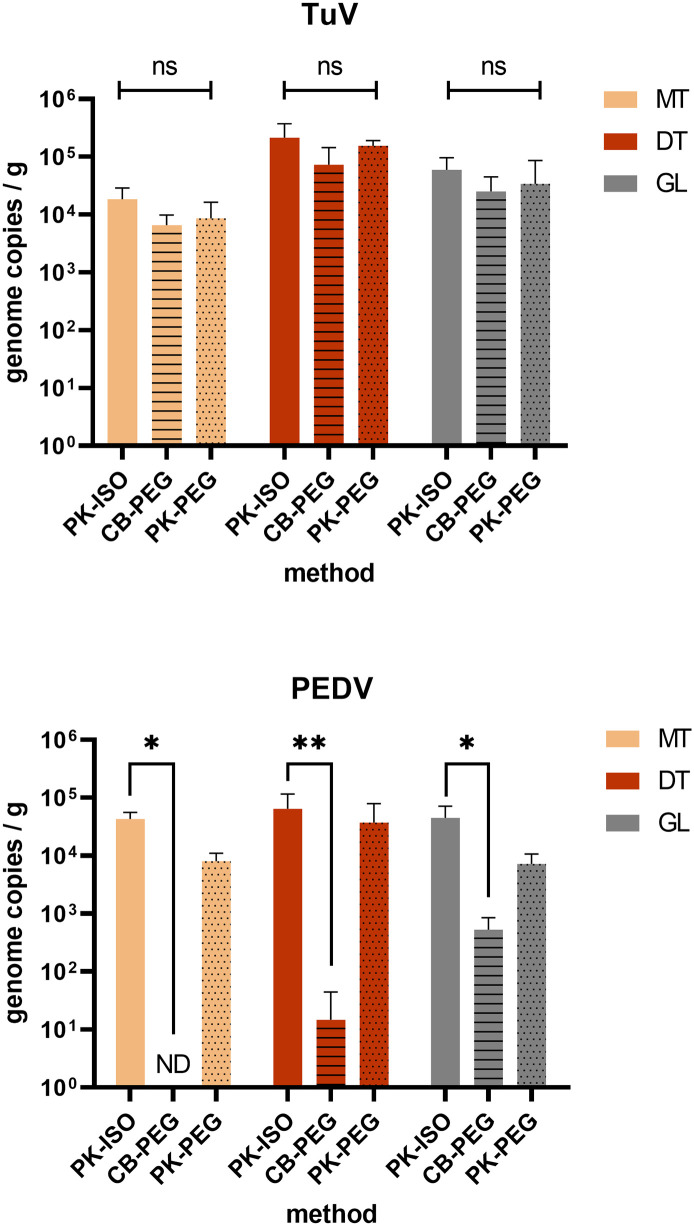
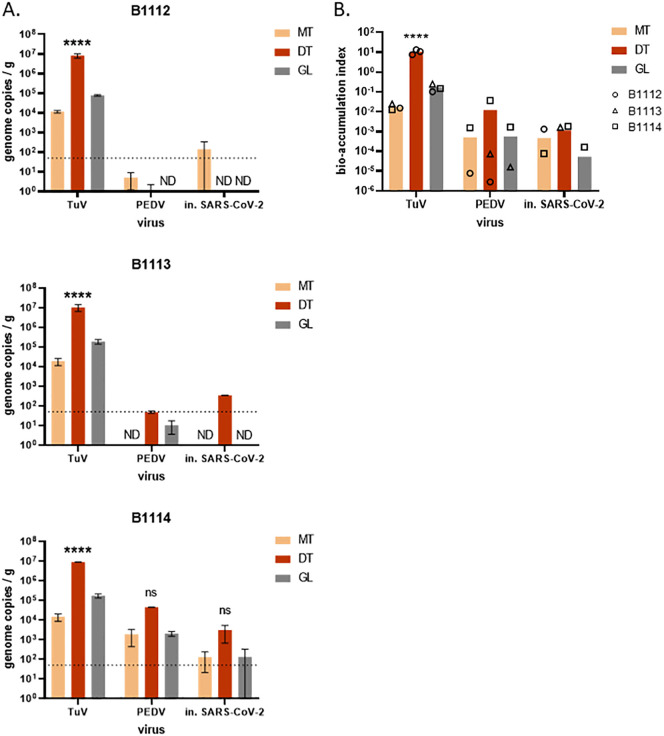
The emergence and worldwide spread of SARS-CoV-2 raises new concerns and challenges regarding possible environmental contamination by this virus through spillover of human sewage, where it has been detected. The coastal environment, under increasing anthropogenic pressure, is subjected to contamination by a large number of human viruses from sewage, most of them being non-enveloped viruses like norovirus. When reaching coastal waters, they can be bio-accumulated by filter-feeding shellfish species such as oysters. Methods to detect this viral contamination were set up for the detection of non-enveloped enteric viruses, and may need optimization to accommodate enveloped viruses like coronaviruses (CoV). Here, we aimed at assessing methods for the detection of CoV, including SARS-CoV-2, in the coastal environment and testing the possibility that SARS-CoV-2 can contaminate oysters, to monitor the contamination of French shores by SARS-CoV-2 using both seawater and shellfish. Using the porcine epidemic diarrhea virus (PEDV), a CoV, as surrogate for SARS-CoV-2, and Tulane virus, as surrogate for non-enveloped viruses such as norovirus, we assessed and selected methods to detect CoV in seawater and shellfish. Seawater-based methods showed variable and low yields for PEDV. In shellfish, the current norm for norovirus detection was applicable to CoV detection. Both PEDV and heat-inactivated SARS-CoV-2 could contaminate oysters in laboratory settings, with a lower efficiency than a calicivirus used as control. Finally, we applied our methods to seawater and shellfish samples collected from April to August 2020 in France, where we could detect the presence of human norovirus, a marker of human fecal contamination, but not SARS-CoV-2. Together, our results validate methods for the detection of CoV in the coastal environment, including the use of shellfish as sentinels of the microbial quality of their environment, and suggest that SARS-CoV-2 did not contaminate the French shores during the summer season.
严重急性呼吸综合征冠状病毒2(SARS-CoV-2)的出现及其在全球范围内的传播引发了新的担忧和挑战,即该病毒可能通过已检测到其踪迹的人类污水溢出而造成环境污染。在日益增加的人为压力下,沿海环境受到来自污水的大量人类病毒的污染,其中大多数是像诺如病毒这样的无包膜病毒。当这些病毒进入沿海水域时,它们可以被滤食性贝类物种(如牡蛎)生物累积。用于检测无包膜肠道病毒的病毒污染检测方法已经建立,可能需要进行优化以适应像冠状病毒(CoV)这样的包膜病毒。在此,我们旨在评估在沿海环境中检测包括SARS-CoV-2在内的冠状病毒的方法,并测试SARS-CoV-2污染牡蛎的可能性,以便利用海水和贝类监测法国海岸受SARS-CoV-2的污染情况。我们使用猪流行性腹泻病毒(PEDV,一种冠状病毒)作为SARS-CoV-2的替代物,以及图莱里病毒作为无包膜病毒(如诺如病毒)的替代物,评估并选择了在海水和贝类中检测冠状病毒的方法。基于海水的方法对PEDV的检测产量各不相同且较低。在贝类中,目前检测诺如病毒的标准适用于冠状病毒的检测。在实验室环境中,PEDV和热灭活的SARS-CoV-2都可能污染牡蛎,但其效率低于用作对照的杯状病毒。最后,我们将我们的方法应用于2020年4月至8月在法国采集的海水和贝类样本,在这些样本中我们能够检测到人类粪便污染标志物——人类诺如病毒的存在,但未检测到SARS-CoV-2。总之,我们的结果验证了在沿海环境中检测冠状病毒的方法,包括使用贝类作为其环境微生物质量的哨兵,并表明在夏季SARS-CoV-2并未污染法国海岸。