Department of Medical and Surgical Sciences, University of Foggia, 71122 Foggia, Italy.
Int J Mol Sci. 2022 Mar 30;23(7):3829. doi: 10.3390/ijms23073829.
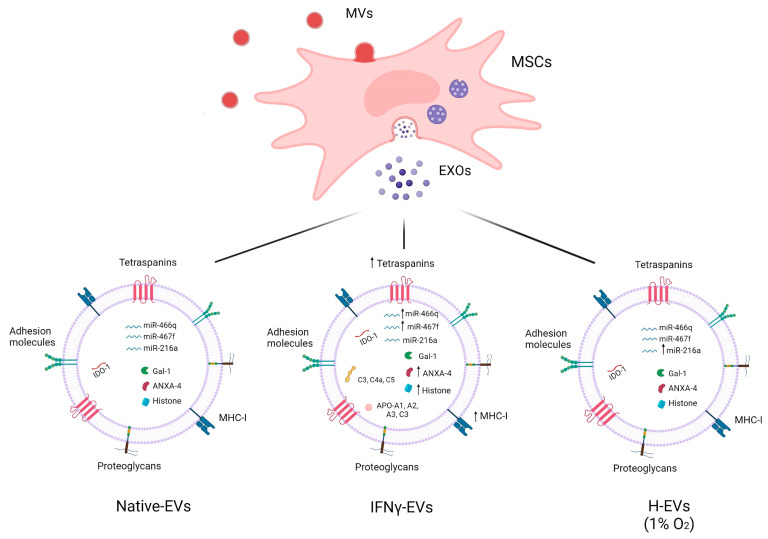
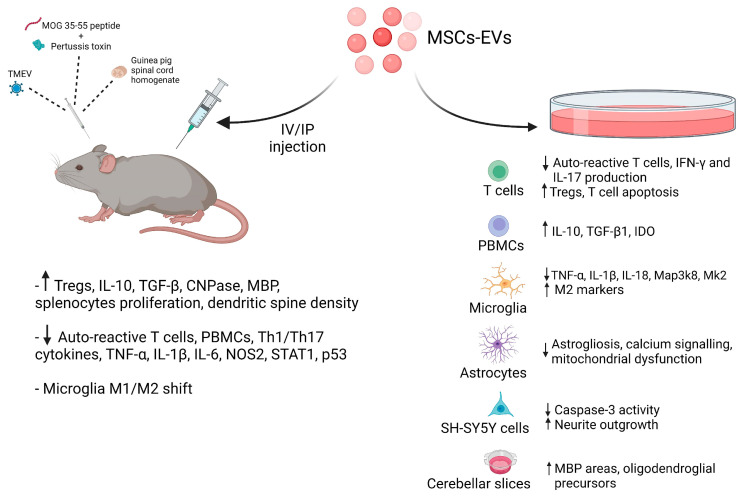
Autoimmune demyelinating diseases-including multiple sclerosis, neuromyelitis optica spectrum disorder, anti-myelin oligodendrocyte glycoprotein-associated disease, acute disseminated encephalomyelitis, and glial fibrillary acidic protein (GFAP)-associated meningoencephalomyelitis-are a heterogeneous group of diseases even though their common pathology is characterized by neuroinflammation, loss of myelin, and reactive astrogliosis. The lack of safe pharmacological therapies has purported the notion that cell-based treatments could be introduced to cure these patients. Among stem cells, mesenchymal stem cells (MSCs), obtained from various sources, are considered to be the ones with more interesting features in the context of demyelinating disorders, given that their secretome is fully equipped with an array of anti-inflammatory and neuroprotective molecules, such as mRNAs, miRNAs, lipids, and proteins with multiple functions. In this review, we discuss the potential of cell-free therapeutics utilizing MSC secretome-derived extracellular vesicles-and in particular exosomes-in the treatment of autoimmune demyelinating diseases, and provide an outlook for studies of their future applications.
自身免疫性脱髓鞘疾病——包括多发性硬化症、视神经脊髓炎谱系疾病、抗髓鞘少突胶质细胞糖蛋白相关疾病、急性播散性脑脊髓炎和胶质纤维酸性蛋白(GFAP)相关脑膜脑炎——是一组异质性疾病,尽管它们的共同病理学特征是神经炎症、髓鞘丧失和反应性星形胶质细胞增生。由于缺乏安全的药理学治疗方法,人们认为可以引入基于细胞的治疗方法来治愈这些患者。在干细胞中,间充质干细胞(MSCs)来源于各种来源,被认为是在脱髓鞘疾病背景下具有更有趣特征的细胞,因为它们的分泌组完全配备了一系列抗炎和神经保护分子,如 mRNAs、miRNAs、脂质和具有多种功能的蛋白质。在这篇综述中,我们讨论了利用 MSC 分泌组衍生的细胞外囊泡(特别是外泌体)治疗自身免疫性脱髓鞘疾病的无细胞治疗的潜力,并对它们未来应用的研究进行了展望。