The Comprehensive Cancer Centre of Nanjing Drum Tower Hospital, The Affiliated Hospital of Nanjing University Medical School, 321 Zhongshan Road, Nanjing, 210008, China.
Department of Oncology, Rudong Peoples' Hospital of Jiangsu Province, Nantong, China.
J Nanobiotechnology. 2022 Apr 13;20(1):190. doi: 10.1186/s12951-022-01397-7.
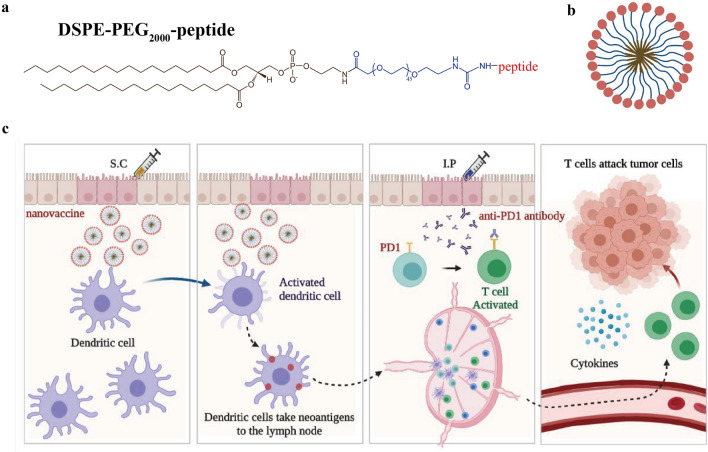
Neoantigens are considered ideal targets for immunotherapy, especially tumor vaccine, because of their strong specificity and immunogenicity. Here, we developed a neoantigen nanovaccine used liposomes with lymph-node targeting characteristic.
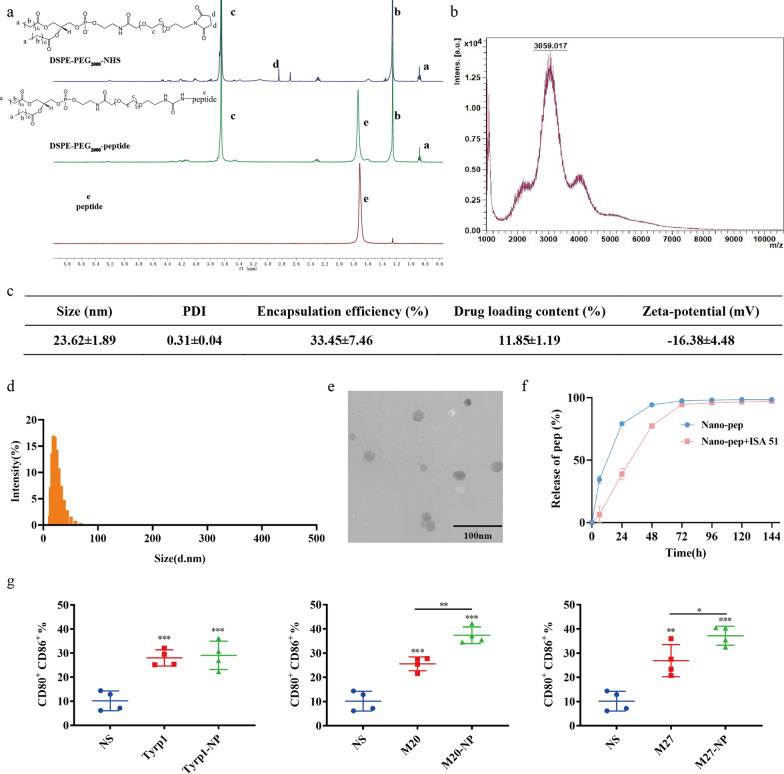
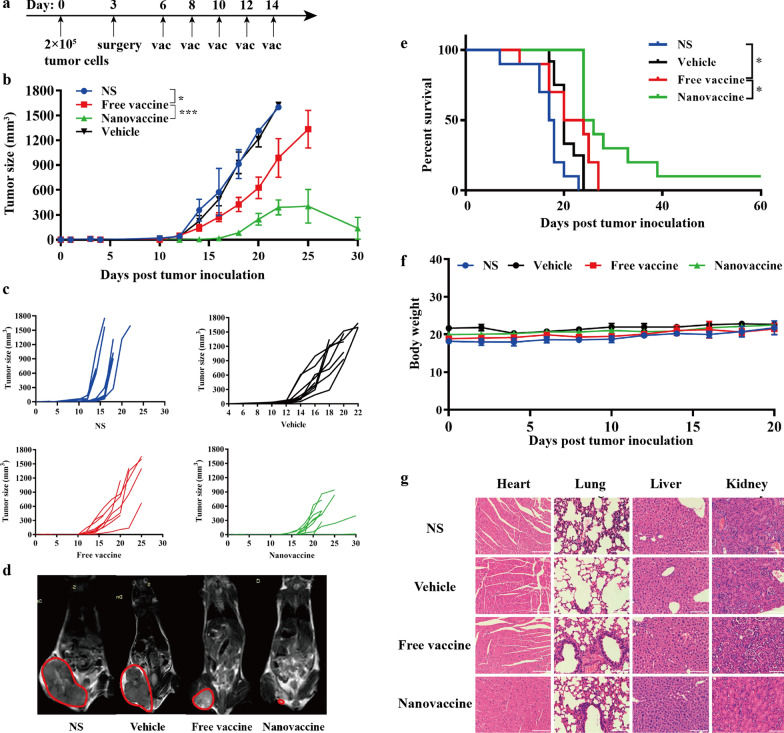
Our nanovaccine was composed of neoantigens, an amphiphilic liposome and an adjuvant Montanide™ ISA 51. Small animal imaging system and immunofluorescence staining were used to identify the distribution of nanovaccines. A subcutaneous-tumor-resection mouse model of melanoma was established to evaluate the anti-tumor efficacy. Flow cytometry was performed to assay the immune responses initiated by nanovaccines.
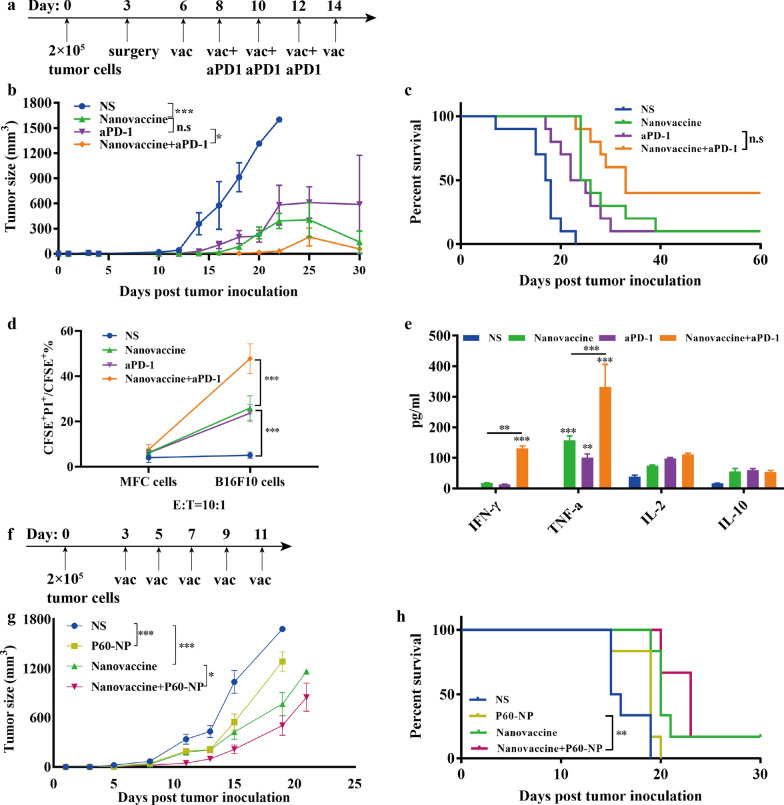
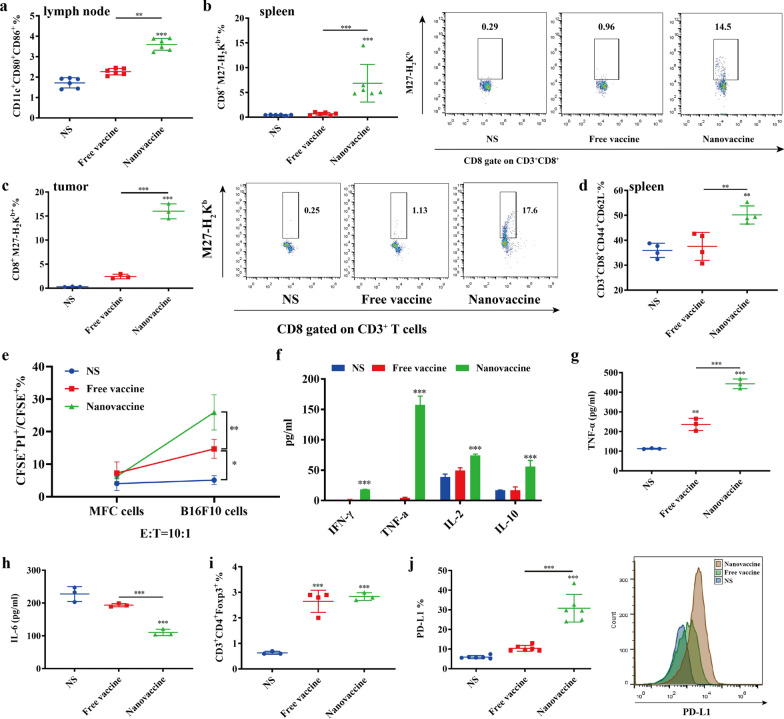
Nanovaccines could traffic to lymph nodes, be uptaken by CD11c DCs and promote DCs maturity. After the treatment of our neoantigen nanovaccines, the average recurrence time was extended from 11 to 16 days and the median survival time was even prolonged 7.5 days relative to the control group (NS group). Nanovaccines increased neoantigen-specific T cells to 10-fold of free vaccines, and upregulated Th1 cytokines, such as IFN-γ and TNF-α. The anti-tumor activity of spleen lymphocytes in the nanovaccine group was significantly stronger than that of other groups. However, some immune-inhibitory cells or molecules in tumor microenvironment have been detected upregulated under the immune pressure of neoantigen nanovaccines, such as Tregs and PD-L1. The efficacy of the neoantigen nanovaccine combined with anti-PD1 antibody or Treg inhibiting peptide P60 was better than that of the single treatment.
We developed a general vaccine strategy, triggering specific T cell responses, and provided feasible combination strategies for better anti-tumor efficacy.
新抗原被认为是免疫治疗的理想靶点,特别是肿瘤疫苗,因为它们具有很强的特异性和免疫原性。在这里,我们开发了一种使用具有淋巴结靶向特性的脂质体的新型抗原纳米疫苗。
我们的纳米疫苗由新抗原、两亲脂质体和佐剂 Montanide™ ISA 51 组成。小动物成像系统和免疫荧光染色用于识别纳米疫苗的分布。建立了黑色素瘤皮下肿瘤切除小鼠模型,以评估其抗肿瘤疗效。流式细胞术用于检测纳米疫苗引发的免疫反应。
纳米疫苗可以向淋巴结转运,被 CD11c DC 摄取,并促进 DC 成熟。与对照组(NS 组)相比,用我们的新型抗原纳米疫苗治疗后,平均复发时间从 11 天延长到 16 天,中位生存时间甚至延长了 7.5 天。纳米疫苗将新抗原特异性 T 细胞增加到游离疫苗的 10 倍,并上调了 Th1 细胞因子,如 IFN-γ 和 TNF-α。纳米疫苗组的脾淋巴细胞的抗肿瘤活性明显强于其他组。然而,在新型抗原纳米疫苗的免疫压力下,已检测到肿瘤微环境中的一些免疫抑制细胞或分子上调,如 Tregs 和 PD-L1。新型抗原纳米疫苗联合抗 PD1 抗体或 Treg 抑制肽 P60 的疗效优于单一治疗。
我们开发了一种通用的疫苗策略,触发特异性 T 细胞反应,并为更好的抗肿瘤疗效提供了可行的联合策略。