Maleki Dizaj Solmaz, Salatin Sara, Khezri Khadijeh, Lee Jyh-Yeuan, Lotfipour Farzaneh
Dental and Periodontal Research Center, Tabriz University of Medical Sciences, Tabriz, Iran.
Department of Dental Biomaterials, Faculty of Dentistry, Tabriz University of Medical Sciences, Tabriz, Iran.
Front Microbiol. 2022 Mar 31;13:831655. doi: 10.3389/fmicb.2022.831655. eCollection 2022.
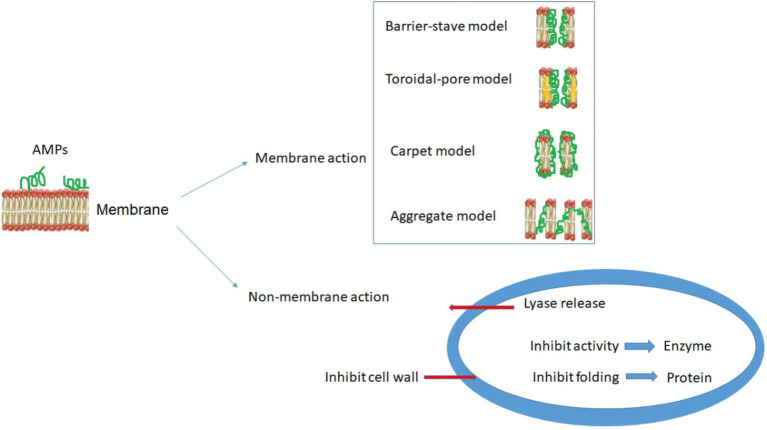
As a category of small peptides frequently found in nature, antimicrobial peptides (AMPs) constitute a major part of the innate immune system of various organisms. Antimicrobial peptides feature various inhibitory effects against fungi, bacteria, viruses, and parasites. Due to the increasing concerns of antibiotic resistance among microorganisms, development of antimicrobial peptides is an emerging tool as a favorable applicability prospect in food, medicine, aquaculture, animal husbandry, and agriculture. This review presents the latest research progress made in the field of antimicrobial peptides, such as their mechanism of action, classification, application status, design techniques, and a review on decoration of nanoparticles and polymers with AMPs that are used in treating multidrug resistance. Lastly, we will highlight recent progress in antiviral peptides to treat emerging viral diseases (e.g., anti-coronavirus peptides) and discuss the outlook of AMP applications.
作为自然界中常见的一类小肽,抗菌肽(AMPs)是各种生物体固有免疫系统的重要组成部分。抗菌肽对真菌、细菌、病毒和寄生虫具有多种抑制作用。由于微生物对抗生素耐药性的日益关注,抗菌肽的开发作为一种新兴工具,在食品、医药、水产养殖、畜牧业和农业领域具有良好的应用前景。本文综述了抗菌肽领域的最新研究进展,包括其作用机制、分类、应用现状、设计技术,以及对抗菌肽修饰纳米颗粒和聚合物用于治疗多重耐药性的综述。最后,我们将重点介绍治疗新兴病毒性疾病的抗病毒肽(如抗冠状病毒肽)的最新进展,并讨论抗菌肽应用的前景。