Department of Addictions, King's College London, London, United Kingdom.
J Med Internet Res. 2022 Apr 14;24(4):e35178. doi: 10.2196/35178.
There are a range of wearable transdermal alcohol sensors that are available and are being developed. These devices have the potential to monitor alcohol consumption continuously over extended periods in an objective manner, overcoming some of the limitations of other alcohol measurement methods (blood, breath, and urine).
The objective of our systematic review was to assess wearable transdermal alcohol sensor accuracy.
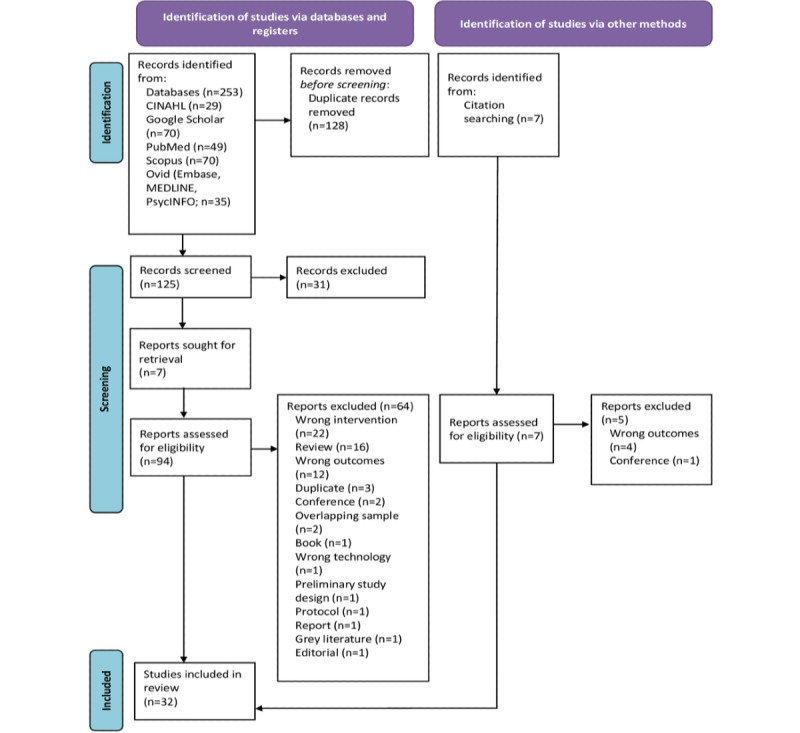
A systematic search of the CINAHL, Embase, Google Scholar, MEDLINE, PsycINFO, PubMed, and Scopus bibliographic databases was conducted in February 2021. In total, 2 team members (EB and SH) independently screened studies for inclusion, extracted data, and assessed the risk of bias. The methodological quality of each study was appraised using the Mixed Methods Appraisal Tool. The primary outcome was transdermal alcohol sensor accuracy. The data were presented as a narrative synthesis.
We identified and analyzed 32 studies. Study designs included laboratory, ambulatory, and mixed designs, as well as randomized controlled trials; the length of time for which the device was worn ranged from days to weeks; and the analyzed sample sizes ranged from 1 to 250. The results for transdermal alcohol concentration data from various transdermal alcohol sensors were generally found to positively correlate with breath alcohol concentration, blood alcohol concentration, and self-report (moderate to large correlations). However, there were some discrepancies between study reports; for example, WrisTAS sensitivity ranged from 24% to 85.6%, and specificity ranged from 67.5% to 92.94%. Higher malfunctions were reported with the BACtrack prototype (16%-38%) and WrisTAS (8%) than with SCRAM (2%); however, the former devices also reported a reduced time lag for peak transdermal alcohol concentration values when compared with SCRAM. It was also found that many companies were developing new models of wearable transdermal alcohol sensors.
As shown, there is a lack of consistency in the studies on wearable transdermal alcohol sensor accuracy regarding study procedures and analyses of findings, thus making it difficult to draw direct comparisons between them. This needs to be considered in future research, and there needs to be an increase in studies directly comparing different transdermal alcohol sensors. There is also a lack of research investigating the accuracy of transdermal alcohol sensors as a tool for monitoring alcohol consumption in clinical populations and use over extended periods. Although there is some preliminary evidence suggesting the accuracy of these devices, this needs to be further investigated in clinical populations.
PROSPERO CRD42021231027; https://www.crd.york.ac.uk/prospero/display_record.php?RecordID=231027.
有一系列可穿戴式透皮酒精传感器可供使用和开发。这些设备有可能以客观的方式连续监测酒精的摄入情况,从而克服了其他酒精测量方法(血液、呼吸和尿液)的一些局限性。
我们的系统评价旨在评估可穿戴式透皮酒精传感器的准确性。
2021 年 2 月,我们对 CINAHL、Embase、Google Scholar、MEDLINE、PsycINFO、PubMed 和 Scopus 文献数据库进行了系统搜索。共有 2 名团队成员(EB 和 SH)独立筛选纳入研究、提取数据并评估偏倚风险。使用混合方法评估工具评估了每项研究的方法学质量。主要结局为透皮酒精传感器的准确性。数据以叙述性综合呈现。
我们确定并分析了 32 项研究。研究设计包括实验室、动态和混合设计以及随机对照试验;设备佩戴时间从几天到几周不等;分析的样本量从 1 到 250 不等。各种透皮酒精传感器的透皮酒精浓度数据的结果通常与呼吸酒精浓度、血液酒精浓度和自我报告呈正相关(中度至高度相关)。然而,研究报告之间存在一些差异;例如,WrisTAS 的灵敏度范围为 24%至 85.6%,特异性范围为 67.5%至 92.94%。与 SCRAM 相比,BACtrack 原型(16%-38%)和 WrisTAS(8%)报告的故障更高;然而,前两种设备报告的透皮酒精浓度峰值的时间滞后也较短。还发现许多公司正在开发新的可穿戴式透皮酒精传感器模型。
研究结果表明,在可穿戴式透皮酒精传感器准确性方面,研究程序和研究结果分析缺乏一致性,因此很难对它们进行直接比较。这需要在未来的研究中加以考虑,并且需要增加对不同透皮酒精传感器进行直接比较的研究。也缺乏研究调查透皮酒精传感器作为监测临床人群和长期使用的酒精摄入量的工具的准确性。尽管有一些初步证据表明这些设备的准确性,但仍需要在临床人群中进一步研究。
PROSPERO CRD42021231027;https://www.crd.york.ac.uk/prospero/display_record.php?RecordID=231027。
