Department of Biochemical Engineering and Biotechnology, Indian Institute of Technology, New Delhi 110016, India.
Department of Pathology, All India Institute of Medical Sciences, New Delhi 110029, India.
Dis Model Mech. 2022 May 1;15(5). doi: 10.1242/dmm.049572. Epub 2022 Jun 6.
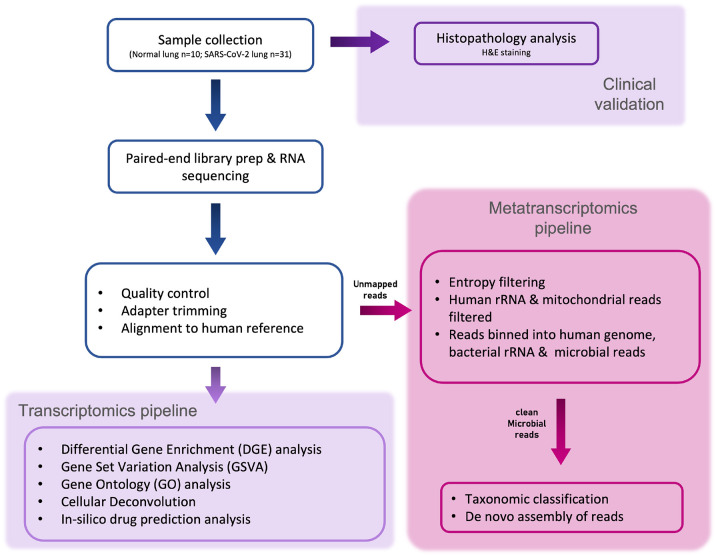
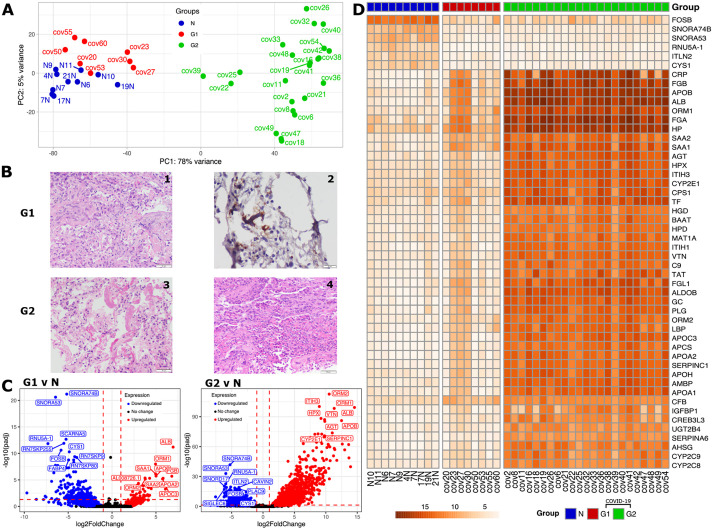
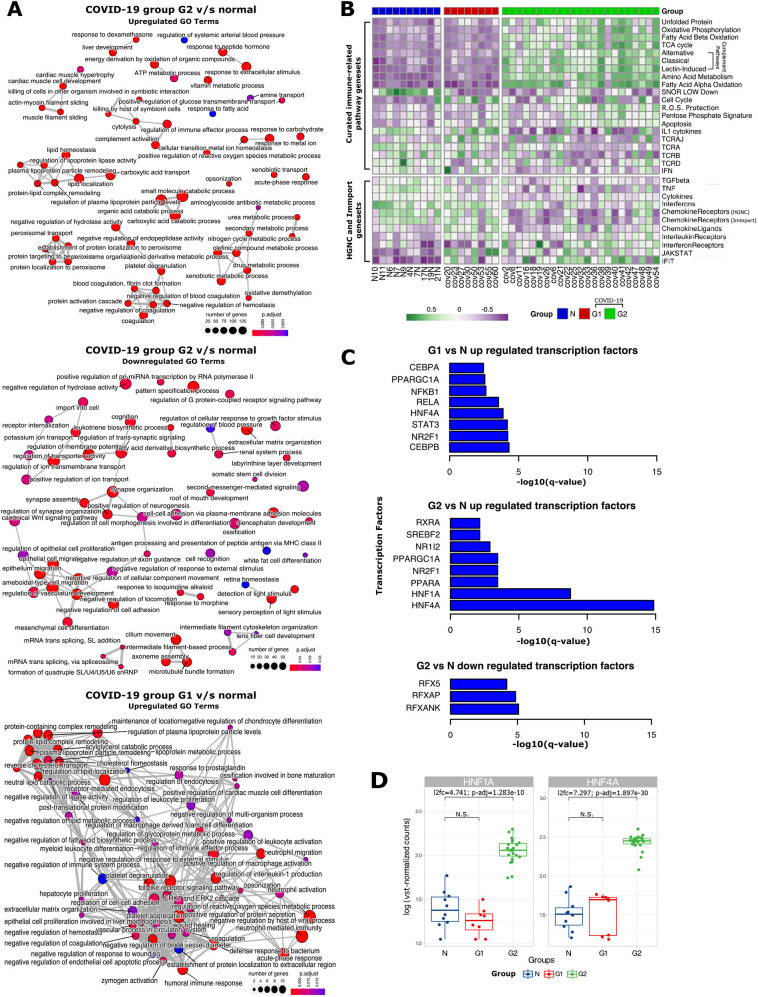
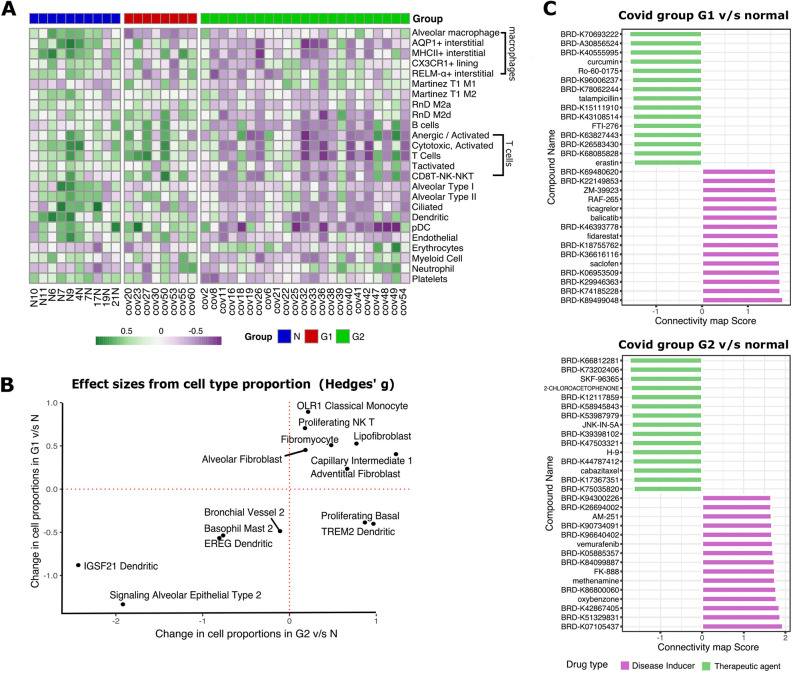
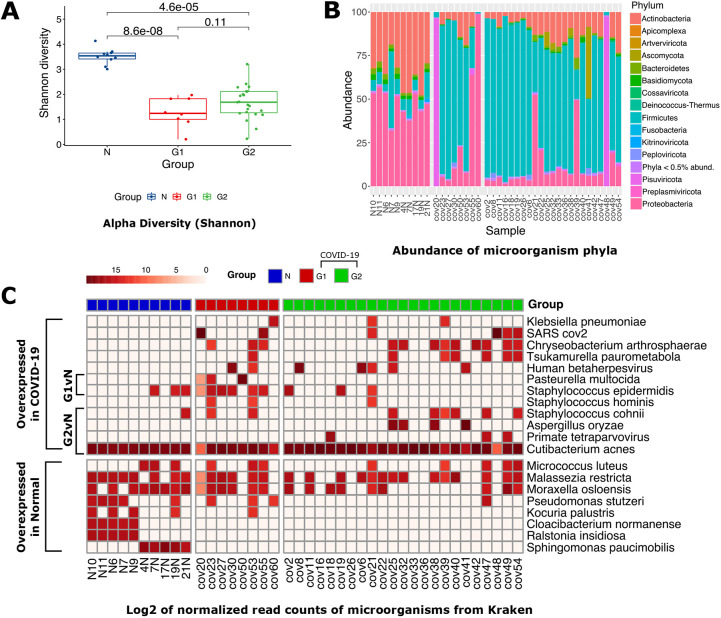
To elucidate the molecular mechanisms that manifest lung abnormalities during severe acute respiratory syndrome coronavirus 2 (SARS-CoV-2) infections, we performed whole-transcriptome sequencing of lung autopsies from 31 patients with severe COVID-19 and ten uninfected controls. Using metatranscriptomics, we identified the existence of two distinct molecular signatures of lethal COVID-19. The dominant 'classical' signature (n=23) showed upregulation of the unfolded protein response, steroid biosynthesis and complement activation, supported by massive metabolic reprogramming leading to characteristic lung damage. The rarer signature (n=8) that potentially represents 'cytokine release syndrome' (CRS) showed upregulation of cytokines such as IL1 and CCL19, but absence of complement activation. We found that a majority of patients cleared SARS-CoV-2 infection, but they suffered from acute dysbiosis with characteristic enrichment of opportunistic pathogens such as Staphylococcus cohnii in 'classical' patients and Pasteurella multocida in CRS patients. Our results suggest two distinct models of lung pathology in severe COVID-19 patients, which can be identified through complement activation, presence of specific cytokines and characteristic microbiome. These findings can be used to design personalized therapy using in silico identified drug molecules or in mitigating specific secondary infections.
为了阐明严重急性呼吸综合征冠状病毒 2(SARS-CoV-2)感染期间肺部异常的分子机制,我们对 31 名重症 COVID-19 患者和 10 名未感染对照者的肺尸检进行了全转录组测序。通过宏转录组学,我们发现了两种截然不同的致命 COVID-19 分子特征。占主导地位的“经典”特征(n=23)表现为未折叠蛋白反应、类固醇生物合成和补体激活的上调,这得到了大规模代谢重编程的支持,导致了特征性的肺部损伤。较少见的特征(n=8)可能代表“细胞因子释放综合征”(CRS),表现为细胞因子如 IL1 和 CCL19 的上调,但缺乏补体激活。我们发现大多数患者清除了 SARS-CoV-2 感染,但他们遭受了急性生态失调,特征性地富集了机会性病原体,如“经典”患者中的凝固酶阴性葡萄球菌和 CRS 患者中的多杀巴斯德菌。我们的研究结果表明,严重 COVID-19 患者的肺部病理学有两种不同的模式,可以通过补体激活、特定细胞因子的存在和特征性微生物组来识别。这些发现可用于设计使用计算机识别的药物分子的个性化治疗或减轻特定的继发性感染。