Department of Public Health Sciences, Henry Ford Hospital, Detroit, MI, USA.
Center for Urban Responses to Environmental Stressors, Wayne State University, Detroit, MI, USA.
Pediatr Res. 2023 Jun;93(7):2051-2060. doi: 10.1038/s41390-022-02051-6. Epub 2022 Apr 20.
Gut microbiota maturation coincides with nervous system development. Cross-sectional data suggest gut microbiota of individuals with and without attention deficit hyperactivity disorder (ADHD) differs. We hypothesized that infant gut microbiota composition is associated with later ADHD development in our on-going birth cohort study, WHEALS.
Gut microbiota was profiled using 16S ribosomal RNA and the internal transcribed spacer region 2 (ITS2) sequencing in stool samples from 1 month and 6 months of age. ADHD was defined by parent-reported or medical record doctor diagnosis at age 10.
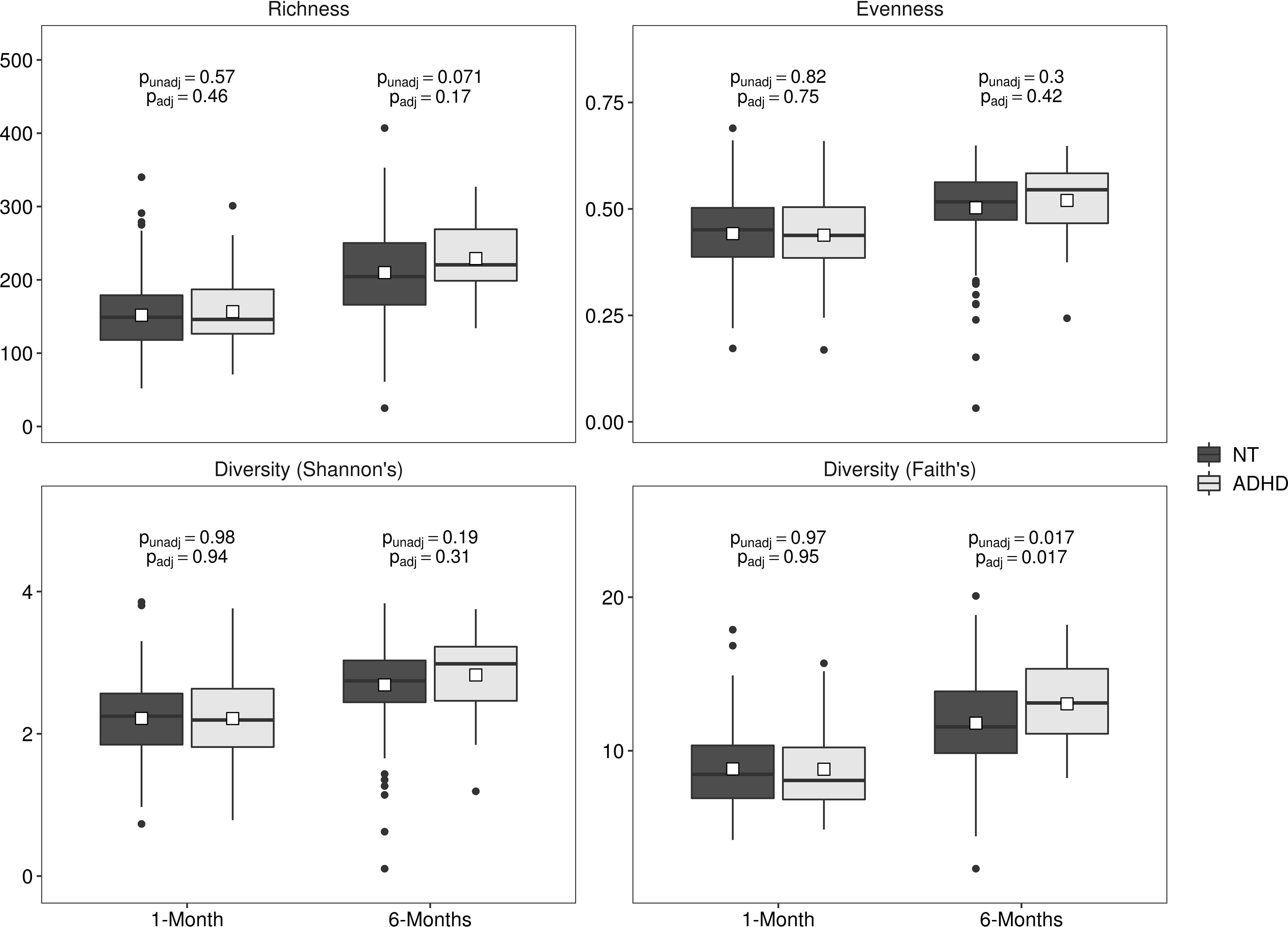
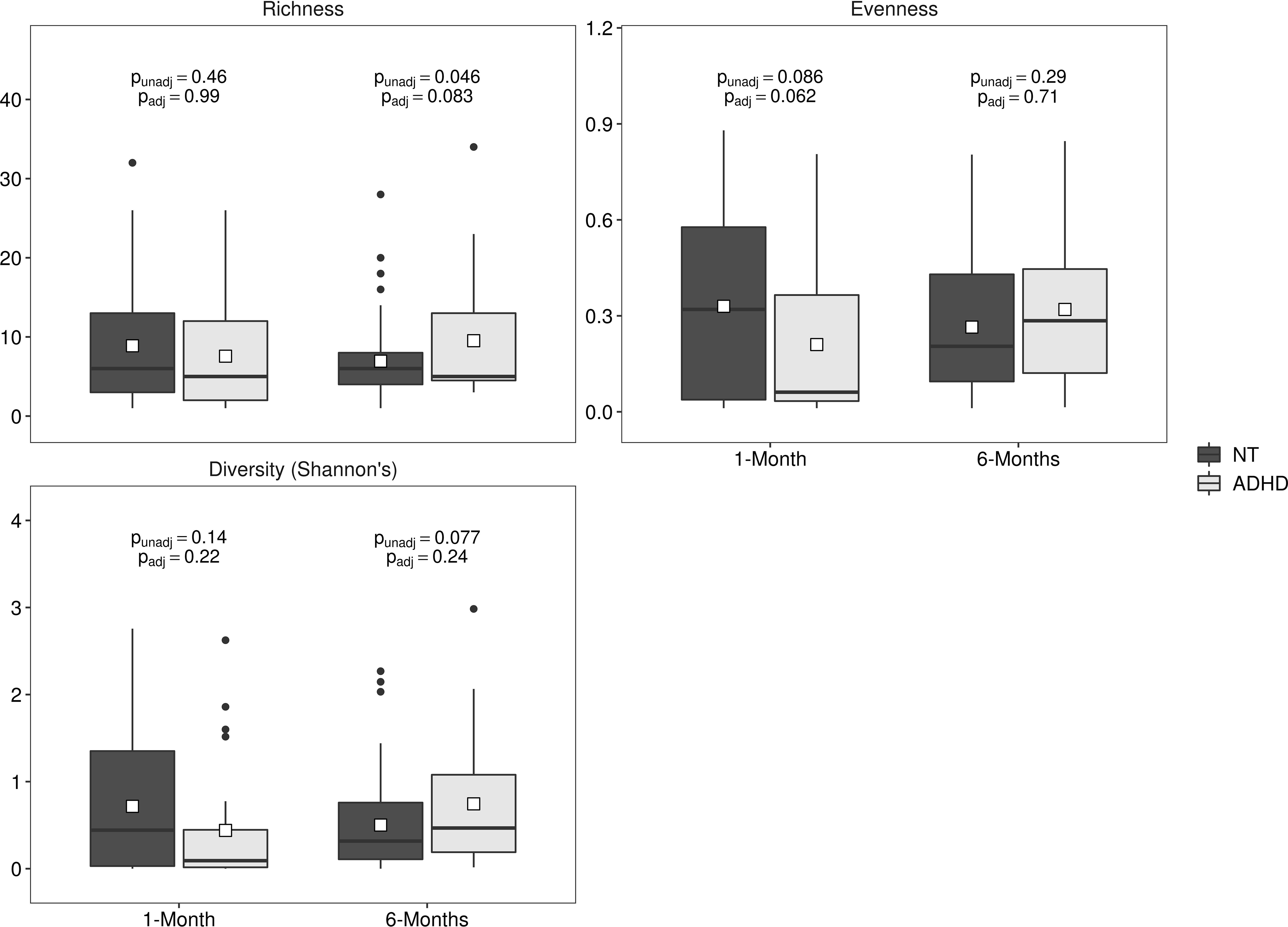
A total of 314 children had gut microbiota and ADHD data; 59 (18.8%) had ADHD. After covariate adjustment, bacterial phylogenetic diversity (p = 0.017) and bacterial composition (unweighted UniFrac p = 0.006, R = 0.9%) at age 6 months were associated with development of ADHD. At 1 month of age, 18 bacterial and 3 fungal OTUs were associated with ADHD development. At 6 months of age, 51 bacterial OTUs were associated with ADHD; 14 of the order Lactobacillales. Three fungal OTUs at 6 months of age were associated with ADHD development.
Infant gut microbiota is associated with ADHD development in pre-adolescents. Further studies replicating these findings and evaluating potential mechanisms of the association are needed.
Cross-sectional studies suggest that the gut microbiota of individuals with and without ADHD differs. We found evidence that the bacterial gut microbiota of infants at 1 month and 6 months of age is associated with ADHD at age 10 years. We also found novel evidence that the fungal gut microbiota in infancy (ages 1 month and 6 months) is associated with ADHD at age 10 years. This study addresses a gap in the literature in providing longitudinal evidence for an association of the infant gut microbiota with later ADHD development.
肠道微生物群的成熟与神经系统的发育相吻合。横断面数据表明,患有和不患有注意缺陷多动障碍(ADHD)的个体的肠道微生物群不同。我们假设,在我们正在进行的出生队列研究 WHEALS 中,婴儿肠道微生物群的组成与之后 ADHD 的发展有关。
使用 16S 核糖体 RNA 和内部转录间隔区 2(ITS2)测序在 1 个月和 6 个月龄的粪便样本中分析肠道微生物群。ADHD 通过父母报告或 10 岁时的医疗记录医生诊断定义。
共有 314 名儿童有肠道微生物群和 ADHD 数据;59 名(18.8%)患有 ADHD。经过协变量调整后,6 个月时细菌系统发育多样性(p=0.017)和细菌组成(非加权 UniFrac p=0.006,R=0.9%)与 ADHD 的发展有关。在 1 个月时,18 个细菌和 3 个真菌 OTU 与 ADHD 发展有关。在 6 个月时,51 个细菌 OTU 与 ADHD 有关;其中 14 个为乳杆菌目。6 个月时的 3 个真菌 OTU 与 ADHD 发展有关。
婴儿肠道微生物群与青少年前 ADHD 的发展有关。需要进一步的研究来复制这些发现并评估关联的潜在机制。
横断面研究表明,患有和不患有 ADHD 的个体的肠道微生物群不同。我们发现证据表明,1 个月和 6 个月龄婴儿的肠道细菌微生物群与 10 岁时的 ADHD 有关。我们还发现了新的证据,即婴儿期(1 个月和 6 个月龄)的肠道真菌微生物群与 10 岁时的 ADHD 有关。这项研究提供了关于婴儿肠道微生物群与以后 ADHD 发展之间关联的纵向证据,填补了文献中的空白。