G. Oppenheimer Center for Neurobiology of Stress and Resilience, Vatche and Tamar Manoukian Division of Digestive Diseases, David Geffen School of Medicine at UCLA, Los Angeles, CA, USA.
MayerInterconnected, LLC, Los Angeles, CA, USA.
Transl Psychiatry. 2022 Apr 20;12(1):164. doi: 10.1038/s41398-022-01922-0.
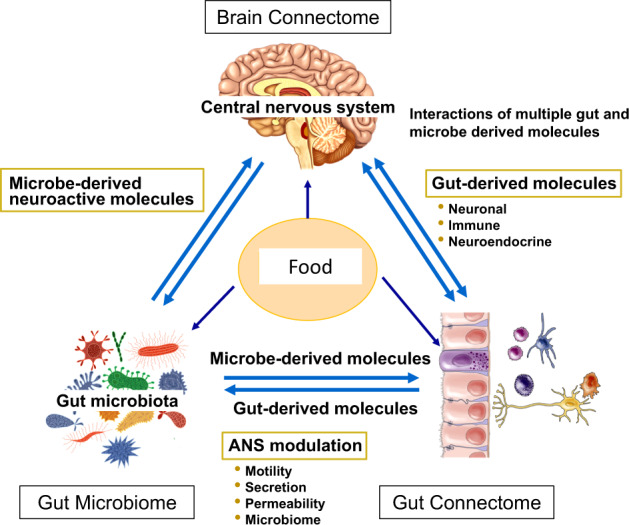
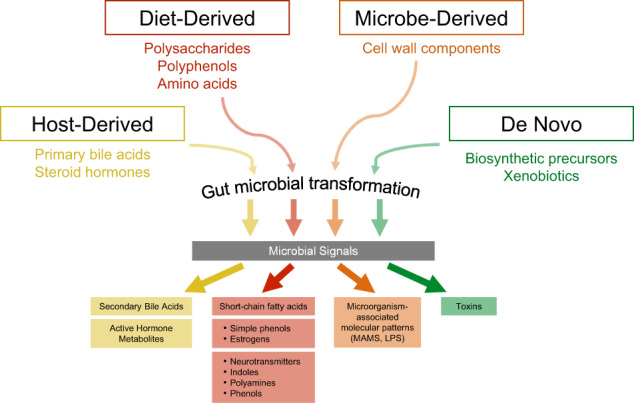
There is emerging evidence that diet has a major modulatory influence on brain-gut-microbiome (BGM) interactions with important implications for brain health, and for several brain disorders. The BGM system is made up of neuroendocrine, neural, and immune communication channels which establish a network of bidirectional interactions between the brain, the gut and its microbiome. Diet not only plays a crucial role in shaping the gut microbiome, but it can modulate structure and function of the brain through these communication channels. In this review, we summarize the evidence available from preclinical and clinical studies on the influence of dietary habits and interventions on a selected group of psychiatric and neurologic disorders including depression, cognitive decline, Parkinson's disease, autism spectrum disorder and epilepsy. We will particularly address the role of diet-induced microbiome changes which have been implicated in these effects, and some of which are shared between different brain disorders. While the majority of these findings have been demonstrated in preclinical and in cross-sectional, epidemiological studies, to date there is insufficient evidence from mechanistic human studies to make conclusions about causality between a specific diet and microbially mediated brain function. Many of the dietary benefits on microbiome and brain health have been attributed to anti-inflammatory effects mediated by the microbial metabolites of dietary fiber and polyphenols. The new attention given to dietary factors in brain disorders has the potential to improve treatment outcomes with currently available pharmacological and non-pharmacological therapies.
越来越多的证据表明,饮食对脑-肠-微生物组(BGM)的相互作用具有重要的调节作用,这对大脑健康和几种脑部疾病都有重要影响。BGM 系统由神经内分泌、神经和免疫通讯通道组成,这些通道在大脑、肠道及其微生物组之间建立了一个双向相互作用的网络。饮食不仅在塑造肠道微生物组方面起着至关重要的作用,而且可以通过这些通讯通道调节大脑的结构和功能。在这篇综述中,我们总结了来自临床前和临床研究的证据,这些研究探讨了饮食习惯和干预措施对一组特定的精神和神经疾病的影响,包括抑郁症、认知能力下降、帕金森病、自闭症谱系障碍和癫痫。我们将特别关注饮食引起的微生物组变化在这些影响中的作用,其中一些变化在不同的脑部疾病中是共有的。虽然这些发现中的大多数已经在临床前和横断面、流行病学研究中得到证实,但迄今为止,没有足够的来自人类机制研究的证据来得出关于特定饮食与微生物介导的大脑功能之间因果关系的结论。许多饮食对微生物组和大脑健康的益处归因于膳食纤维和多酚的微生物代谢产物介导的抗炎作用。在脑部疾病中对饮食因素的新关注有可能改善目前可用的药物和非药物治疗的治疗效果。