Lopopolo Graziella, Salsi Benedetta, Banfi Alessandra, Isaza Pablo González, Fusco Irene
Division of Gynecology, Poliambulatorio San Michele, 42121 Reggio Emilia, Italy.
Division of Dermatology, Poliambulatorio San Michele, 42121 Reggio Emilia, Italy.
Bioengineering (Basel). 2022 Mar 25;9(4):140. doi: 10.3390/bioengineering9040140.
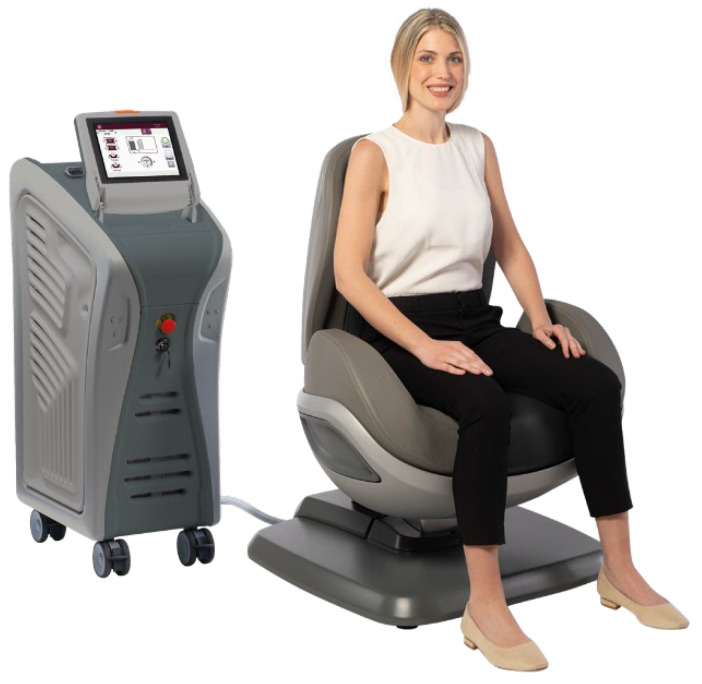
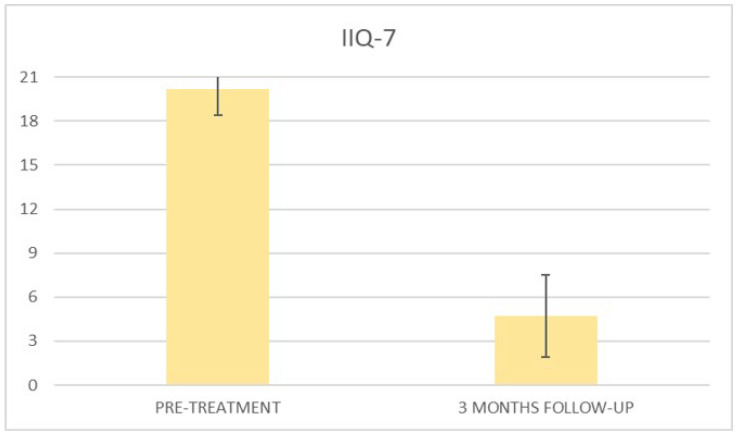
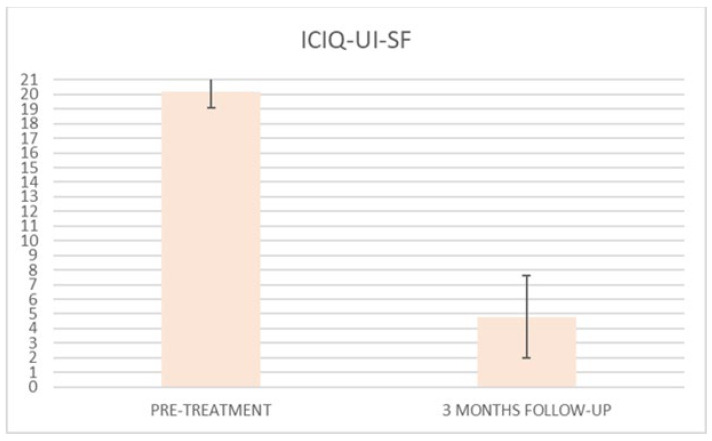
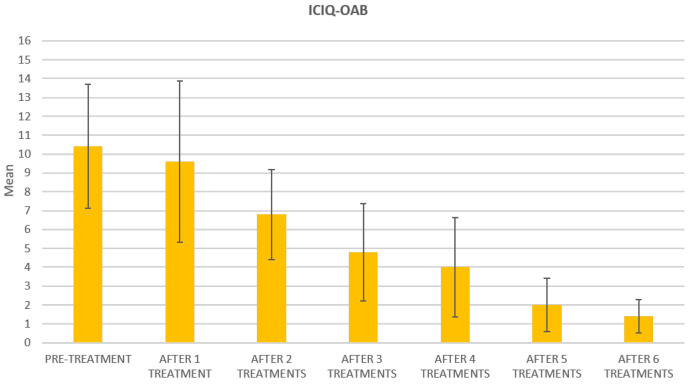
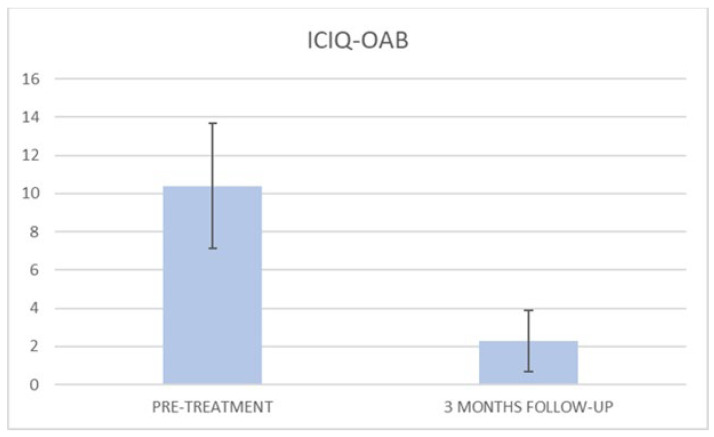
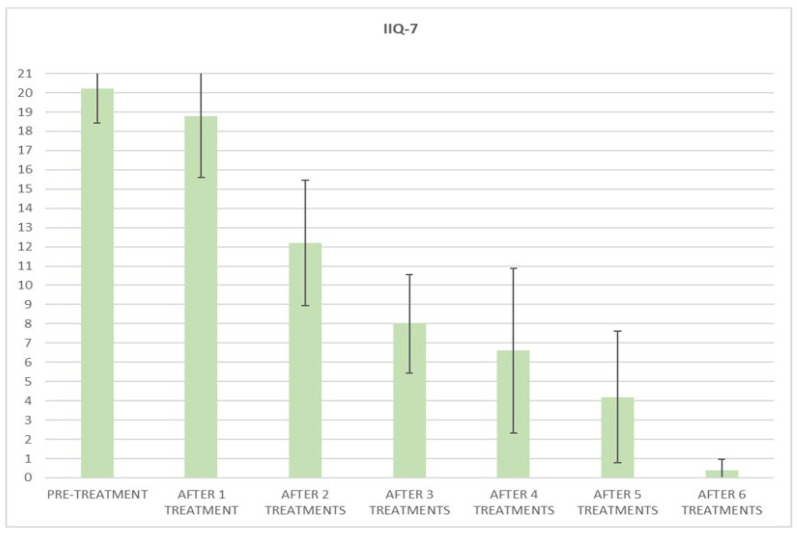
Background and Objectives: Urinary incontinence is the accidental loss of urine that can occur at any age, especially among women over 50; however, its prevalence is increasing. This study aimed to assess the efficacy and safety of a device that uses Top Flat Magnetic Stimulation for the management of women with mixed urinary incontinence. Materials and Methods: A total of 50 female patients underwent a total of six treatment sessions performed twice a week for three consecutive weeks, for 28 min. Three questionnaires were used for the evaluation of the urinary improvements: Urinary Incontinence Short Form (ICIQ-UI-SF), Incontinence Questionnaire Overactive Bladder Module (ICIQ-OAB), and Incontinence Impact Questionnaire-Short Form (IIQ-7). The questionnaires were compiled immediately before each treatment, within the treatment period (until the sixth treatment session), and up to 3 months of follow-up. Results: Improvement in quality of life is observed according to the results of the questionnaire, already after six sessions and at three months follow-up. ICIQ-UI-SF’s average score at baseline was 20.2 (±1.1), and it significantly declined (p < 0.01) to 1.8 (±2.4) after six sessions and to 4.8 (±2.8) at 3 months follow-up; ICIQ-OAB’s average score significantly decreased (p < 0.01) from 10.4 (±3.2) at baseline to 1.4 (±0.8) after six sessions and 2.3 (±1.6) at 3 months follow-up. IIQ-7’s average score significantly decreased (p < 0.01) from 20.2 (±1.7) at baseline to 0.4 (±0.5) after six sessions and to 4.7 (±2.8) at 3 months follow-up. Conclusions: Our results suggest that Top Flat Magnetic Stimulation technology can reduce mixed urinary incontinence symptoms for all women examined, leading to an improvement in the patient quality of life and patient awareness of their pelvic floor area with good results.
尿失禁是指尿液意外泄漏,可发生于任何年龄,尤其是50岁以上的女性;然而,其患病率正在上升。本研究旨在评估一种采用顶部平面磁刺激的设备对混合性尿失禁女性进行治疗的有效性和安全性。材料与方法:共有50名女性患者接受了总共6次治疗,每周进行2次,连续3周,每次28分钟。使用了三份问卷来评估尿液改善情况:尿失禁简表(ICIQ-UI-SF)、膀胱过度活动症尿失禁问卷模块(ICIQ-OAB)和尿失禁影响问卷简表(IIQ-7)。问卷在每次治疗前、治疗期间(直至第六次治疗)以及长达3个月的随访期内进行填写。结果:根据问卷结果,在六次治疗后及三个月随访时观察到生活质量有所改善。ICIQ-UI-SF在基线时的平均得分为20.2(±1.1),六次治疗后显著下降(p < 0.01)至1.8(±2.4),三个月随访时降至4.8(±2.8);ICIQ-OAB的平均得分从基线时的10.4(±3.2)显著下降(p < 0.01)至六次治疗后的1.4(±0.8)以及三个月随访时的2.3(±1.6)。IIQ-7的平均得分从基线时的20.2(±1.7)显著下降(p < 0.01)至六次治疗后的0.4(±0.5)以及三个月随访时的4.7(±2.8)。结论:我们的结果表明,顶部平面磁刺激技术可减轻所有受试女性的混合性尿失禁症状,改善患者生活质量,并提高患者对盆底区域的认知,效果良好。