Delannoy Elise, Tellier Géraldine, Cholet Juliette, Leroy Alice M, Treizebré Anthony, Soncin Fabrice
CNRS/IIS/Centre Oscar Lambret/Lille University SMMiL-E Project, CNRS Délégation Hauts-de-France, 43 Avenue le Corbusier, 59800 Lille, France.
Univ. Lille, CNRS, Centrale Lille, Univ. Polytechnique Hauts-de-France, UMR 8520-IEMN-Institut d'Electronique de Microélectronique et de Nanotechnologie, 59000 Lille, France.
Biomedicines. 2022 Mar 29;10(4):797. doi: 10.3390/biomedicines10040797.
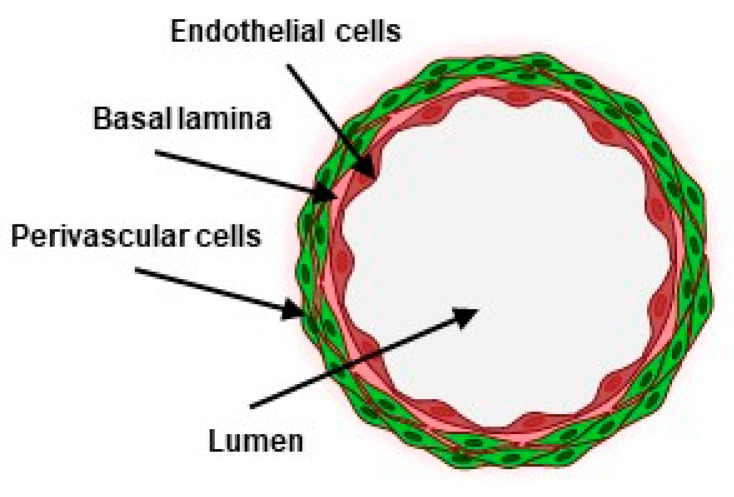
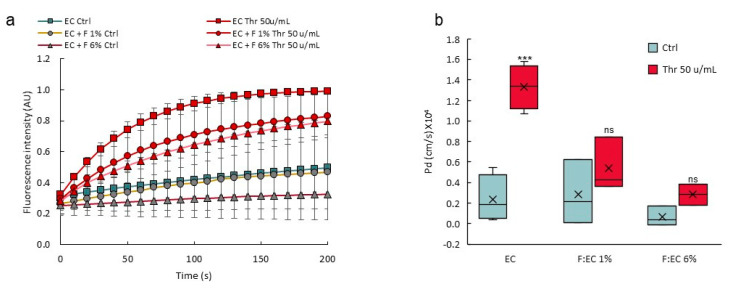
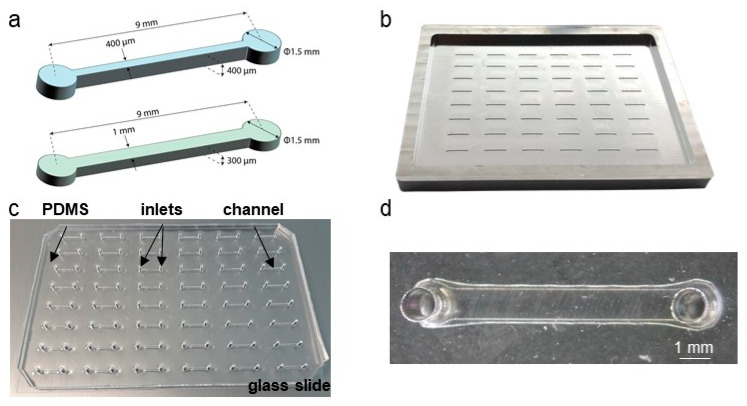
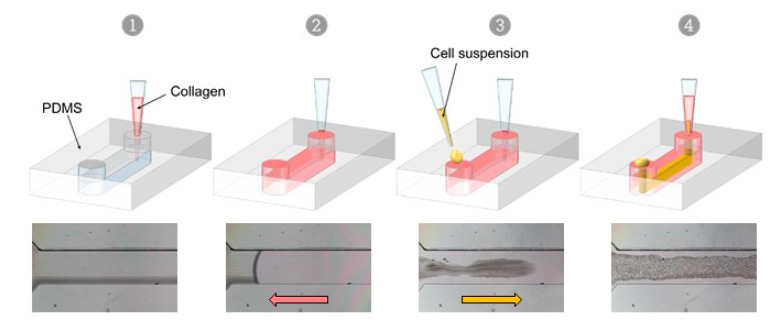
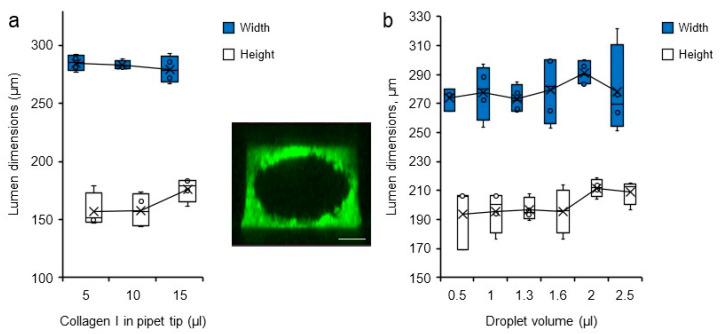
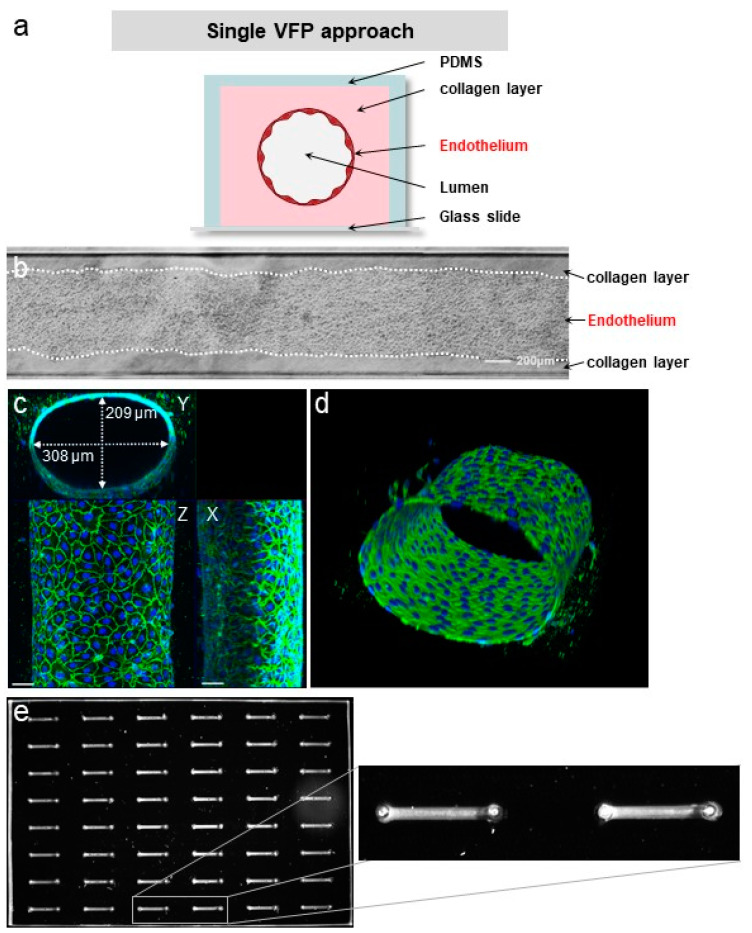
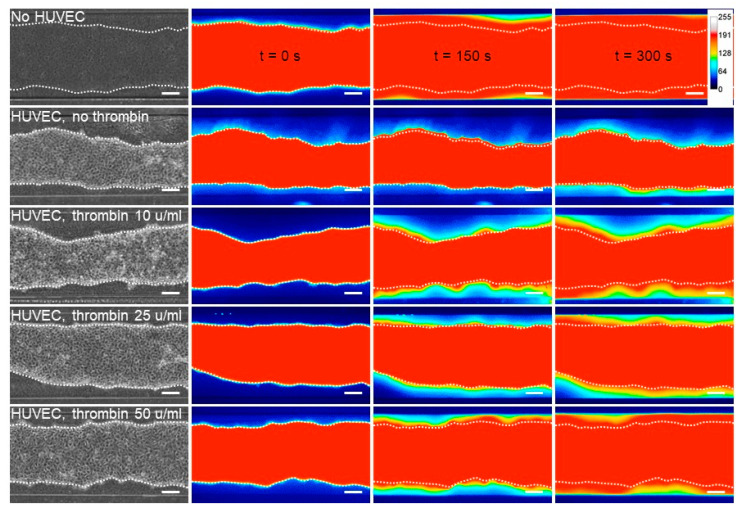
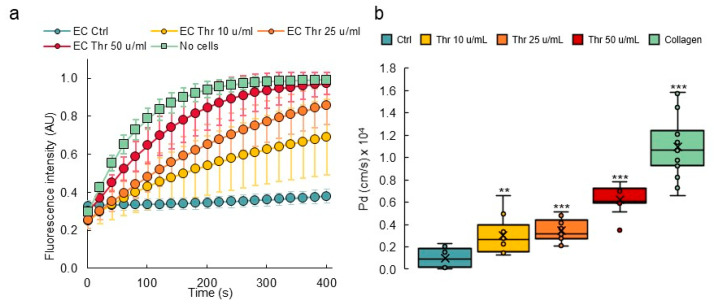
Blood vessel-on-a-chip models aim at reproducing vascular functions. However, very few efficient methods have been designed to address the need for biological replicates in medium- to high-throughput screenings. Here, vessels-on-chip were designed in polydimethylsiloxane-glass chips using the viscous finger patterning technique which was adapted to create channels with various internal diameters inside a collagen solution and to simultaneously seed cells. This method was refined to create blood vessels composed of two concentric, distinct, and closely appositioned layers of human endothelial and perivascular cells arranged around a hollow lumen. These approaches allowed the formation of structurally correct blood vessels-on-chips which were constituted of either only endothelial cells or of both cell types in order to distinguish the vascular barrier reactivity to drugs in the presence or not of perivascular cells. The established vessels showed a tight vascular barrier, as assessed by immunostaining of the adherens junctions, and were reactive to the natural vasopermeant thrombin and to inflammatory cytokines. The presence of perivascular cells markedly increased the tightness of the vascular barrier and lowered its response to thrombin. The design allowed us to simultaneously challenge in real-time several tens of 3D-reconstituted, multicellular blood vessels in a standard multiwell plate format suitable for high-throughput drug screening.
芯片上血管模型旨在重现血管功能。然而,针对中高通量筛选中生物复制品的需求,设计出的有效方法非常少。在此,利用粘性指状图案化技术在聚二甲基硅氧烷 - 玻璃芯片中设计芯片上血管,该技术经过改进,可在胶原蛋白溶液中创建具有不同内径的通道并同时接种细胞。此方法经过优化,可创建由围绕中空管腔排列的两层同心、不同且紧密相邻的人内皮细胞和血管周细胞组成的血管。这些方法能够形成结构正确的芯片上血管,其由仅内皮细胞或两种细胞类型组成,以便区分在有或没有血管周细胞存在的情况下血管屏障对药物的反应性。通过粘附连接的免疫染色评估,所构建的血管显示出紧密的血管屏障,并且对天然血管通透剂凝血酶和炎性细胞因子有反应。血管周细胞的存在显著增加了血管屏障的紧密性,并降低了其对凝血酶的反应。该设计使我们能够在适用于高通量药物筛选的标准多孔板形式中同时实时挑战数十个三维重建的多细胞血管。