Jacobs Blake, Sheikh Ghias, Youness Houssein A, Keddissi Jean I, Abdo Tony
Section of Pulmonary, Critical Care and Sleep Medicine, The University of Oklahoma Health Sciences Center and The Oklahoma City VA Health Care System, Oklahoma City, OK 73104, USA.
Diagnostics (Basel). 2022 Apr 18;12(4):1016. doi: 10.3390/diagnostics12041016.
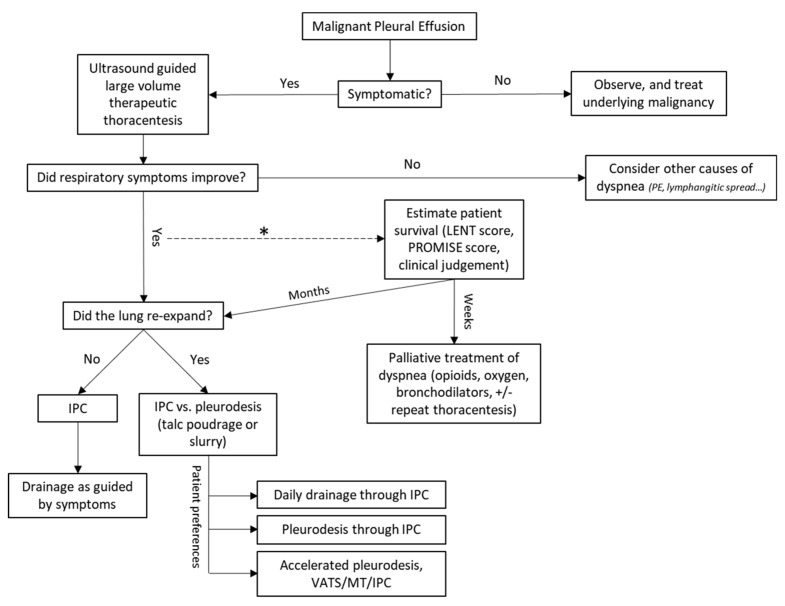
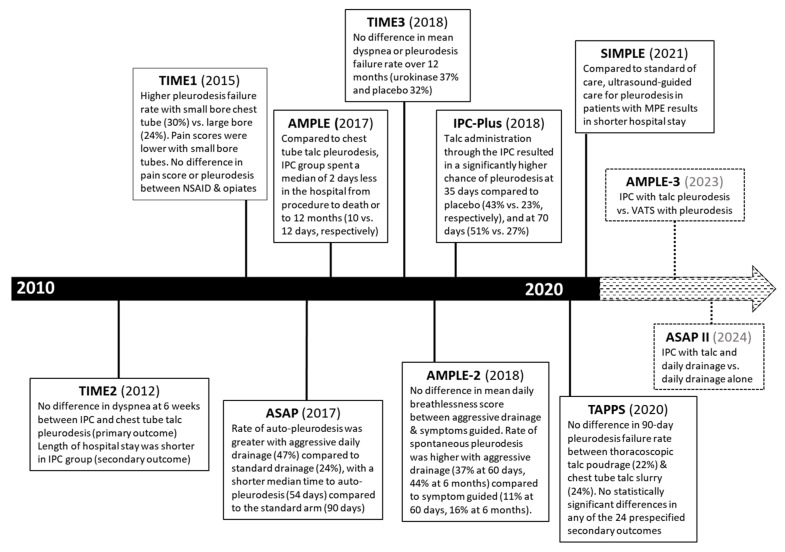
Malignant pleural effusion (MPE) is a common complication of thoracic and extrathoracic malignancies and is associated with high mortality. Treatment is mainly palliative, with symptomatic management achieved via effusion drainage and pleurodesis. Pleurodesis may be hastened by administering a sclerosing agent through a thoracostomy tube, thoracoscopy, or an indwelling pleural catheter (IPC). Over the last decade, several randomized controlled studies shaped the current management of MPE in favor of an outpatient-based approach with a notable increase in IPC usage. Patient preferences remain essential in choosing optimal therapy, especially when the lung is expandable. In this article, we reviewed the last 10 to 15 years of MPE literature with a particular focus on the diagnosis and evolving management.
恶性胸腔积液(MPE)是胸内和胸外恶性肿瘤的常见并发症,且与高死亡率相关。治疗主要是姑息性的,通过胸腔积液引流和胸膜固定术进行症状管理。可通过经胸造瘘管、胸腔镜或留置胸膜导管(IPC)给予硬化剂来加速胸膜固定术。在过去十年中,多项随机对照研究形成了目前对MPE的管理模式,倾向于采用基于门诊的方法,IPC的使用显著增加。在选择最佳治疗方案时,患者的偏好仍然至关重要,尤其是当肺可复张时。在本文中,我们回顾了过去10至15年关于MPE的文献,特别关注其诊断和不断发展的管理方法。