Department of Biology and Biotechnology "L. Spallanzani", University of Pavia, 27100 Pavia, Italy.
Int J Mol Sci. 2022 Apr 10;23(8):4183. doi: 10.3390/ijms23084183.
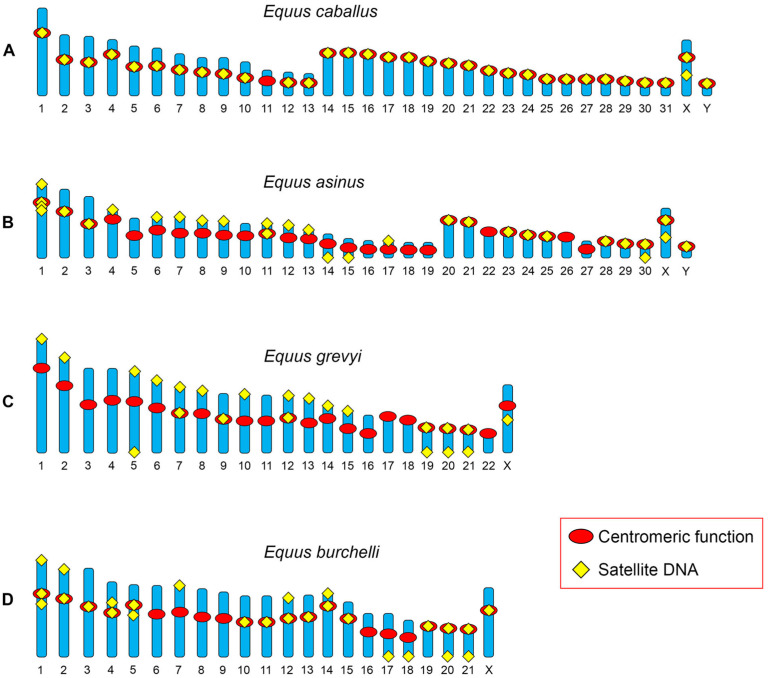
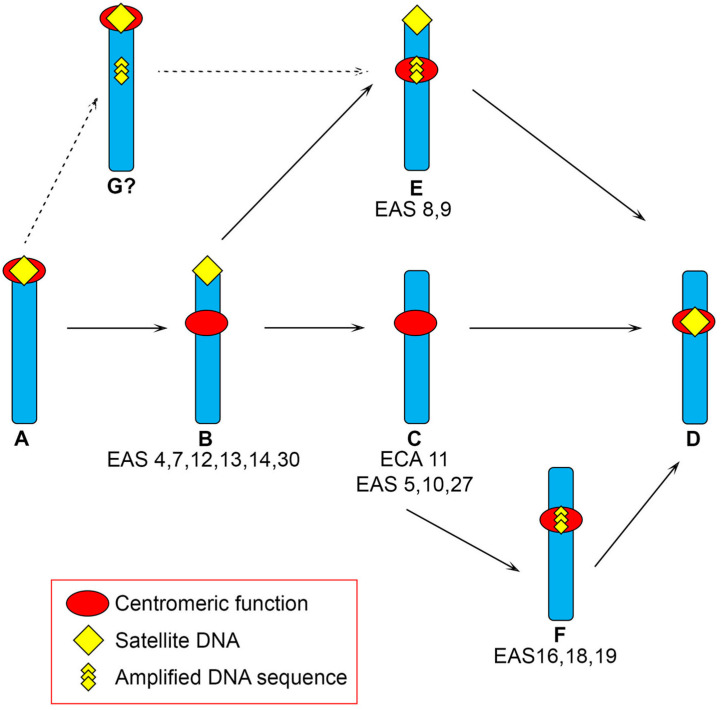
The centromere is the chromosomal locus essential for proper chromosome segregation. While the centromeric function is well conserved and epigenetically specified, centromeric DNA sequences are typically composed of satellite DNA and represent the most rapidly evolving sequences in eukaryotic genomes. The presence of satellite sequences at centromeres hampered the comprehensive molecular analysis of these enigmatic loci. The discovery of functional centromeres completely devoid of satellite repetitions and fixed in some animal and plant species represented a turning point in centromere biology, definitively proving the epigenetic nature of the centromere. The first satellite-free centromere, fixed in a vertebrate species, was discovered in the horse. Later, an extraordinary number of satellite-free neocentromeres had been discovered in other species of the genus Equus, which remains the only mammalian genus with numerous satellite-free centromeres described thus far. These neocentromeres arose recently during evolution and are caught in a stage of incomplete maturation. Their presence made the equids a unique model for investigating, at molecular level, the minimal requirements for centromere seeding and evolution. This model system provided new insights on how centromeres are established and transmitted to the progeny and on the role of satellite DNA in different aspects of centromere biology.
着丝粒是对正确染色体分离至关重要的染色体位置。虽然着丝粒的功能很好地保守并通过表观遗传指定,但着丝粒 DNA 序列通常由卫星 DNA 组成,代表真核基因组中进化最快的序列。卫星序列在着丝粒上的存在阻碍了对这些神秘基因座的全面分子分析。在一些动物和植物物种中发现完全没有卫星重复且固定的功能性着丝粒,这代表着着丝粒生物学的一个转折点,明确证明了着丝粒的表观遗传性质。第一个在脊椎动物物种中发现的无卫星着丝粒,是在马中发现的。后来,在马属的其他物种中发现了大量的无卫星新着丝粒,马属仍然是迄今为止描述的具有众多无卫星着丝粒的唯一哺乳动物属。这些新着丝粒是在进化过程中最近产生的,处于不完全成熟的阶段。它们的存在使马成为研究分子水平上着丝粒播种和进化的最小要求的独特模型。该模型系统提供了关于着丝粒如何建立并传递给后代的新见解,以及卫星 DNA 在着丝粒生物学不同方面的作用。