Department of Pharmacological and Pharmaceutical Sciences, University of Houston College of Pharmacy, Houston, TX, USA.
Nat Commun. 2022 Apr 22;13(1):2201. doi: 10.1038/s41467-022-29752-0.
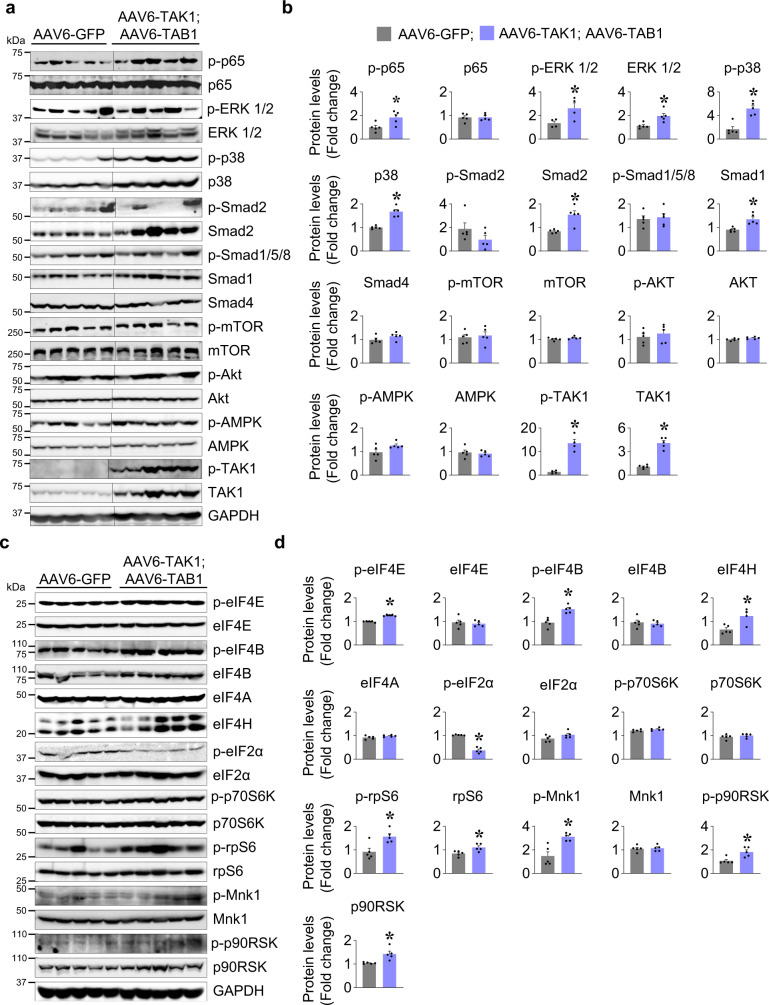
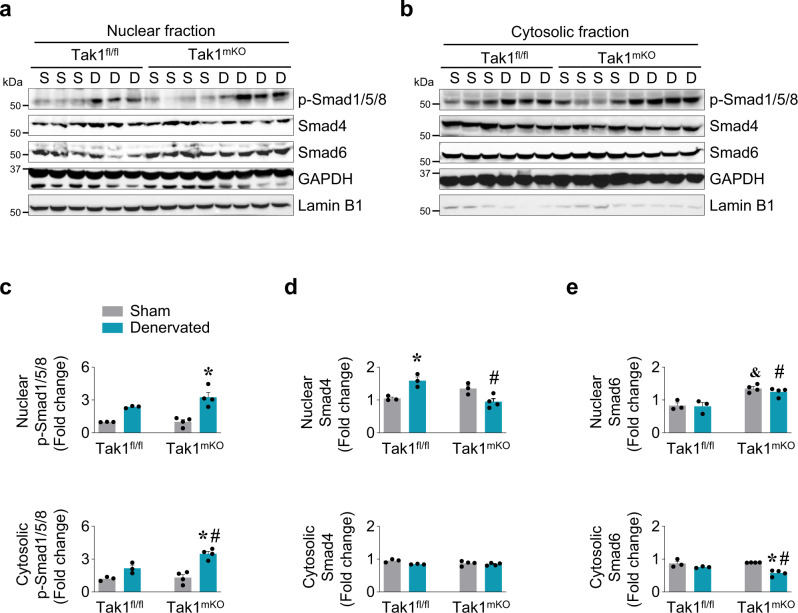
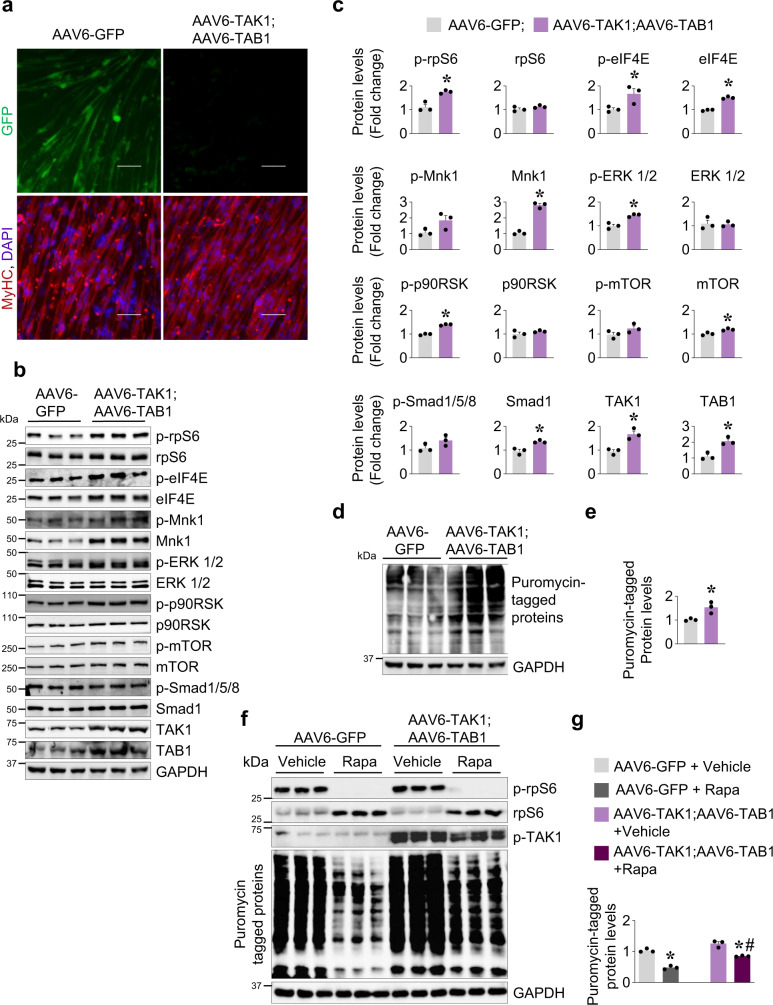
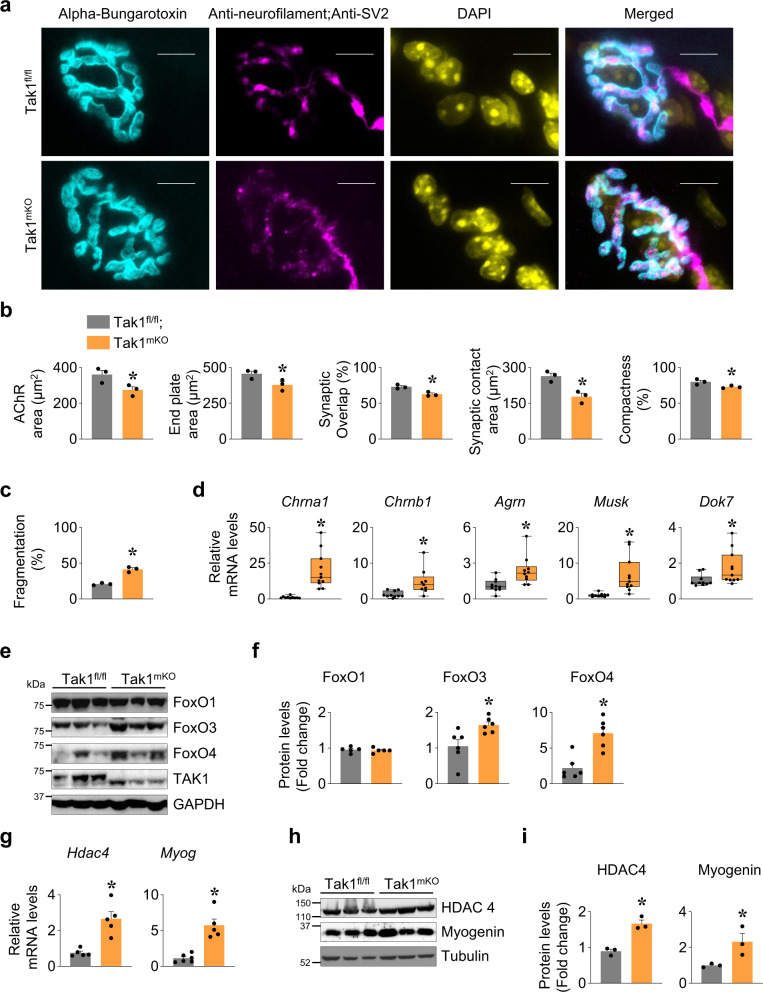
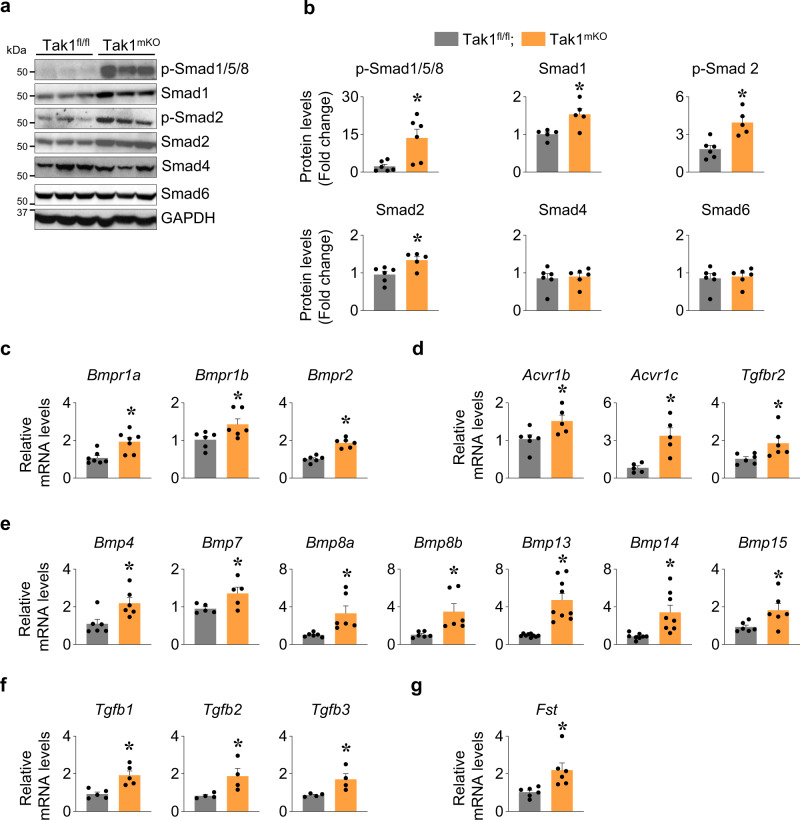
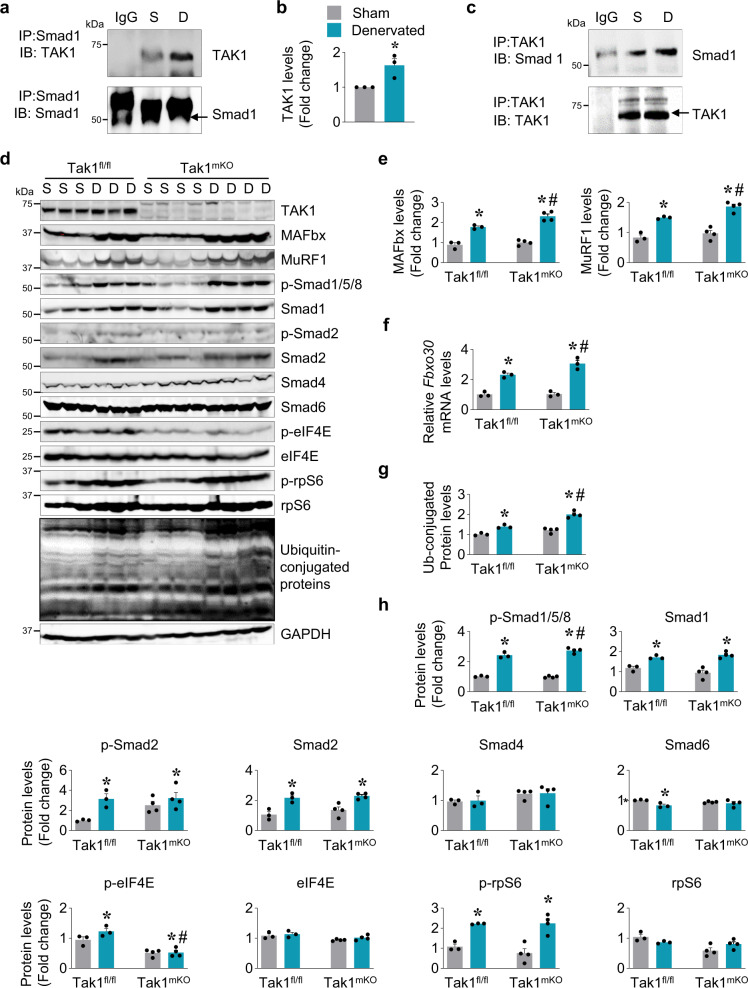
Skeletal muscle mass is regulated through coordinated activation of multiple signaling pathways. TAK1 signalosome has been found to be activated in various conditions of muscle atrophy and hypertrophy. However, the role and mechanisms by which TAK1 regulates skeletal muscle mass remain less understood. Here, we demonstrate that supraphysiological activation of TAK1 in skeletal muscle of adult mice stimulates translational machinery, protein synthesis, and myofiber growth. TAK1 causes phosphorylation of elongation initiation factor 4E (eIF4E) independent of mTOR. Inactivation of TAK1 disrupts neuromuscular junction morphology and causes deregulation of Smad signaling. Using genetic approaches, we demonstrate that TAK1 prevents excessive loss of muscle mass during denervation. TAK1 favors the nuclear translocation of Smad4 and cytoplasmic retention of Smad6. TAK1 is also required for the phosphorylation of eIF4E in denervated skeletal muscle. Collectively, our results demonstrate that TAK1 supports skeletal muscle growth and prevents neurogenic muscle atrophy in adult mice.
骨骼肌质量受多种信号通路的协调激活调控。TAK1 信号小体已在多种肌肉萎缩和肥大的情况下被发现被激活。然而,TAK1 调节骨骼肌质量的作用和机制仍知之甚少。在这里,我们证明了在成年小鼠的骨骼肌中超生理激活 TAK1 可刺激翻译机制、蛋白质合成和肌纤维生长。TAK1 导致延伸起始因子 4E(eIF4E)的磷酸化,而不依赖于 mTOR。TAK1 的失活破坏了神经肌肉接头的形态,并导致 Smad 信号的失调。通过遗传方法,我们证明了 TAK1 可防止去神经支配期间肌肉质量的过度丧失。TAK1 有利于 Smad4 的核易位和 Smad6 的细胞质保留。TAK1 还需要在去神经支配的骨骼肌中磷酸化 eIF4E。总之,我们的结果表明,TAK1 支持骨骼肌生长,并防止成年小鼠的神经源性肌肉萎缩。