Key Laboratory of Synthetic and Natural Functional Molecule of the Ministry of Education, College of Chemistry and Materials Science, Northwest University, Xi'an 710127, PR China.
Suzhou Genevide Biotechnology Co., Ltd, Suzhou 215123, PR China.
Bioorg Chem. 2022 Jul;124:105799. doi: 10.1016/j.bioorg.2022.105799. Epub 2022 Apr 18.
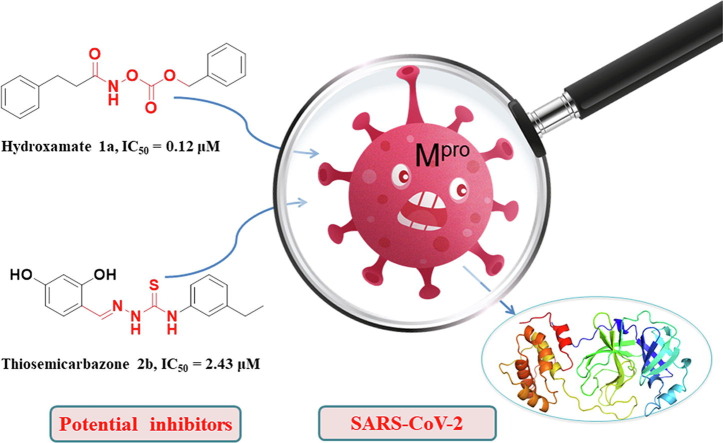
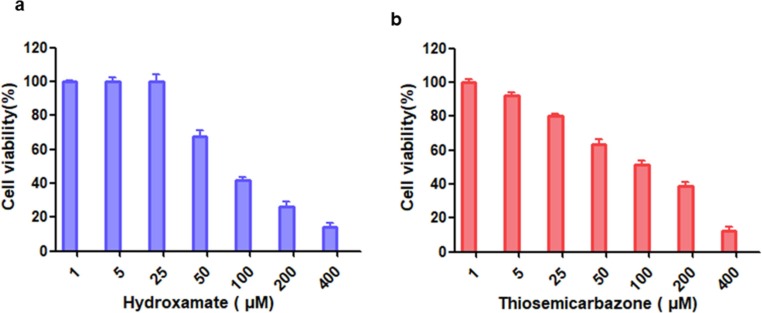
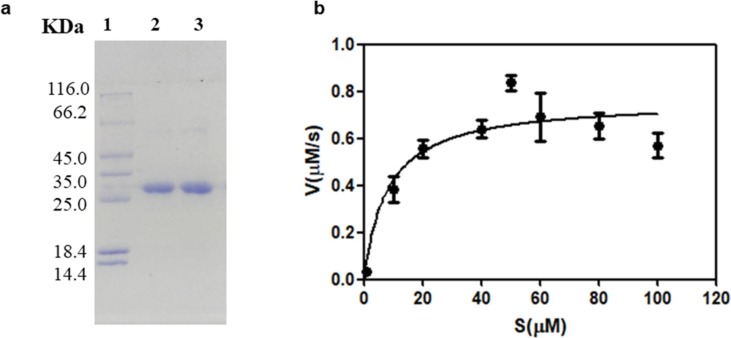
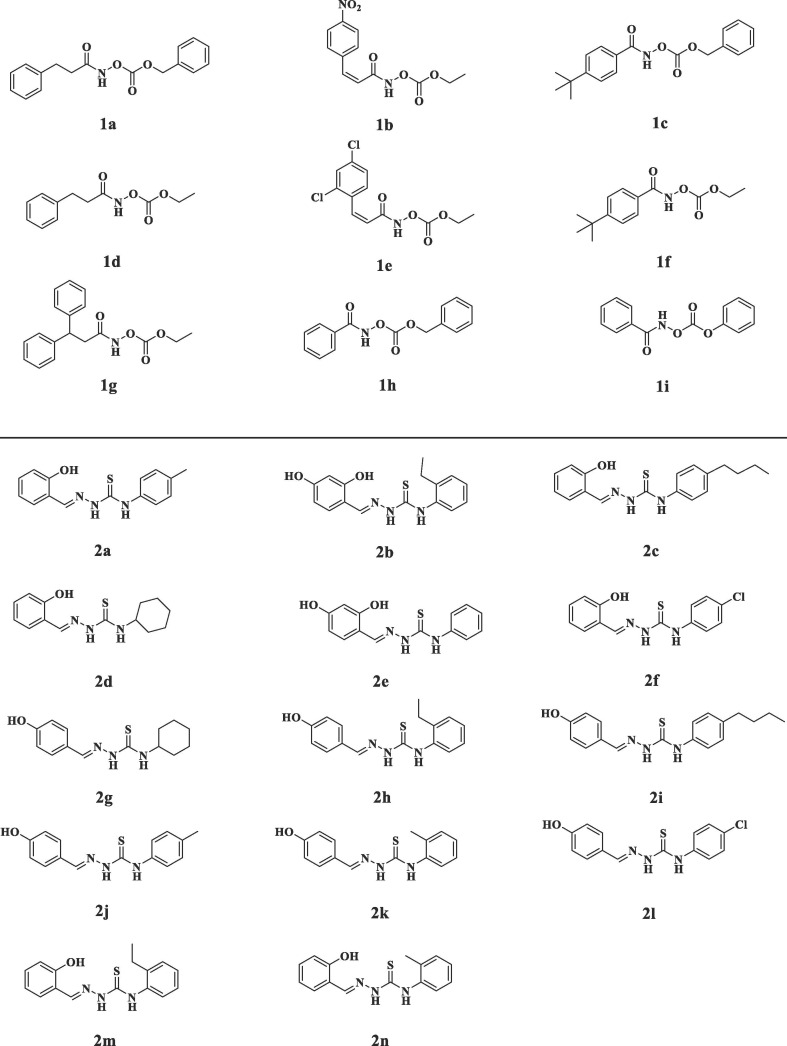
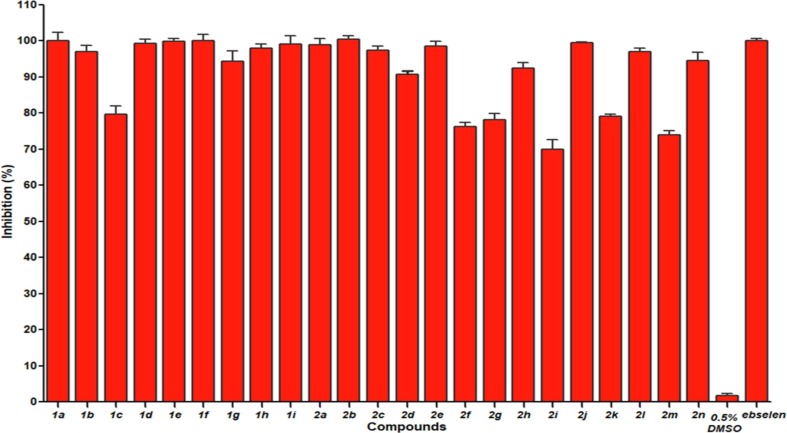
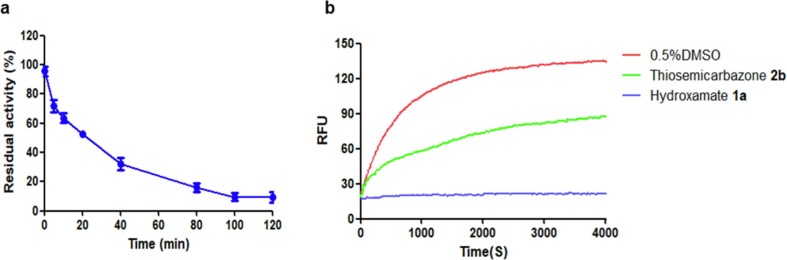
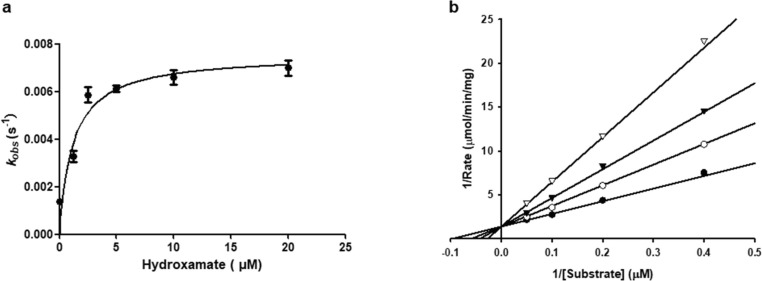
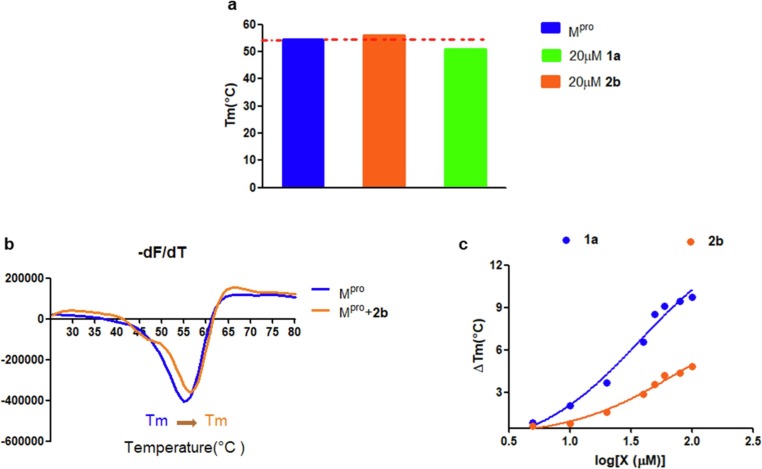
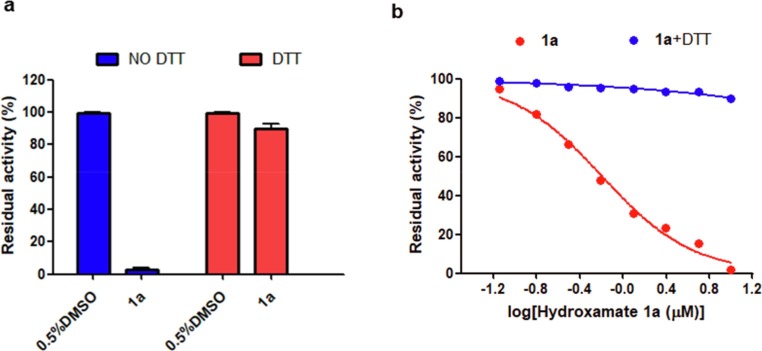
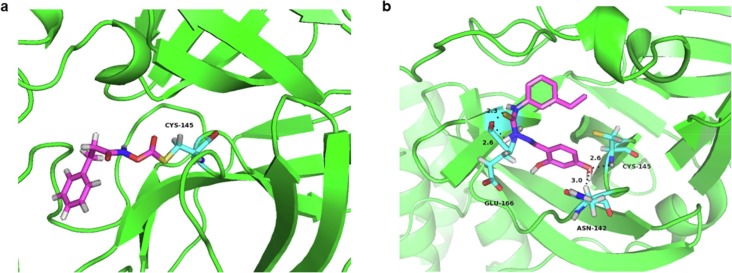
The emerging COVID-19 pandemic generated by Severe Acute Respiratory Syndrome Coronavirus 2 (SARS-CoV-2) has severely threatened human health. The main protease (M) of SARS-CoV-2 is promising target for antiviral drugs, which plays a vital role for viral duplication. Development of the inhibitor against M is an ideal strategy to combat COVID-19. In this work, twenty-three hydroxamates 1a-i and thiosemicarbazones 2a-n were identified by FRET screening to be the potent inhibitors of M, which exhibited more than 94% (except 1c) and more than 69% inhibition, and an IC value in the range of 0.12-31.51 and 2.43-34.22 μM, respectively. 1a and 2b were found to be the most effective inhibitors in the hydroxamates and thiosemicarbazones, with an IC of 0.12 and 2.43 μM, respectively. Enzyme kinetics, jump dilution and thermal shift assays revealed that 2b is a competitive inhibitor of M, while 1a is a time-dependently inhibitor; 2b reversibly but 1a irreversibly bound to the target; the binding of 2b increased but 1a decreased stability of the target, and DTT assays indicate that 1a is the promiscuous cysteine protease inhibitor. Cytotoxicity assays showed that 1a has low, but 2b has certain cytotoxicity on the mouse fibroblast cells (L929). Docking studies revealed that the benzyloxycarbonyl carbon of 1a formed thioester with Cys145, while the phenolic hydroxyl oxygen of 2b formed H-bonds with Cys145 and Asn142. This work provided two promising scaffolds for the development of M inhibitors to combat COVID-19.
由严重急性呼吸系统综合症冠状病毒 2 (SARS-CoV-2) 引起的新型冠状病毒大流行严重威胁着人类健康。SARS-CoV-2 的主要蛋白酶 (M) 是抗病毒药物的有前途的靶标,对病毒复制起着至关重要的作用。开发针对 M 的抑制剂是对抗 COVID-19 的理想策略。在这项工作中,通过荧光各向异性(FRET)筛选鉴定了 23 个羟肟酸 1a-i 和硫代氨基甲酸盐 2a-n 是 M 的有效抑制剂,其抑制率超过 94%(除 1c 外)和超过 69%,IC 值在 0.12-31.51 和 2.43-34.22 μM 之间。在羟肟酸和硫代氨基甲酸盐中,发现 1a 和 2b 是最有效的抑制剂,IC 值分别为 0.12 和 2.43 μM。酶动力学、跳稀释和热转移测定表明,2b 是 M 的竞争性抑制剂,而 1a 是时间依赖性抑制剂;2b 可逆但 1a 不可逆地与靶标结合;2b 的结合增加但 1a 降低靶标稳定性,DTT 测定表明 1a 是广谱半胱氨酸蛋白酶抑制剂。细胞毒性测定表明,1a 对小鼠成纤维细胞(L929)的毒性较低,但 2b 具有一定的细胞毒性。对接研究表明,1a 的苄氧羰基碳原子与 Cys145 形成硫酯键,而 2b 的酚羟基氧与 Cys145 和 Asn142 形成氢键。这项工作为开发针对 M 的抑制剂以对抗 COVID-19 提供了两个有前途的支架。