Gene Expression Laboratory, Salk Institute for Biological Studies, 10010 North Torrey Pines Road, La Jolla, CA 92037, USA; Laboratory of Biological Chemistry, School of Pharmaceutical Sciences, Wakayama Medical University, 25-1 Shitibancho, Wakayama, Wakayama 640-8156, Japan.
Gene Expression Laboratory, Salk Institute for Biological Studies, 10010 North Torrey Pines Road, La Jolla, CA 92037, USA.
Cell Rep. 2022 Apr 26;39(4):110730. doi: 10.1016/j.celrep.2022.110730.
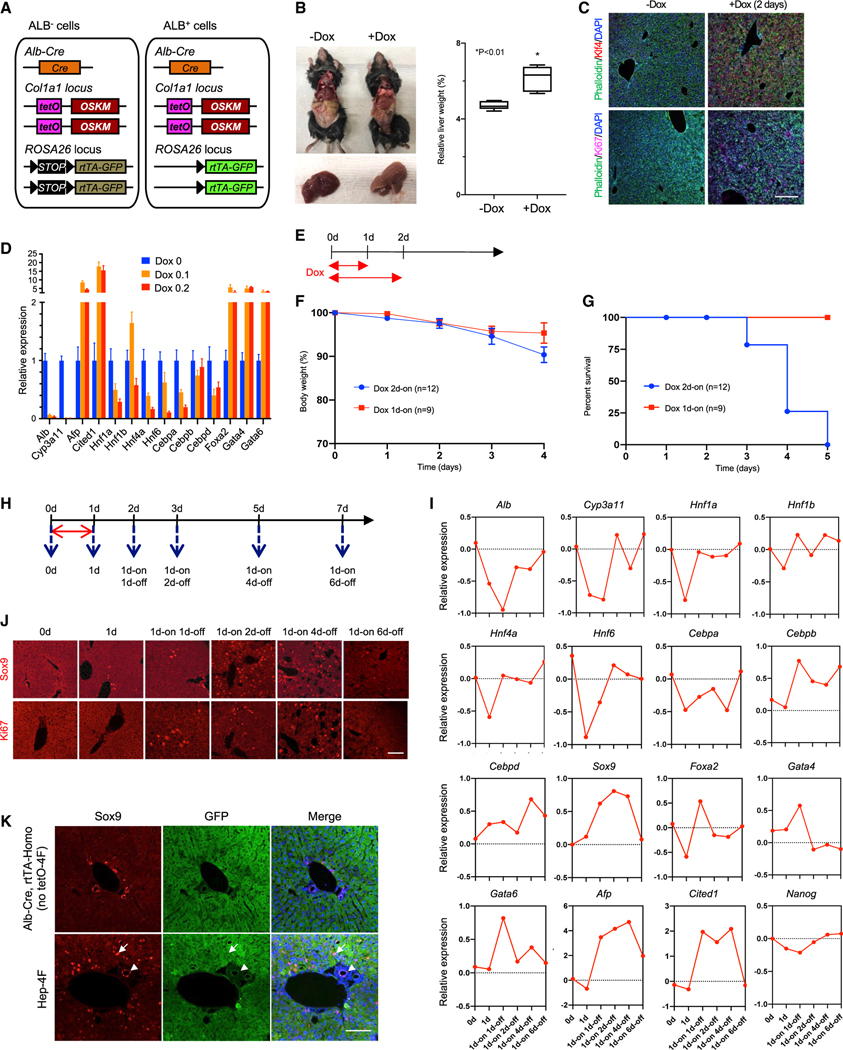
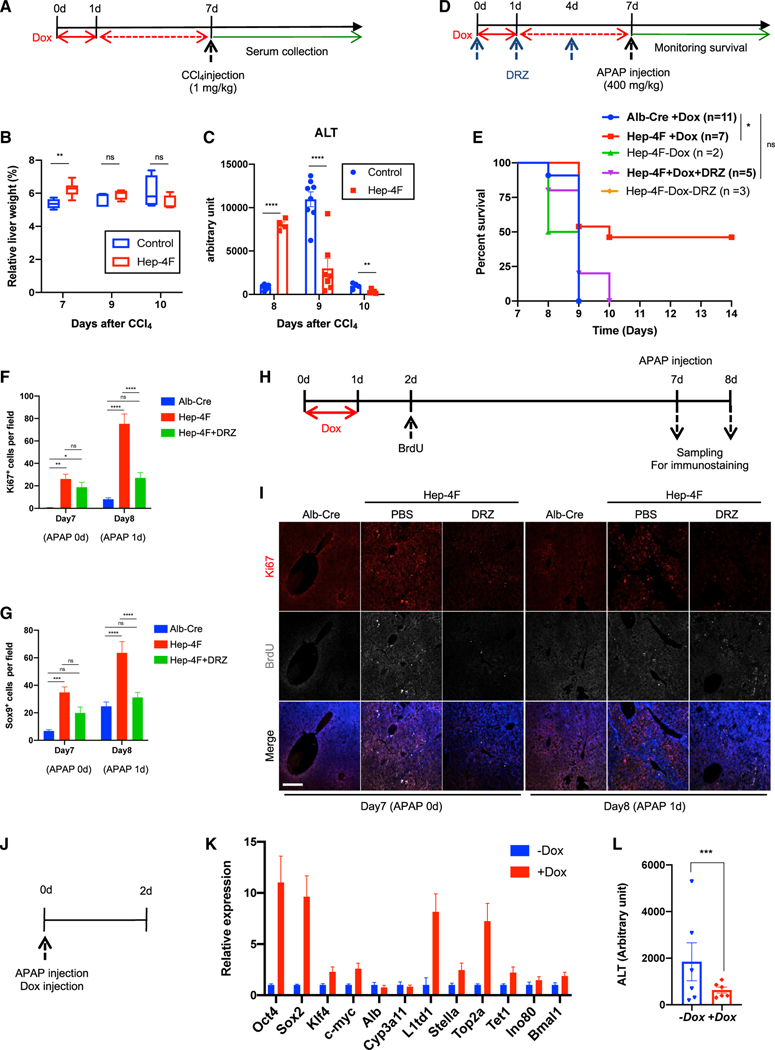
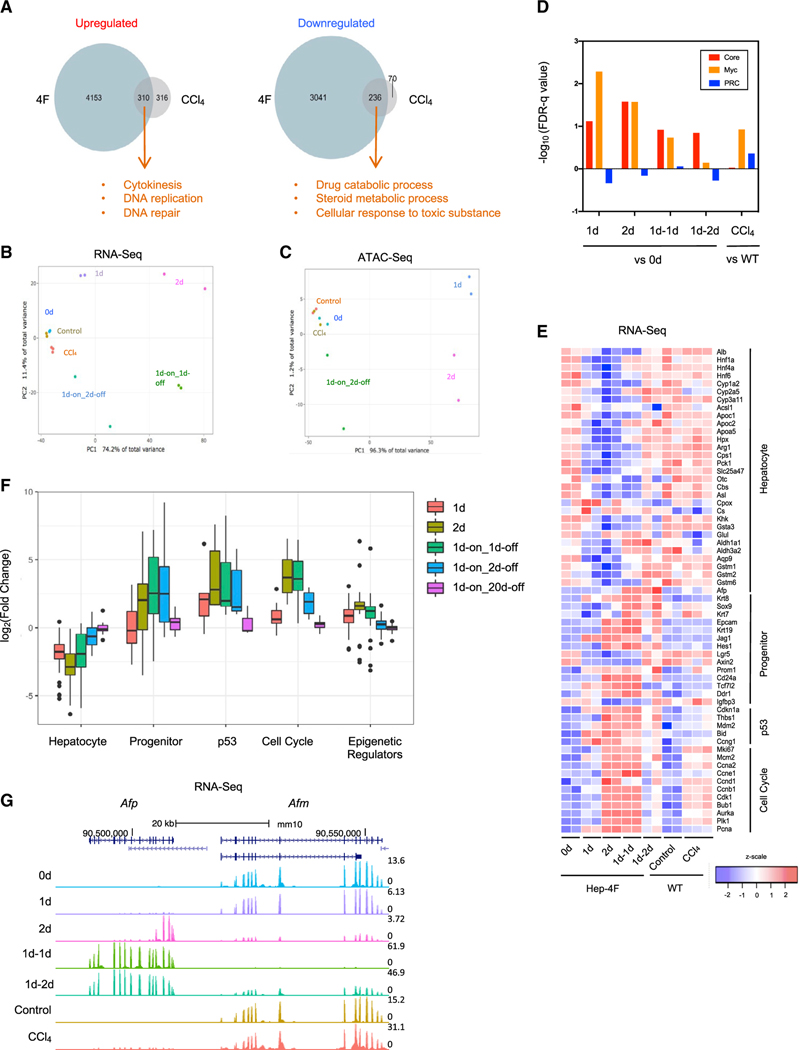
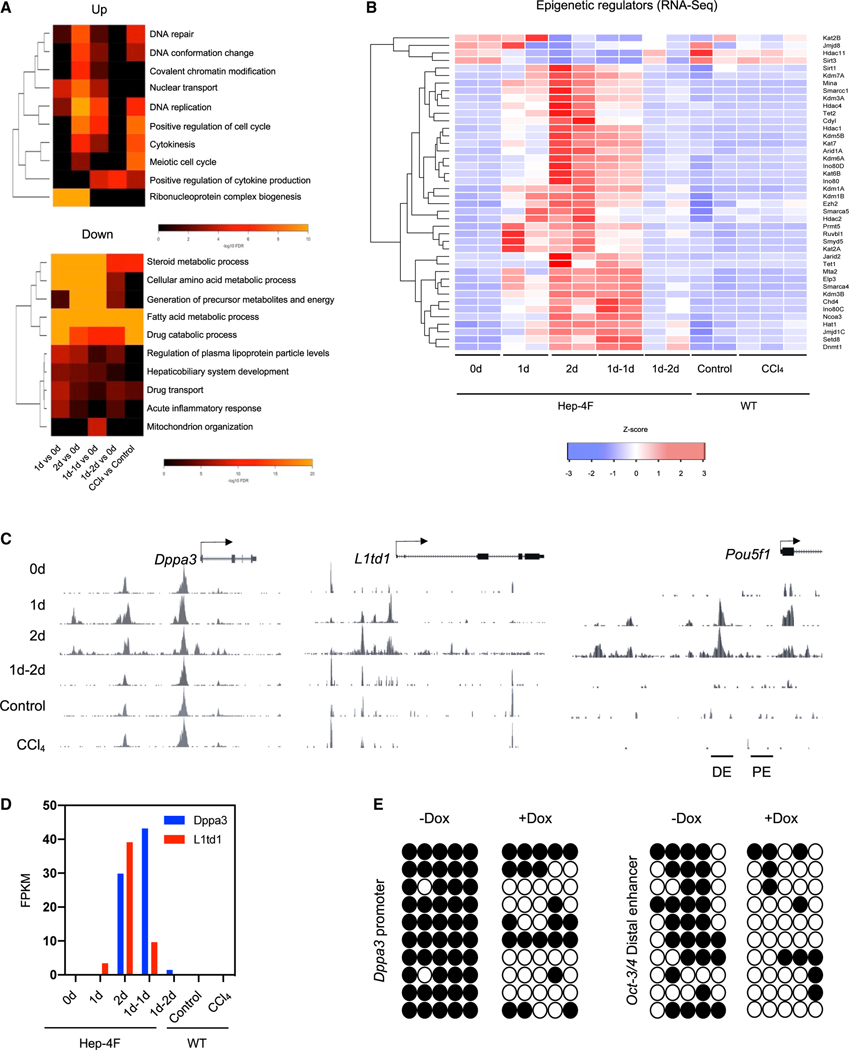
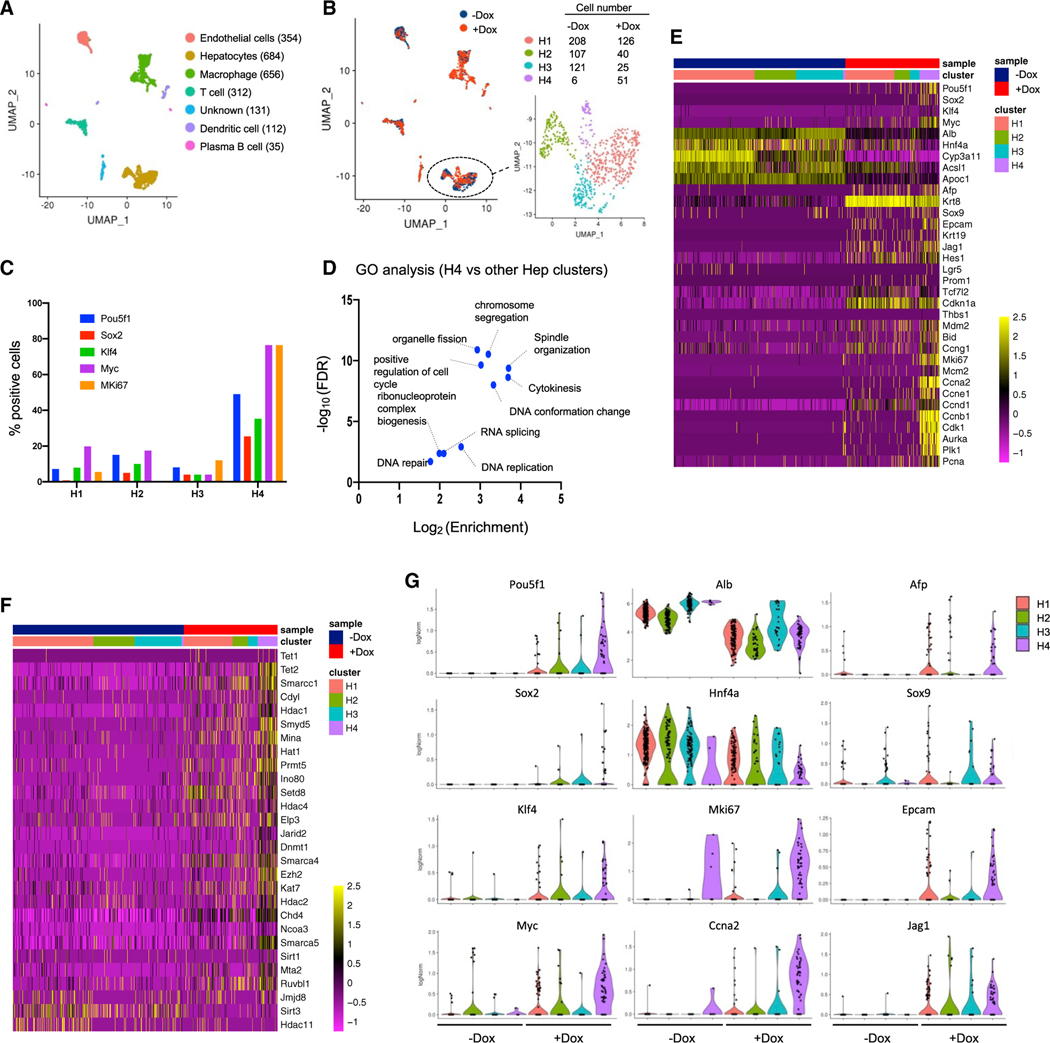
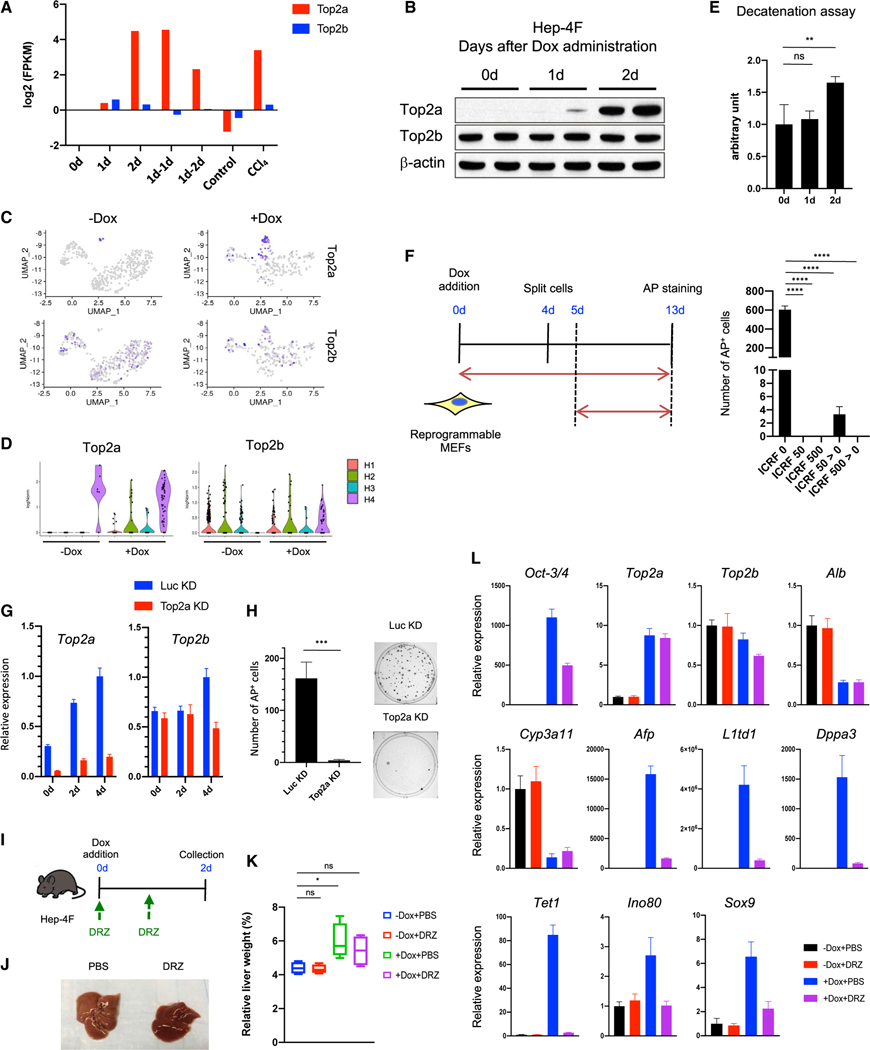
Mammals have limited regenerative capacity, whereas some vertebrates, like fish and salamanders, are able to regenerate their organs efficiently. The regeneration in these species depends on cell dedifferentiation followed by proliferation. We generate a mouse model that enables the inducible expression of the four Yamanaka factors (Oct-3/4, Sox2, Klf4, and c-Myc, or 4F) specifically in hepatocytes. Transient in vivo 4F expression induces partial reprogramming of adult hepatocytes to a progenitor state and concomitantly increases cell proliferation. This is indicated by reduced expression of differentiated hepatic-lineage markers, an increase in markers of proliferation and chromatin modifiers, global changes in DNA accessibility, and an acquisition of liver stem and progenitor cell markers. Functionally, short-term expression of 4F enhances liver regenerative capacity through topoisomerase2-mediated partial reprogramming. Our results reveal that liver-specific 4F expression in vivo induces cellular plasticity and counteracts liver failure, suggesting that partial reprogramming may represent an avenue for enhancing tissue regeneration.
哺乳动物的再生能力有限,而某些脊椎动物,如鱼类和蝾螈,能够有效地再生其器官。这些物种的再生依赖于细胞去分化,随后是增殖。我们生成了一种小鼠模型,能够在肝实质细胞中诱导表达四个山中因子(Oct-3/4、Sox2、Klf4 和 c-Myc,或 4F)。瞬时体内 4F 表达诱导成年肝实质细胞部分重编程为祖细胞状态,并同时增加细胞增殖。这表现为分化的肝谱系标志物表达减少,增殖标志物和染色质修饰物增加,DNA 可及性的全局变化,以及获得肝干细胞和祖细胞标志物。功能上,4F 的短期表达通过拓扑异构酶 2 介导的部分重编程增强了肝再生能力。我们的结果表明,体内肝特异性 4F 表达诱导细胞可塑性并对抗肝衰竭,表明部分重编程可能是增强组织再生的一种途径。