Pons M, Caner M, Rubies J, Carmona M, Ruiz M A, Yáñez-Juan A M
Hospital Universitari Son Espases, Palma de Mallorca, España.
Hospital de Manacor, Manacor, España.
Rev Neurol. 2022 May 1;74(9):291-297. doi: 10.33588/rn.7409.2021505.
Digital screen time has been largely studied in children populations, but few have focused on children with neurodevelopmental disorders. Our main objective was to study the characteristics of use of recreational screens (television (TV) and video games), in children with neurodevelopmental disorders.
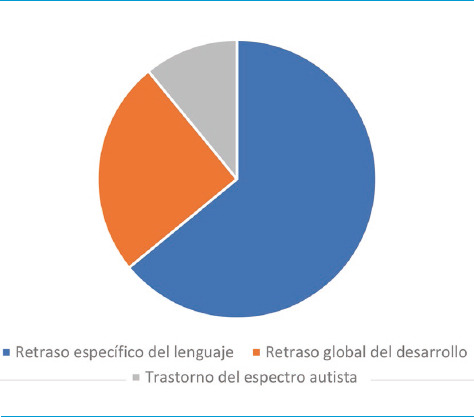
We conducted a case-control study in which children with neurodevelopmental disorders under the age of 6 were compared with controls of the same age range. We analysed TV and video game exposure through a designed questionnaire for parents that included daily time exposure, sociodemographic characteristics, home media environment, sociocultural habits, attitudes and beliefs about TV.
Sixty-one individuals with developmental and 153 controls were enrolled. Children with developmental problems spend more time watching TV than controls (124,4 ± 83,4 vs 71,5 ± 47,4 min / day p <0,001), while video game time was similar in both groups (37,6 ± 39, 6 vs 31,7 ± 32,6 min / day p = 0,138). Children with neurodevelopmental disorders began earlier to watch TV than controls. There were no relevant differences between groups in demographics, Sociocultural, environmental and attitudinal and belief variables.
Children with neurodevelopmental disorders start watching TV at an earlier age and consume more screen time than healthy children. Our findings indicate that Children with neurodevelopmental disorders are more vulnerable to screen abuse, and stress the importance to offer anticipatory guidance to their parents.
数字屏幕使用时间在儿童群体中已有大量研究,但很少有研究关注神经发育障碍儿童。我们的主要目标是研究神经发育障碍儿童使用娱乐屏幕(电视和电子游戏)的特点。
我们进行了一项病例对照研究,将6岁以下的神经发育障碍儿童与同年龄范围的对照组儿童进行比较。我们通过为家长设计的问卷分析电视和电子游戏的接触情况,问卷包括每日接触时间、社会人口学特征、家庭媒体环境、社会文化习惯、对电视的态度和信念。
纳入了61名发育障碍儿童和153名对照儿童。发育问题儿童看电视的时间比对照组儿童多(124.4±83.4 vs 71.5±47.4分钟/天,p<0.001),而两组电子游戏时间相似(37.6±39.6 vs 31.7±32.6分钟/天,p = 0.138)。神经发育障碍儿童比对照组儿童更早开始看电视。两组在人口统计学、社会文化、环境以及态度和信念变量方面没有相关差异。
神经发育障碍儿童比健康儿童更早开始看电视且屏幕使用时间更长。我们的研究结果表明,神经发育障碍儿童更容易受到屏幕滥用的影响,并强调了向其父母提供前瞻性指导的重要性。