Merck Center for Catalysis at Princeton University, Princeton, New Jersey 08544, United States.
Department of Chemistry, North Carolina State University, Raleigh, North Carolina 27695, United States.
J Am Chem Soc. 2022 May 11;144(18):8296-8305. doi: 10.1021/jacs.2c02392. Epub 2022 Apr 29.
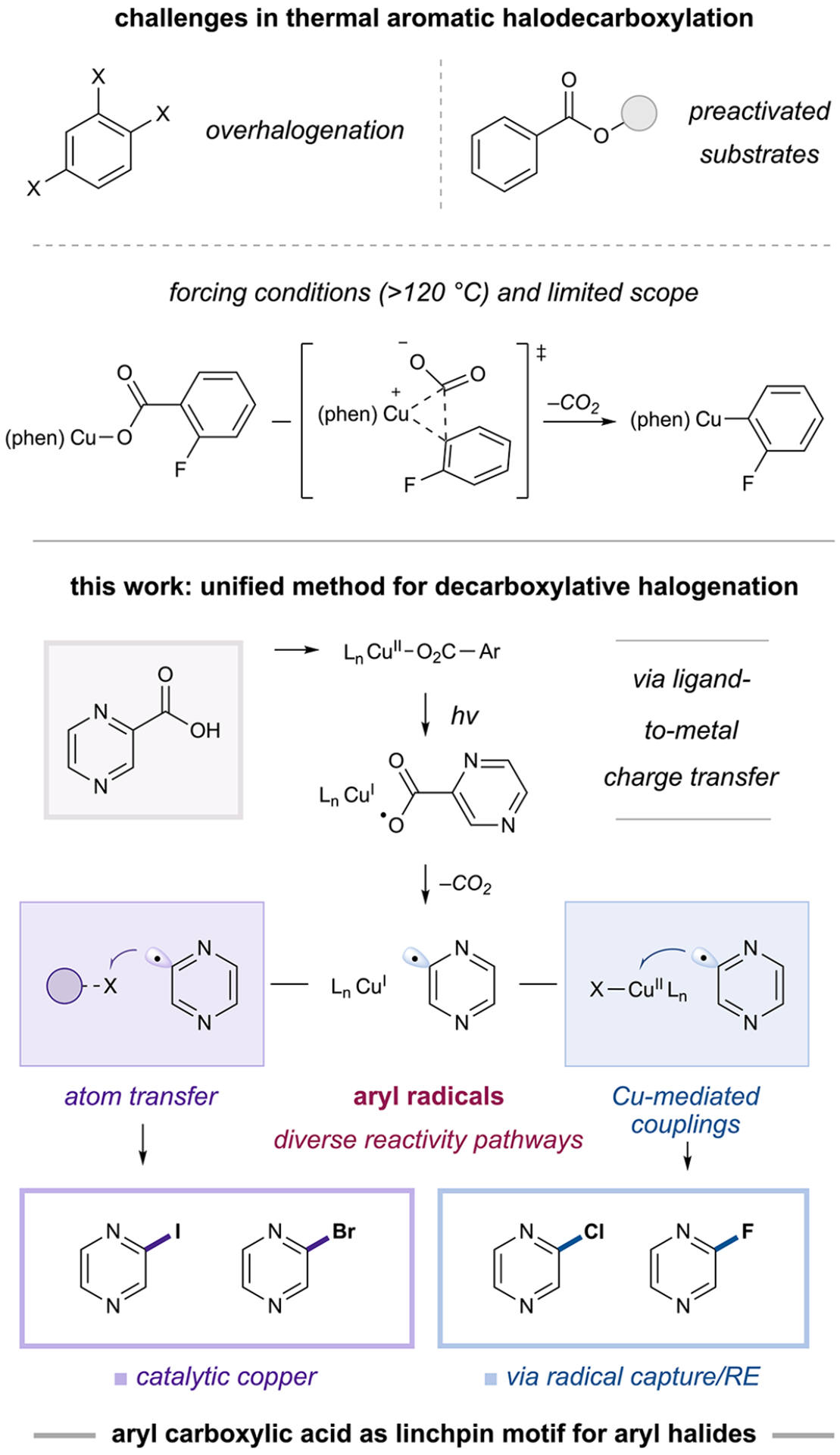
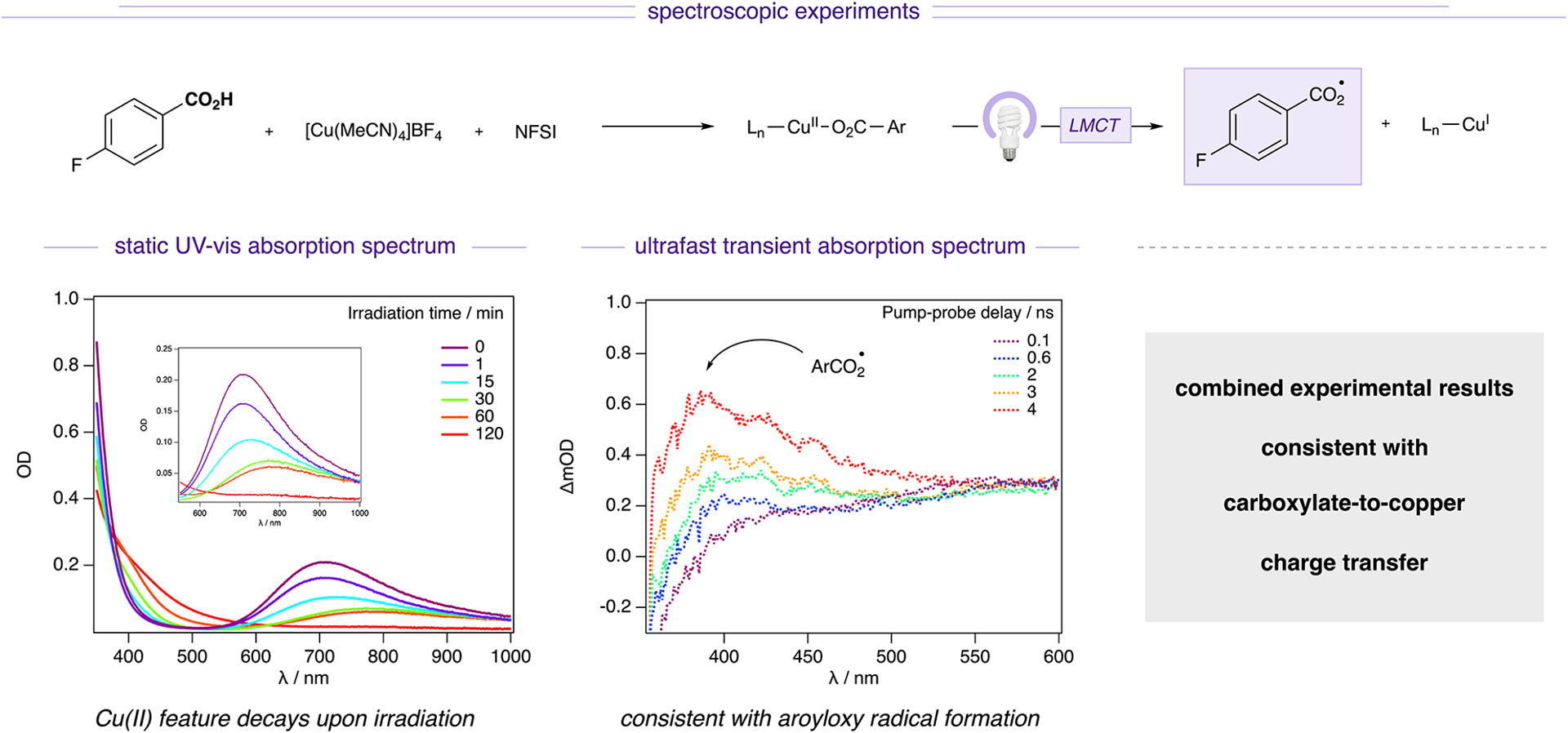
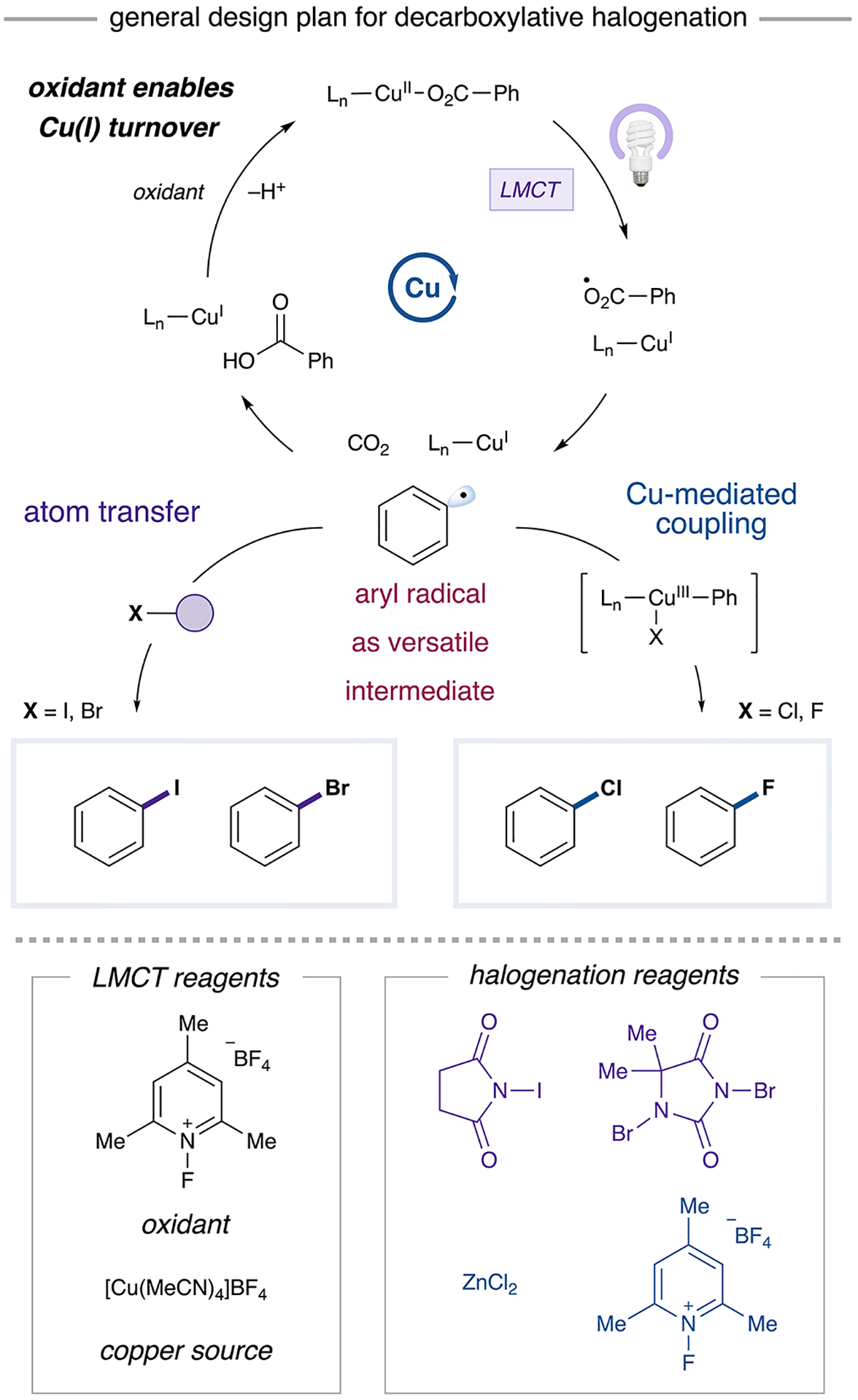
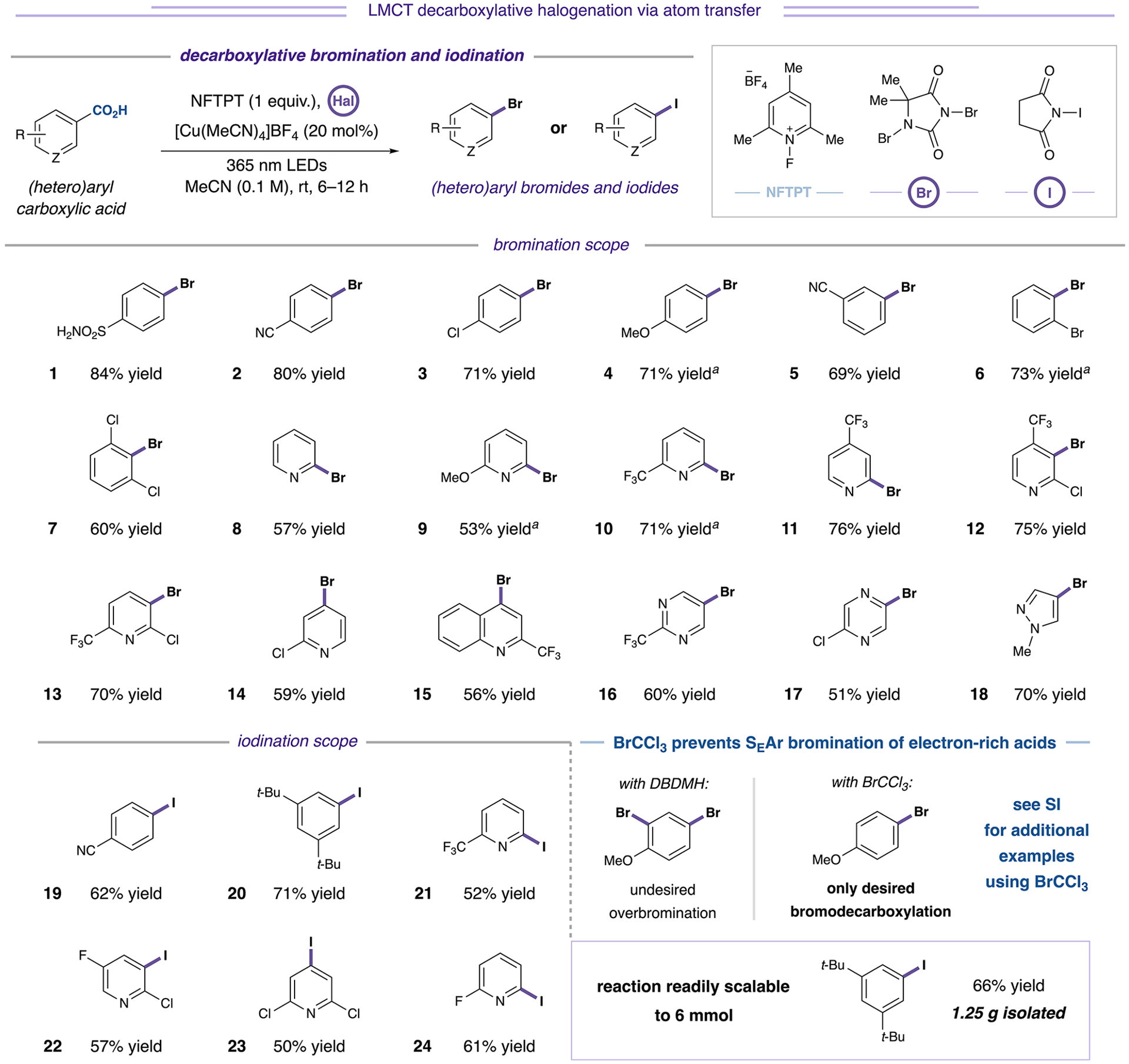
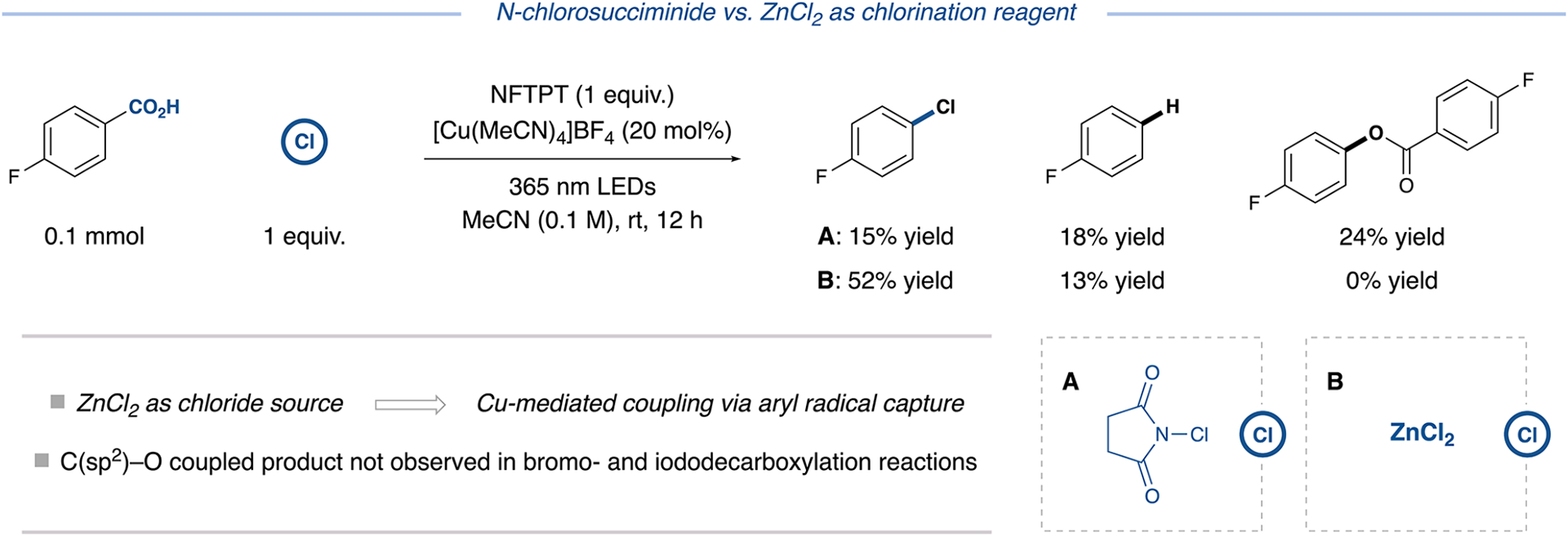
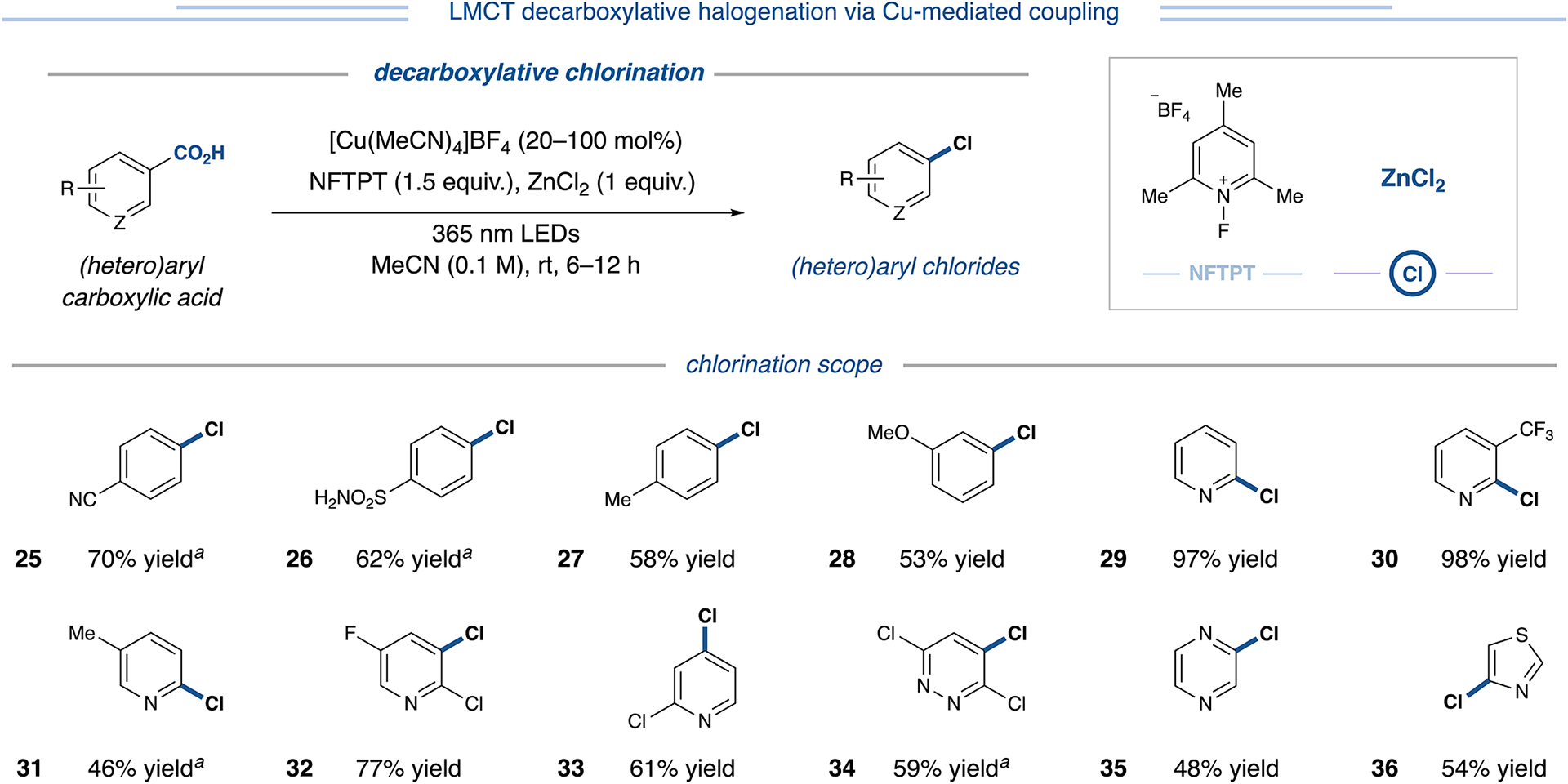
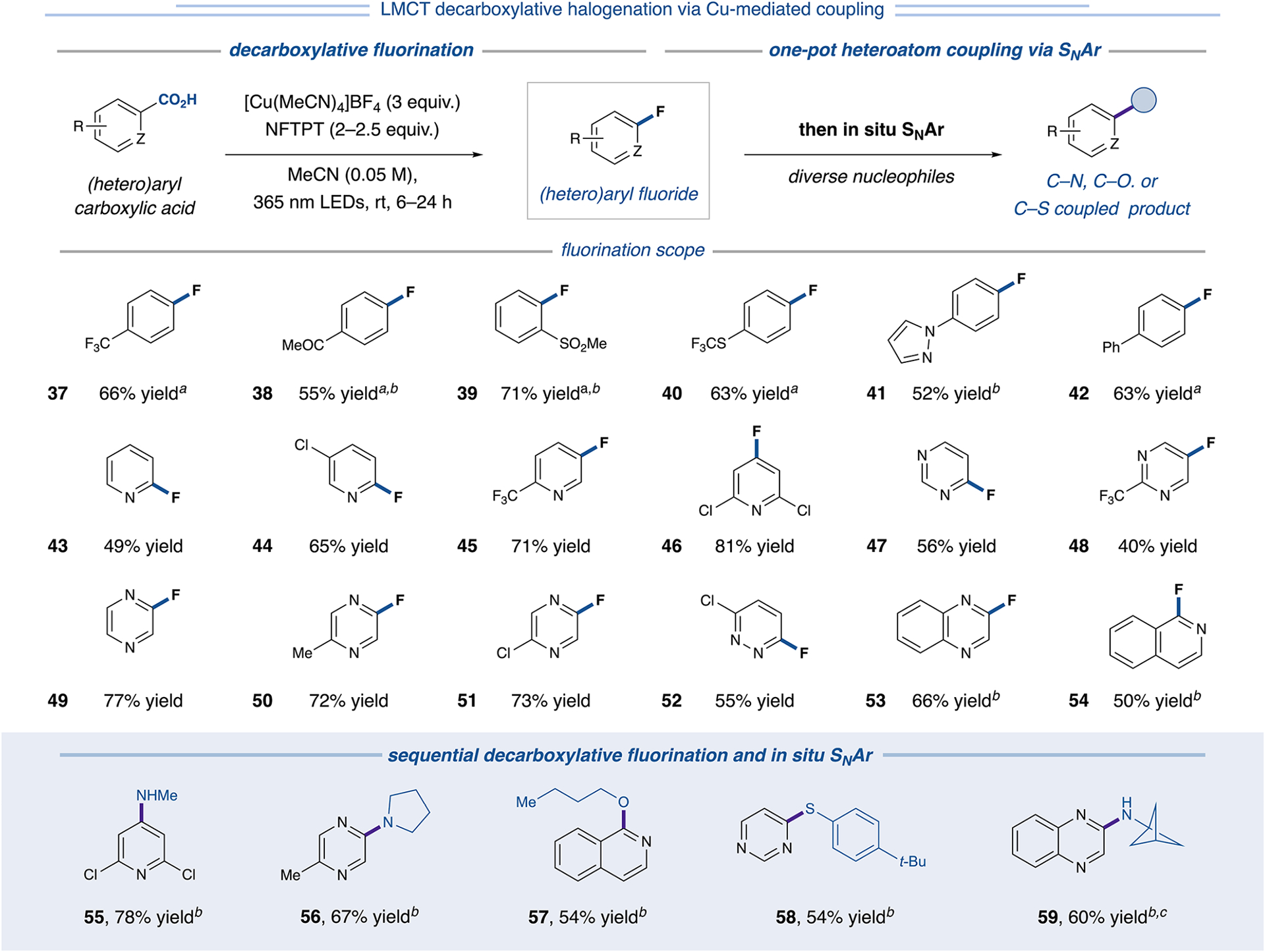
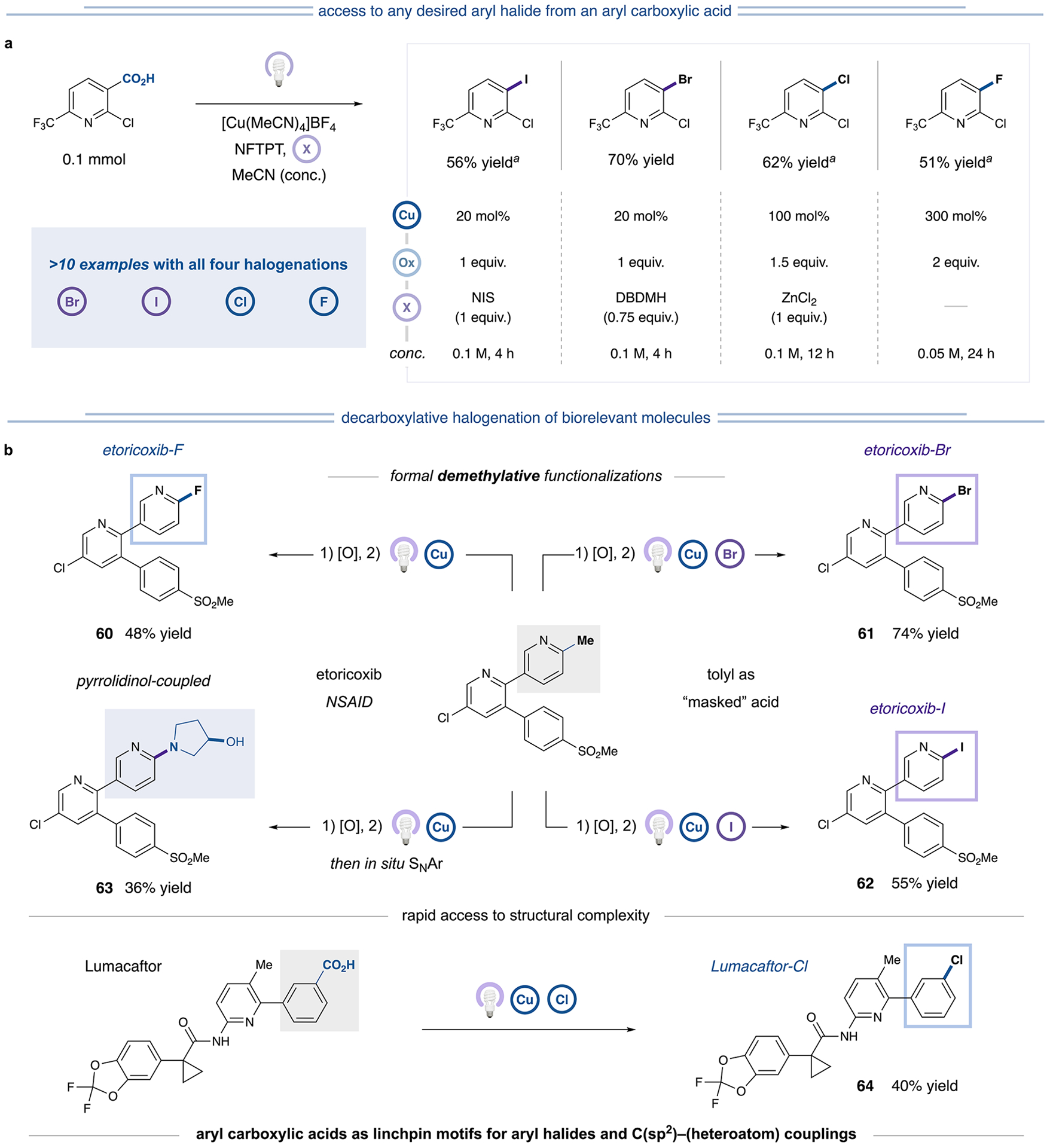
Aryl halides are a fundamental motif in synthetic chemistry, playing a critical role in metal-mediated cross-coupling reactions and serving as important scaffolds in drug discovery. Although thermal decarboxylative functionalization of aryl carboxylic acids has been extensively explored, the scope of existing halodecarboxylation methods remains limited, and there currently exists no unified strategy that provides access to any type of aryl halide from an aryl carboxylic acid precursor. Herein, we report a general catalytic method for direct decarboxylative halogenation of (hetero)aryl carboxylic acids via ligand-to-metal charge transfer. This strategy accommodates an exceptionally broad scope of substrates. We leverage an aryl radical intermediate toward divergent functionalization pathways: (1) atom transfer to access bromo- or iodo(hetero)arenes or (2) radical capture by copper and subsequent reductive elimination to generate chloro- or fluoro(hetero)arenes. The proposed ligand-to-metal charge transfer mechanism is supported through an array of spectroscopic studies.
芳基卤化物是合成化学中的一个基本结构单元,在金属介导的交叉偶联反应中起着关键作用,并作为药物发现中的重要支架。尽管芳基羧酸的热脱羧官能化已经得到了广泛的研究,但现有的脱羧卤化方法的范围仍然有限,目前还没有一种统一的策略可以从芳基羧酸前体中获得任何类型的芳基卤化物。在此,我们报告了一种通过配体到金属电荷转移实现(杂)芳基羧酸直接脱羧卤化的通用催化方法。该策略适应了极其广泛的底物范围。我们利用芳基自由基中间体实现了不同的功能化途径:(1)通过原子转移得到溴代或碘代(杂)芳烃,或(2)通过铜捕获自由基,随后进行还原消除得到氯代或氟代(杂)芳烃。通过一系列光谱研究支持了所提出的配体到金属电荷转移机制。