Almeria Ciarra, Kreß Sebastian, Weber Viktoria, Egger Dominik, Kasper Cornelia
Institute of Cell and Tissue Culture Technologies, University of Natural Resources and Life Sciences, Muthgasse 18, 1190, Vienna, Austria.
Center for Biomedical Technology, Department for Biomedical Research, Danube University, Dr.-Karl-Dorrek-Straße 30, 3500, Krems an der Donau, Austria.
Cell Biosci. 2022 May 2;12(1):51. doi: 10.1186/s13578-022-00786-7.
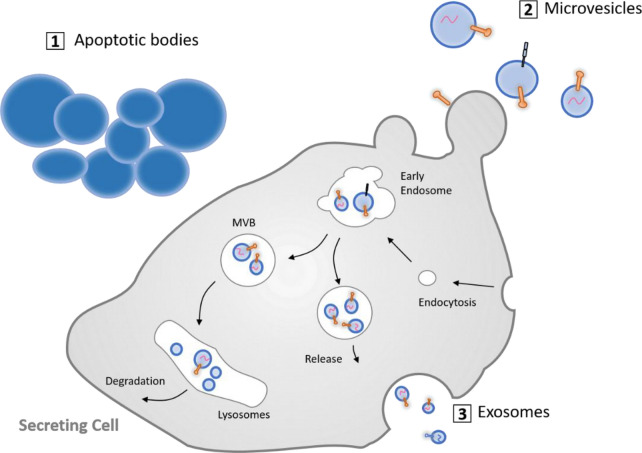
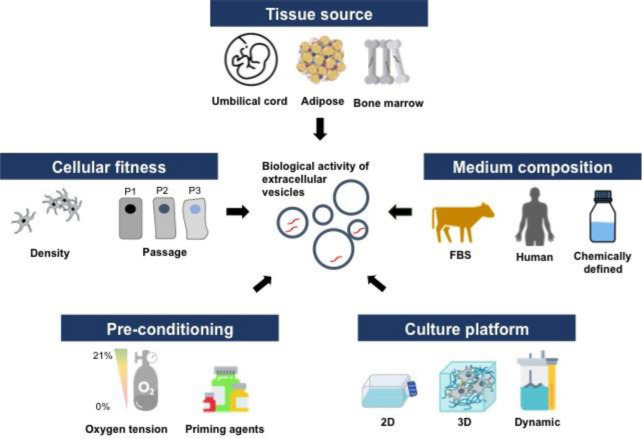
Extracellular vesicles (EVs) are cell-derived membrane structures exerting major effects in physiological as well as pathological processes by functioning as vehicles for the delivery of biomolecules to their target cells. An increasing number of effects previously attributed to cell-based therapies have been recognized to be actually mediated by EVs derived from the respective cells, suggesting the administration of purified EVs instead of living cells for cell-based therapies. In this review, we focus on the heterogeneity of EVs derived from mesenchymal stem/stromal cells (MSC) and summarize upstream process parameters that crucially affect the resulting therapeutic properties and biological functions. Hereby, we discuss the effects of the cell source, medium composition, 3D culture, bioreactor culture and hypoxia. Furthermore, aspects of the isolation and storage strategies influences EVs are described. Conclusively, optimization of upstream process parameters should focus on controlling MSC-derived EV heterogeneity for specific therapeutic applications.
细胞外囊泡(EVs)是源自细胞的膜结构,通过作为生物分子传递至靶细胞的载体,在生理和病理过程中发挥主要作用。越来越多以前归因于基于细胞疗法的效应,现已被认为实际上是由源自相应细胞的细胞外囊泡介导的,这表明在基于细胞的疗法中使用纯化的细胞外囊泡而非活细胞。在本综述中,我们聚焦于间充质干/基质细胞(MSC)衍生的细胞外囊泡的异质性,并总结对所产生的治疗特性和生物学功能有至关重要影响的上游工艺参数。在此,我们讨论细胞来源、培养基成分、三维培养、生物反应器培养和缺氧的影响。此外,还描述了分离和储存策略对细胞外囊泡的影响。总之,上游工艺参数的优化应侧重于针对特定治疗应用控制MSC衍生的细胞外囊泡的异质性。