Department of Epidemiology and Biostatistics, College of Medicine and Health Science, Bahir Dar University, Bahir Dar, Ethiopia.
Sci Rep. 2022 May 5;12(1):7361. doi: 10.1038/s41598-022-10863-z.
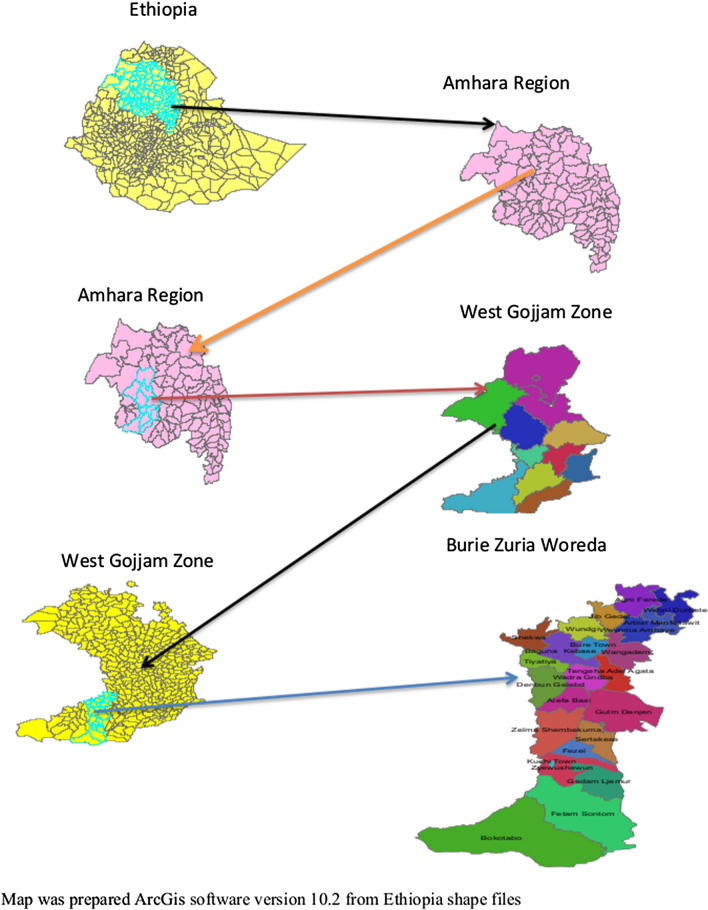
Rabies is a zoonotic viral disease that can occur in all warm blooded animals including humans. Vaccinating dogs can protect people from contracting rabies. Despite the availability of effective human and animal rabies vaccines, rabies prevention and control efforts are inadequate. The aim of the study was to determine the level of rabies prevention practices and associated factors among household heads in Bure Zuria district, North-west Ethiopia. Community based cross-sectional study was conducted at Bure Zuria from June 1 to 30, 2020. A total of 609 participants were selected using simple random sampling technique. Simple and multiple binary logistic regressions were applied to identify associated factors of rabies prevention practices. Of 609 participants, 413 (67.8%) were male and 289 (47.5%) were 30-45 years old. The level of good prevention practices of rabies at Bure Zuria district was 43.3%. Being males (AOR = 2.69 (1.72-4.22)), age group 18-29 years (AOR = 2.70 (1.20-6.10)), ever bitten by dog, (AOR = 2.40 (1.56-3.68)), got training (AOR = 1.70 (1.08-2.68)), had dog (AOR = 2.92 (1.62-5.26)), with good knowledge AOR (95% CI) = 3.42 (2.19-5.32), with good attitude AOR (95% CI) = 1.78 (1.16-2.73) and have 1001-2000 AOR (95% CI) = 2.29 (1.39-3.79) and > 2000 AOR (95% CI) = 2.02 (1.28-3.18)) monthly income were more likely to have good prevention practices of rabies. In this study, we found that the level of good prevention practices of rabies was low in Bure Zuria district. Therefore; awareness creation trainings and multi-sectoral collaborations to prevent rabies are needed in the district, zone and at large region level.
狂犬病是一种可发生在所有温血动物(包括人类)中的人畜共患病毒病。给狗接种疫苗可以保护人们免受狂犬病的侵害。尽管有有效的人类和动物狂犬病疫苗,但狂犬病的预防和控制工作仍不充分。本研究旨在确定在埃塞俄比亚西北部 Bure Zuria 区家庭户主的狂犬病预防措施水平及其相关因素。2020 年 6 月 1 日至 30 日,在 Bure Zuria 进行了基于社区的横断面研究。采用简单随机抽样技术,共选取了 609 名参与者。采用简单和多元二项逻辑回归来确定狂犬病预防措施的相关因素。在 609 名参与者中,413 名(67.8%)为男性,289 名(47.5%)为 30-45 岁。Bure Zuria 区狂犬病良好预防措施水平为 43.3%。男性(AOR=2.69(1.72-4.22))、18-29 岁年龄组(AOR=2.70(1.20-6.10))、曾被狗咬伤(AOR=2.40(1.56-3.68))、接受过培训(AOR=1.70(1.08-2.68))、有狗(AOR=2.92(1.62-5.26))、知识水平高(AOR(95%CI)=3.42(2.19-5.32))、态度良好(AOR(95%CI)=1.78(1.16-2.73))和收入为 1001-2000 埃镑(AOR(95%CI)=2.29(1.39-3.79))和收入超过 2000 埃镑(AOR(95%CI)=2.02(1.28-3.18))的人更有可能采取良好的狂犬病预防措施。在本研究中,我们发现 Bure Zuria 区的狂犬病良好预防措施水平较低。因此,需要在区、地区和更大区域层面开展狂犬病预防意识培训和多部门合作。