Institute of Evolutionary Medicine, University of Zurich, Winterthurerstrasse 190, 8057, Zurich, Switzerland.
Spital Bülach, Spitalstrasse 24, 8180, Bülach, Switzerland.
BMC Public Health. 2022 May 5;22(1):900. doi: 10.1186/s12889-022-13280-z.
Whole-body hydration status is associated with several health outcomes, such as dehydration, edema and hypertension, but little is known about the nonclinical determinants. Therefore, we studied the associations of sex, age, body composition, nutrition, and physical activity on several body hydration measures.
We assessed sociodemographic variables, dietary habits, and physical activity by questionnaire and body composition by bioelectric impedance analysis (BIA). We compared determinants between the sexes and calculated associations between determinants and BIVA hydration measures by multivariable linear regressions.
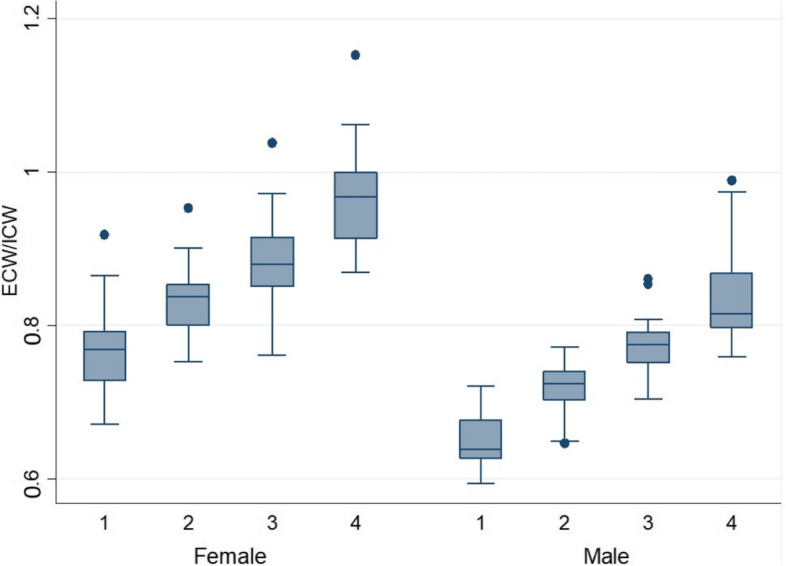
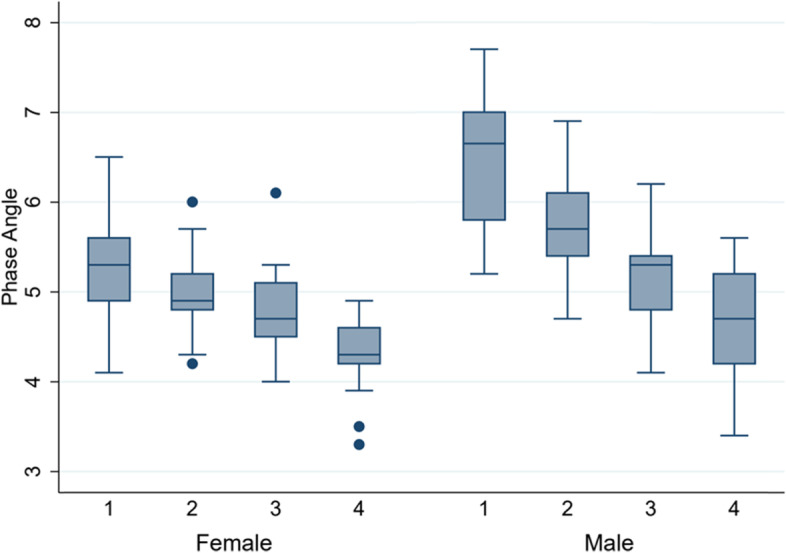
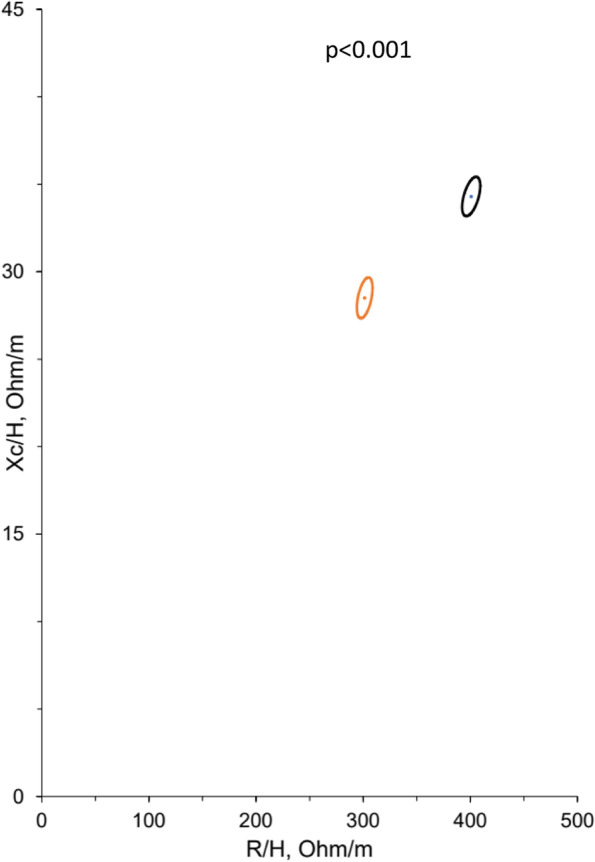
A total of 242 adults from the general population (age 18-94, 47% women) were included. Women were younger, smaller, lighter, and had a smaller BMI (kg/m) than men (p < 0.05). Women had less muscle mass, less visceral fat mass and less extracellular and intracellular water than men (p < 0.001). Women showed less intracellular water per extracellular water than men, while men showed higher phase angle values than women (both p < 0.001). Men had a stronger association of hydration measures with physical activity than women. Both sexes showed a decrease in hydration measures with age.
Sex, age, body composition, and physical activity influence body hydration. There seem to be differences in body water regulation between the sexes. Especially interesting are factors susceptible to preventive measures such as physical activity.
全身水合状态与多种健康结果相关,如脱水、水肿和高血压,但对非临床决定因素知之甚少。因此,我们研究了性别、年龄、身体成分、营养和身体活动对几种身体水合测量的影响。
我们通过问卷调查评估了社会人口统计学变量、饮食习惯和身体活动,通过生物电阻抗分析(BIA)评估了身体成分。我们比较了两性之间的决定因素,并通过多变量线性回归计算了决定因素与 BIVA 水合测量之间的关联。
共纳入 242 名来自普通人群的成年人(年龄 18-94 岁,47%为女性)。女性比男性更年轻、更小、更轻,且 BMI(kg/m)更小(p<0.05)。女性的肌肉量、内脏脂肪量以及细胞外液和细胞内液均少于男性(均 p<0.001)。女性的细胞内水与细胞外水的比值低于男性,而男性的相位角值高于女性(均 p<0.001)。男性的水合测量与身体活动的关联比女性更强。两性的水合测量值均随年龄增长而下降。
性别、年龄、身体成分和身体活动会影响身体水合状态。两性之间似乎存在着不同的身体水调节机制。特别是,像身体活动这样容易受到预防措施影响的因素值得关注。