Guo Shuqin, Liu Na, Liu Ke, Li Ying, Zhang Wei, Zhu Biao, Gu Bin, Wen Ning
Department of Stomatology, The First Medical Center, Chinese PLA General Hospital 28 Fuxing Road, Haidian District Beijing 100853 China
Department of Stomatology, Beijing Railway Construction Hospital, China Railway Construction Corporation 40 Fuxing Road, Haidian District Beijing 100855 China.
RSC Adv. 2020 Sep 30;10(59):35917-35929. doi: 10.1039/d0ra05853j. eCollection 2020 Sep 28.
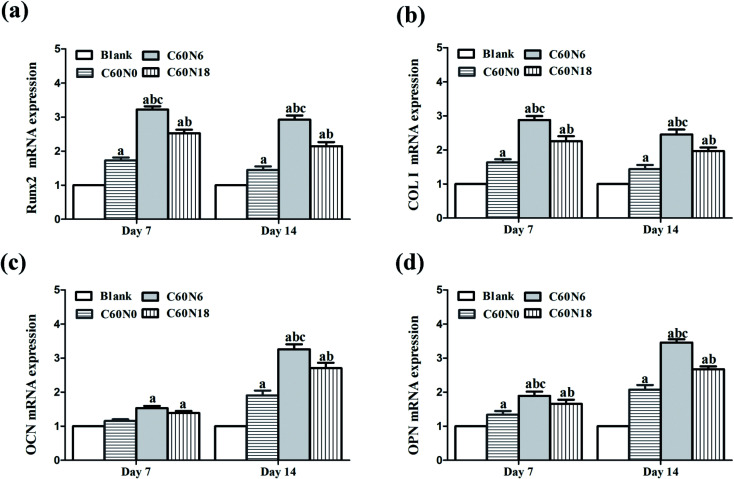
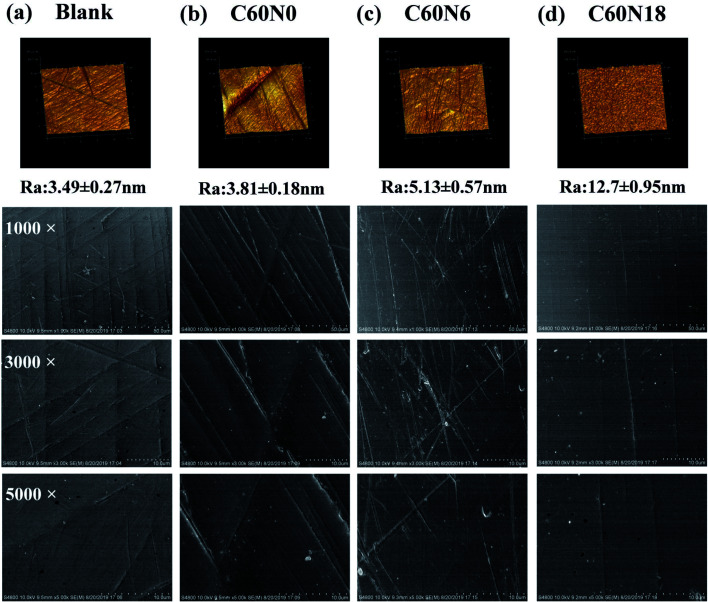
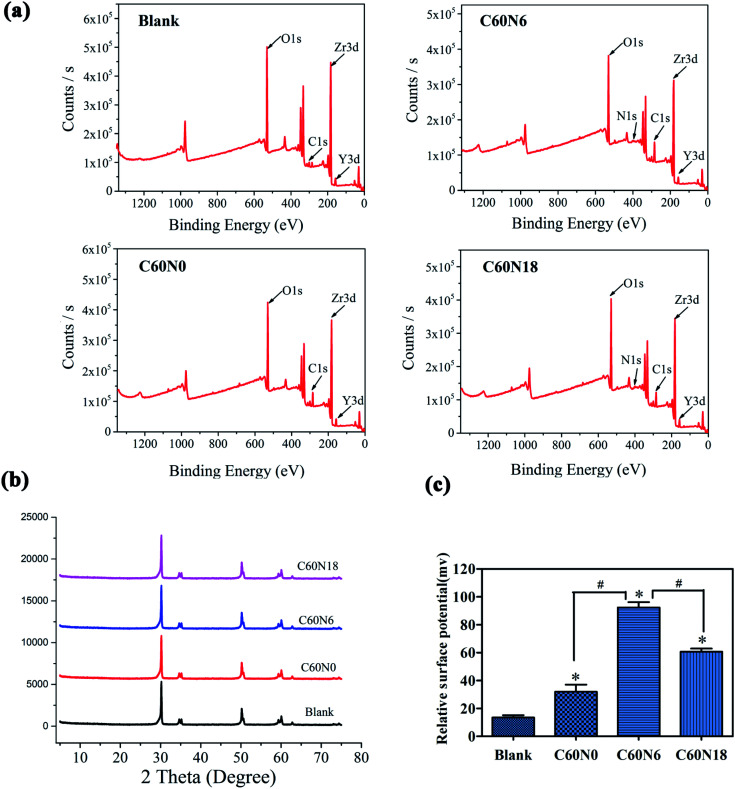
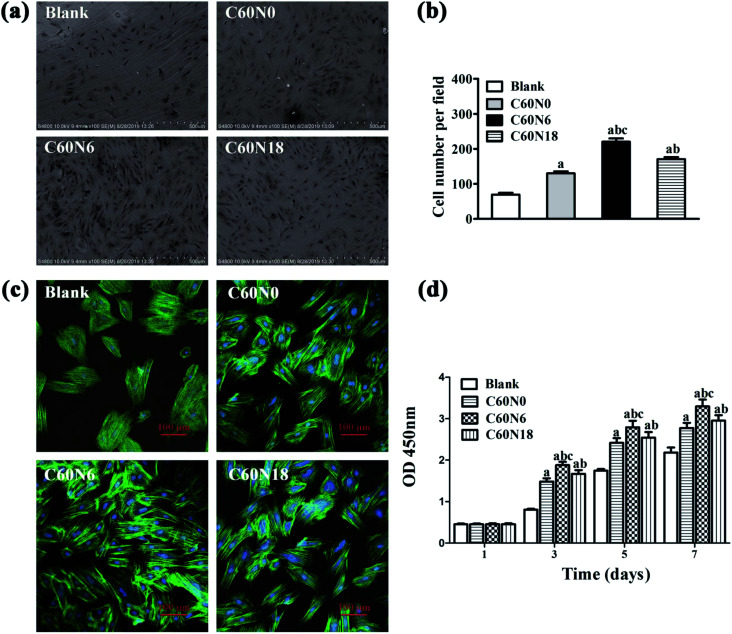
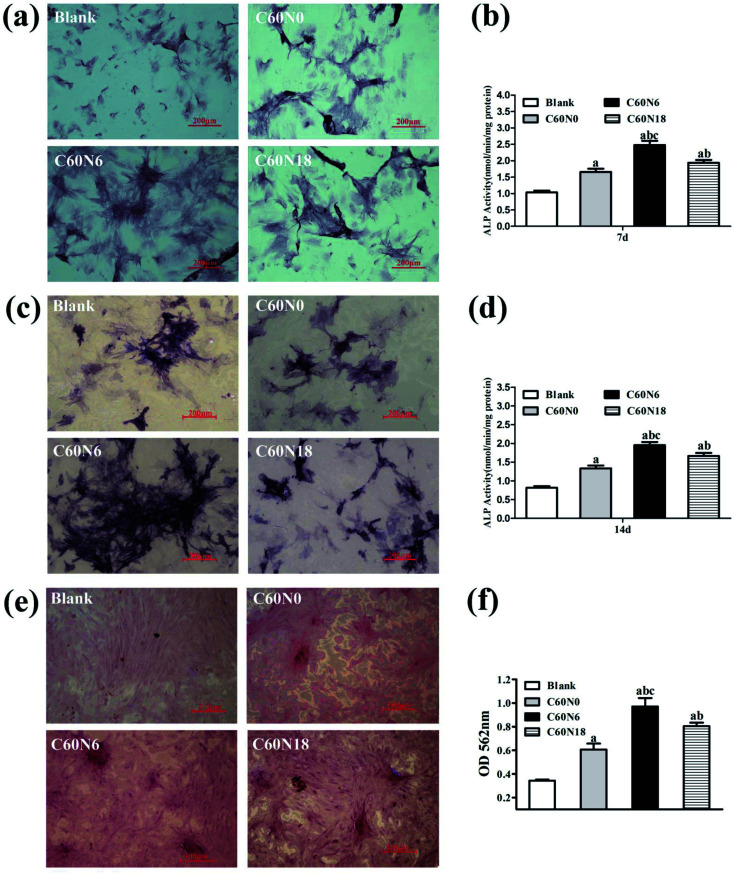
Zirconia is considered the most promising alternative material to titanium implants. However, zirconia is a biologically inert material and its surface modification is essential to obtain efficient osseointegration. Plasma immersion ion implantation (PIII) is a controllable and flexible approach that constructs functional groups on the surface of biomaterials and enhances osteogenic ability of host osteoclast cells. Zirconia disks were randomly divided into 4 groups ( = 50/group): (1) Blank, (2) C60N0, (3) C60N6, and (4) C60N18. Carbon and nitrogen plasma immersion ion implantation on zirconia (C and N-PIII) surface modification was completed with the corresponding parameters. When zirconia was modified by carbon and nitrogen plasma implantation, a new chemical structure was formed on the material surface while the surface roughness of the material remained unaltered. The nitrogen-containing functional groups with high potential were introduced but the bulk crystal structure of zirconia was not changed, indicating that the stability of zirconia was not affected. data showed that zirconia with high surface potential promoted adhesion, proliferation, and osteogenic differentiation of BMSCs. C60N6 was found to be superior to the other groups. Our results demonstrate that a zirconia surface modified by C and N-PIII can introduce desirable nitrogen functional groups and create a suitable extracellular environment to promote BMSCs biological activity. Taken together, these results suggest that C and N-PIII modified zirconia is a promising material for use in the field of medical implantation.
氧化锆被认为是钛植入物最有前景的替代材料。然而,氧化锆是一种生物惰性材料,其表面改性对于实现有效的骨整合至关重要。等离子体浸没离子注入(PIII)是一种可控且灵活的方法,可在生物材料表面构建官能团并增强宿主破骨细胞的成骨能力。将氧化锆圆盘随机分为4组(每组n = 50):(1)空白组,(2)C60N0组,(3)C60N6组,和(4)C60N18组。采用相应参数完成了氧化锆表面的碳和氮等离子体浸没离子注入(C和N - PIII)表面改性。当通过碳和氮等离子体注入对氧化锆进行改性时,材料表面形成了新的化学结构,而材料的表面粗糙度保持不变。引入了具有高潜力的含氮官能团,但氧化锆的体晶体结构未改变,这表明氧化锆的稳定性未受影响。数据表明,具有高表面电位的氧化锆促进了骨髓间充质干细胞的粘附、增殖和成骨分化。发现C60N6组优于其他组。我们的结果表明,经C和N - PIII改性的氧化锆表面可引入理想的氮官能团并创造合适的细胞外环境以促进骨髓间充质干细胞的生物活性。综上所述,这些结果表明经C和N - PIII改性的氧化锆是一种有前景的医用植入材料。