Liu Shuifeng, Huang Da, Hu Yang, Zhang Jiancheng, Chen Bairui, Zhang Hongwu, Dong Xianming, Tong Rongbiao, Li Yiheng, Zhou Wuyi
Biomass 3D Printing Materials Research Center, College of Materials and Energy, South China Agricultural University Guangzhou 510642 China
Department of Anatomy, Guangdong Provincial Key Laboratory of Construction and Detection in Tissue Engineering, Southern Medical University 1023# Shatai South Road Guangzhou 510515 China.
RSC Adv. 2020 Oct 26;10(64):39241-39250. doi: 10.1039/d0ra04581k. eCollection 2020 Oct 21.
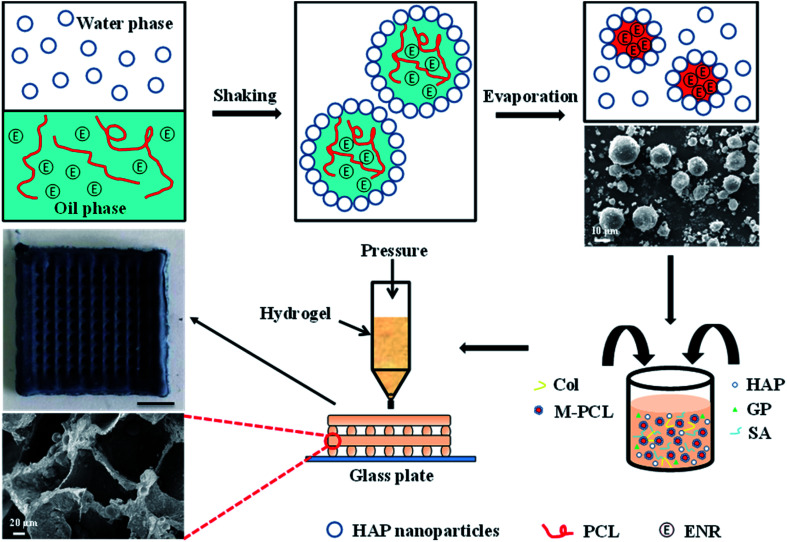
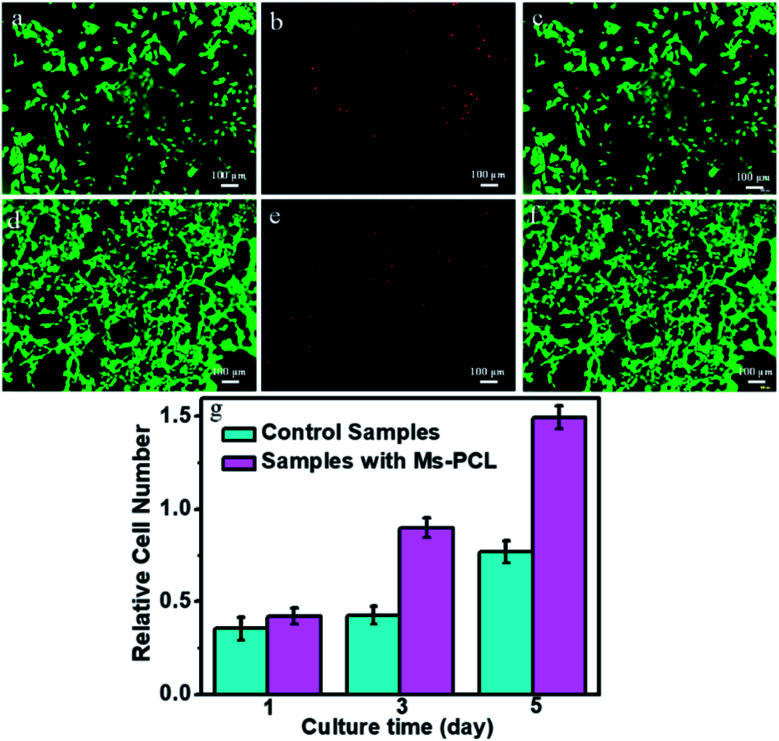
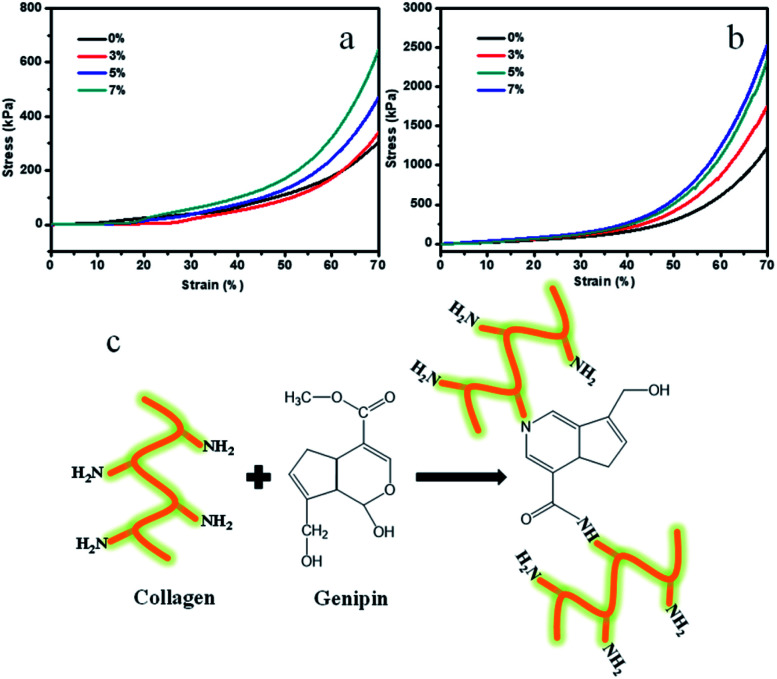
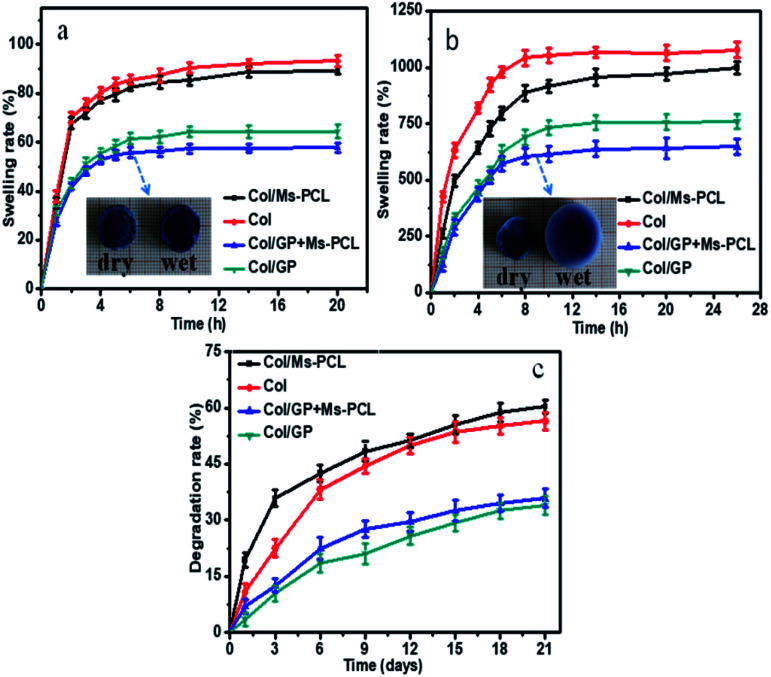
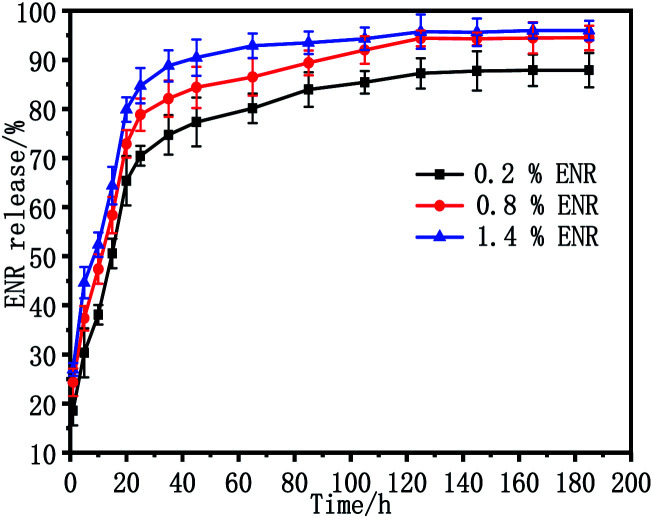
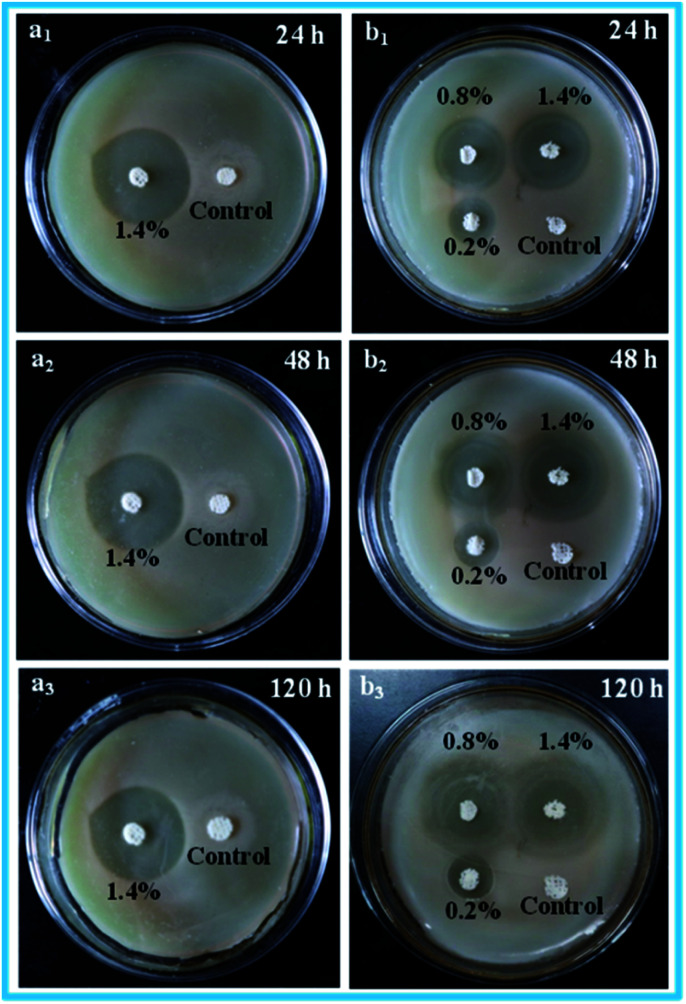
Biocompatible porous scaffolds with adjustable pore structures, appropriate mechanical properties and drug loading properties are important components of bone tissue engineering. In this work, biocompatible sodium alginate (SA)/collagen (Col) multiscale porous scaffolds containing poly(ε-caprolactone) microspheres (Ms-PCL) have been facilely fabricated based on 3D extrusion printing of the pre-crosslinked composite hydrogels. The prepared composite hydrogels can be 3D extrusion printed into porous scaffolds with different designed shapes and adjustable pore structures. The hydroxyapatite (HAP) nanoparticles have been added into the SA/Col hydrogels to achieve stress dispersion and form double crosslinking networks. SA-Ca crosslinking networks and Col-genipin (GP) crosslinking networks have been constructed to improve the mechanical properties of the scaffolds (about 2557 kPa of compressive stress at 70% strain), and reduce the swelling rate and degradation rate of SA/Col scaffolds. Moreover, the SA/Col hydrogels contain hydrophobic antibacterial drug enrofloxacin loaded Ms-PCL, and drug release research shows a sustained-release function of porous scaffolds, indicating the potential application of SA/Col porous scaffolds as drug carriers. In addition, the antibacterial experiments show that the composite scaffolds display a distinguished and long-term antibacterial activity against and . Furthermore, mouse bone mesenchymal stem cells (mBMSCs) are seeded on the SA/Col composite scaffolds, and an biocompatibility experiment shows that the mBMSCs can adhere well on the composite scaffolds, which indicate that the fabricated composite scaffolds are biocompatible. In short, all of the above results suggest that the biocompatible SA/Col composite porous scaffolds have enormous application and potential in bone tissue engineering.
具有可调节孔结构、适当机械性能和载药性能的生物相容性多孔支架是骨组织工程的重要组成部分。在这项工作中,基于预交联复合水凝胶的3D挤出打印,轻松制备了含有聚(ε-己内酯)微球(Ms-PCL)的生物相容性海藻酸钠(SA)/胶原蛋白(Col)多尺度多孔支架。制备的复合水凝胶可以通过3D挤出打印成具有不同设计形状和可调节孔结构的多孔支架。将羟基磷灰石(HAP)纳米颗粒添加到SA/Col水凝胶中以实现应力分散并形成双交联网络。构建了SA-Ca交联网络和Col-京尼平(GP)交联网络,以改善支架的机械性能(在70%应变下压缩应力约为2557 kPa),并降低SA/Col支架的溶胀率和降解率。此外,SA/Col水凝胶含有负载疏水性抗菌药物恩诺沙星的Ms-PCL,药物释放研究表明多孔支架具有缓释功能,表明SA/Col多孔支架作为药物载体的潜在应用。此外,抗菌实验表明,复合支架对[具体细菌名称1]和[具体细菌名称2]具有显著的长期抗菌活性。此外,将小鼠骨髓间充质干细胞(mBMSCs)接种在SA/Col复合支架上,生物相容性实验表明mBMSCs可以很好地粘附在复合支架上,这表明制备的复合支架具有生物相容性。简而言之,上述所有结果表明,生物相容性SA/Col复合多孔支架在骨组织工程中具有巨大的应用潜力。