Cardiovascular Diseases Unit, Cardio-Thoracic and Vascular Department, S. Maria Alle Scotte Hospital, University of Siena, Siena, Italy.
Department of Medical and Surgical Sciences, University of Foggia, Via Luigi Pinto 1, 71121, Foggia, Italy.
Heart Fail Rev. 2023 May;28(3):585-596. doi: 10.1007/s10741-022-10238-6. Epub 2022 May 6.
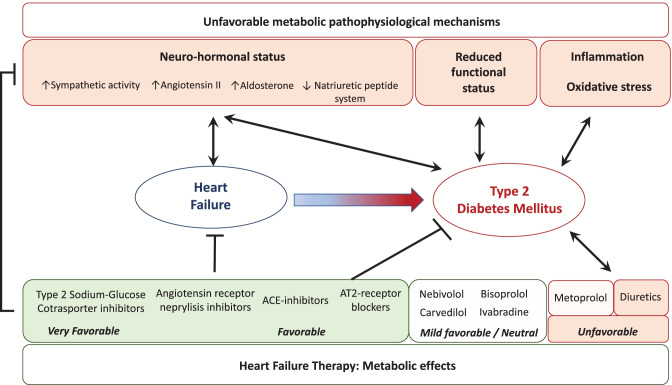
Type 2 diabetes mellitus (T2DM) is a risk factor that plays a major role in the onset of heart failure (HF) both directly, by impairing cardiac function, and indirectly, through associated diseases such as hypertension, coronary disease, renal dysfunction, obesity, and other metabolic disorders. In a population of HF patients, the presence of T2DM ranged from 20 to 40%, according to the population studied, risk factor characteristics, geographic area, and age, and it is associated with a worse prognosis. Finally, patients with HF, when compared with those without HF, show an increased risk for the onset of T2DM due to several mechanisms that predispose the HF patient to insulin resistance. Despite the epidemiological data confirmed the relationship between T2DM and HF, the exact prevalence of HF in T2DM comes from interventional trials rather than from observational registries aimed to prospectively evaluate the risk of HF occurrence in T2DM population. This review is focused on the vicious cycle linking HF and T2DM, from epidemiological data to prognostic implications.
2 型糖尿病(T2DM)是心力衰竭(HF)发病的主要危险因素,它通过损害心脏功能直接作用,也通过高血压、冠心病、肾功能障碍、肥胖和其他代谢紊乱等相关疾病间接作用。根据研究人群、危险因素特征、地理区域和年龄的不同,在 HF 患者人群中,T2DM 的患病率在 20%到 40%之间,并且与预后较差相关。最后,与无 HF 的患者相比,HF 患者由于多种导致 HF 患者发生胰岛素抵抗的机制,发生 T2DM 的风险增加。尽管流行病学数据证实了 T2DM 与 HF 之间的关系,但 T2DM 中 HF 的确切患病率来自于干预性试验,而不是旨在前瞻性评估 T2DM 人群 HF 发生风险的观察性登记研究。本综述重点关注将 HF 和 T2DM 联系起来的恶性循环,从流行病学数据到预后意义。