Yang Yixi, Wang Le, Zhou Yonglin, He Yijun, Lin Shaozhang, Zeng Yuwei, Zhou Yunhe, Li Wei, He Zaopeng, Zhao Qi, Chen Lihao, Li Zijie, Wang Wenhao, Zhang Zhi-Yong
Translational Research Centre of Regenerative Medicine and 3D Printing of Guangzhou Medical University, Guangdong Province Engineering Research Center for Biomedical Engineering, State Key Laboratory of Respiratory Disease, The Third Affiliated Hospital of Guangzhou Medical University, Guangzhou 510150, P. R. China.
Department of Orthopaedic Surgery, The Third Affiliated Hospital of Guangzhou Medical University, Guangzhou 510150, P. R. China.
Regen Biomater. 2022 Apr 29;9:rbac023. doi: 10.1093/rb/rbac023. eCollection 2022.
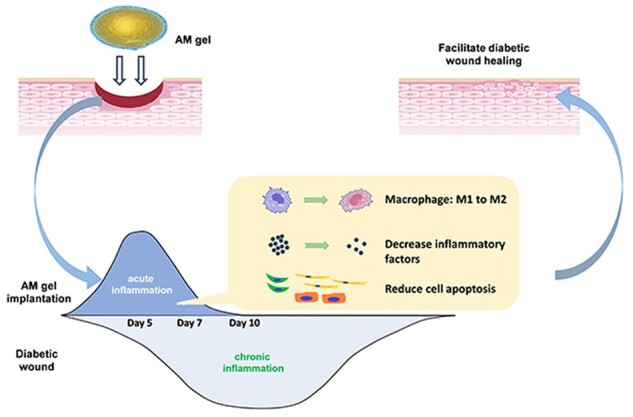
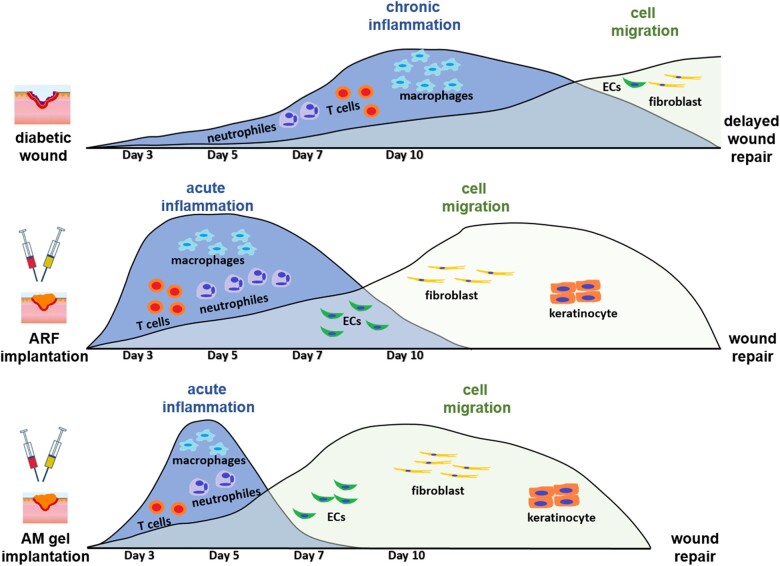
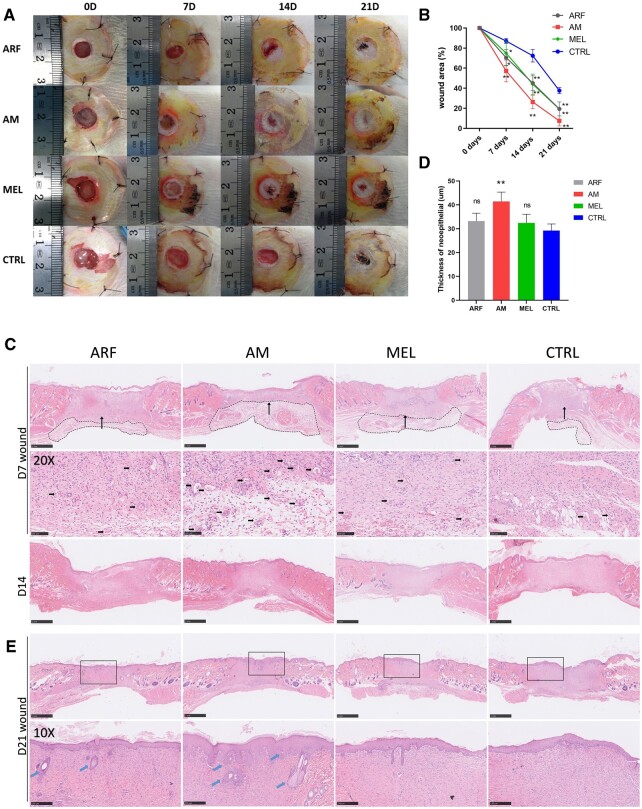
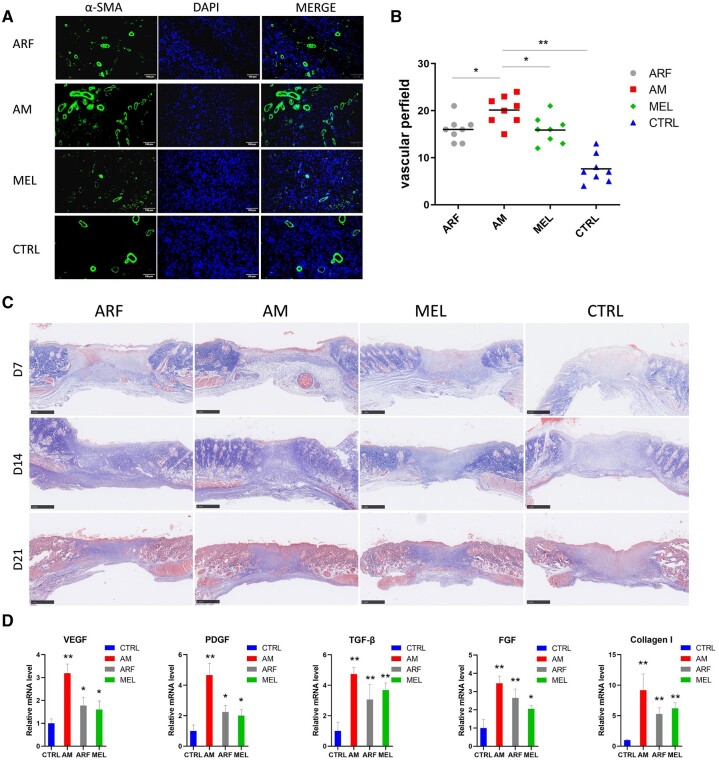
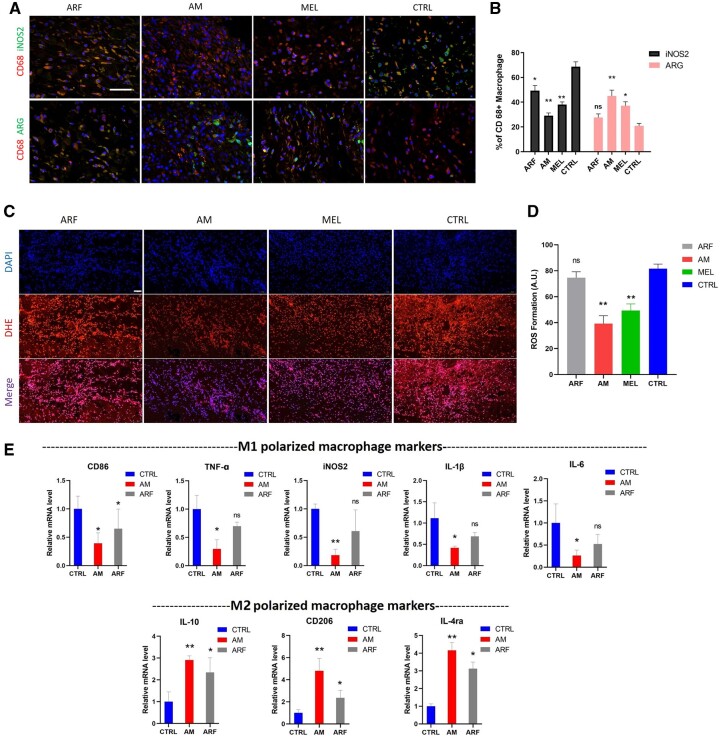
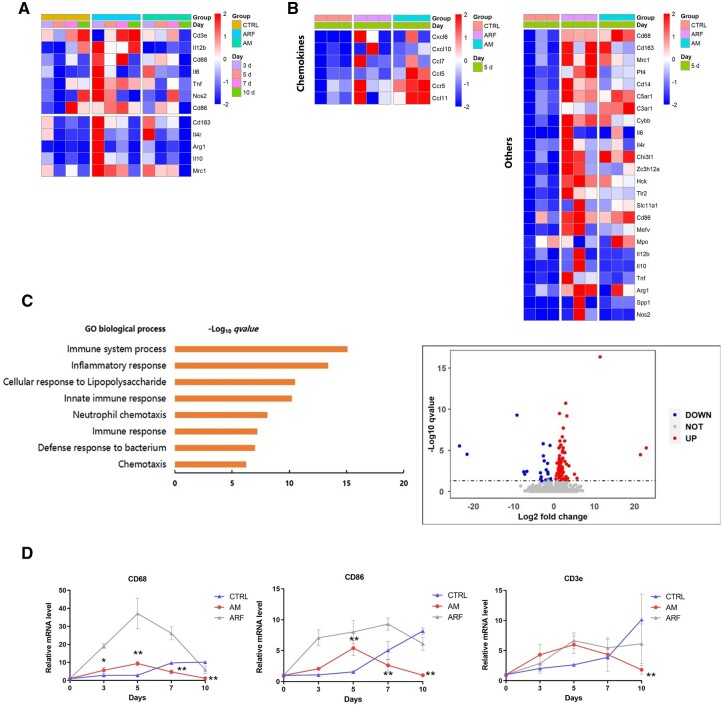
Successful wound healing depends on the reconstruction of proper tissue homeostasis, particularly in the posttraumatic inflammatory tissue microenvironment. Diabetes jeopardizes tissues' immune homeostasis in cutaneous wounds, causing persistent chronic inflammation and cytokine dysfunction. Previously, we developed an autologous regeneration factor (ARF) technology to extract the cytokine composite from autologous tissue to restore immune homeostasis and promote wound healing. However, treatment efficacy was significantly compromised in diabetic conditions. Therefore, we proposed that a combination of melatonin and ARF, which is beneficial for proper immune homeostasis reconstruction, could be an effective treatment for diabetic wounds. Our research showed that the utilization of melatonin-mediated ARF biogel (AM gel) promoted diabetic wound regeneration at a more rapid healing rate. RNA-Seq analysis showed that AM gel treatment could restore more favorable immune tissue homeostasis with unique inflammatory patterning as a result of the diminished intensity of acute and chronic inflammation. Currently, AM gel could be a novel and promising therapeutic strategy for diabetic wounds in clinical practice through favorable immune homeostatic reconstructions in the tissue microenvironment and proper posttraumatic inflammation patterning.
成功的伤口愈合依赖于适当的组织稳态重建,尤其是在创伤后炎症组织微环境中。糖尿病会损害皮肤伤口组织的免疫稳态,导致持续的慢性炎症和细胞因子功能障碍。此前,我们开发了一种自体再生因子(ARF)技术,从自体组织中提取细胞因子复合物,以恢复免疫稳态并促进伤口愈合。然而,在糖尿病条件下,治疗效果显著受损。因此,我们提出褪黑素和ARF的组合有利于适当的免疫稳态重建,可能是治疗糖尿病伤口的有效方法。我们的研究表明,使用褪黑素介导的ARF生物凝胶(AM凝胶)能以更快的愈合速度促进糖尿病伤口再生。RNA测序分析表明,由于急性和慢性炎症强度的降低,AM凝胶治疗可以通过独特的炎症模式恢复更有利的免疫组织稳态。目前,通过在组织微环境中进行有利的免疫稳态重建和适当的创伤后炎症模式,AM凝胶可能是临床实践中治疗糖尿病伤口的一种新的、有前景的治疗策略。