Bosak Alexander, Saraf Nileshi, Willenberg Alicia, Kwan Michael W C, Alto Barry W, Jackson George W, Batchelor Robert H, Nguyen-Huu Truong D, Sankarapani Vinoth, Parks Griffith D, Seal Sudipta, Willenberg Bradley Jay
Department of Internal Medicine, College of Medicine, University of Central Florida 6900 Lake Nona Blvd Orlando FL 32827 USA
Advanced Materials Processing and Analysis Center, Nanoscience and Technology Center, Department of Materials Science and Engineering, University of Central Florida Orlando FL USA.
RSC Adv. 2019 Jul 31;9(41):23752-23763. doi: 10.1039/c9ra02089f. eCollection 2019 Jul 29.
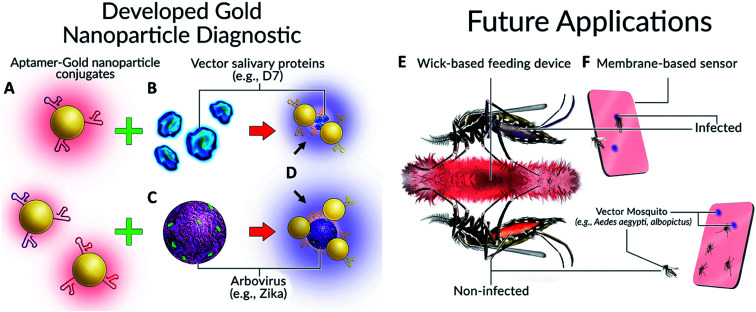
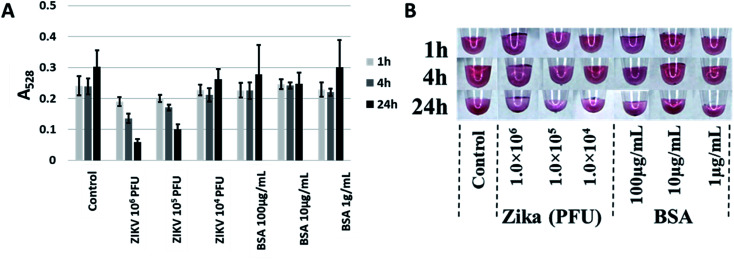
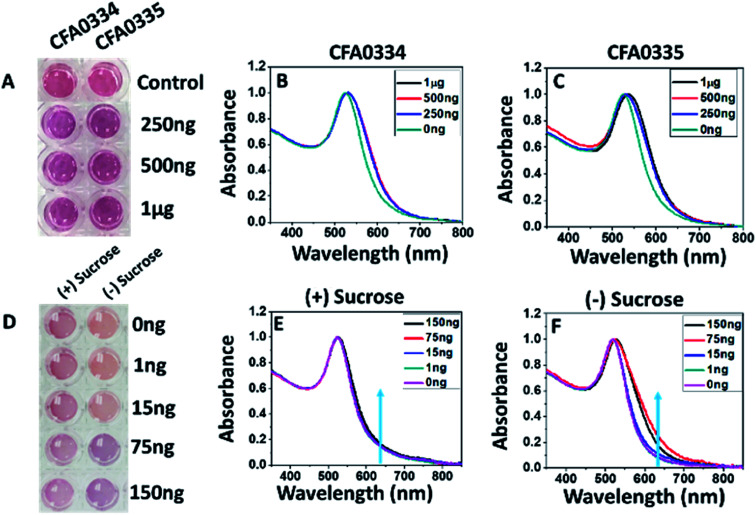
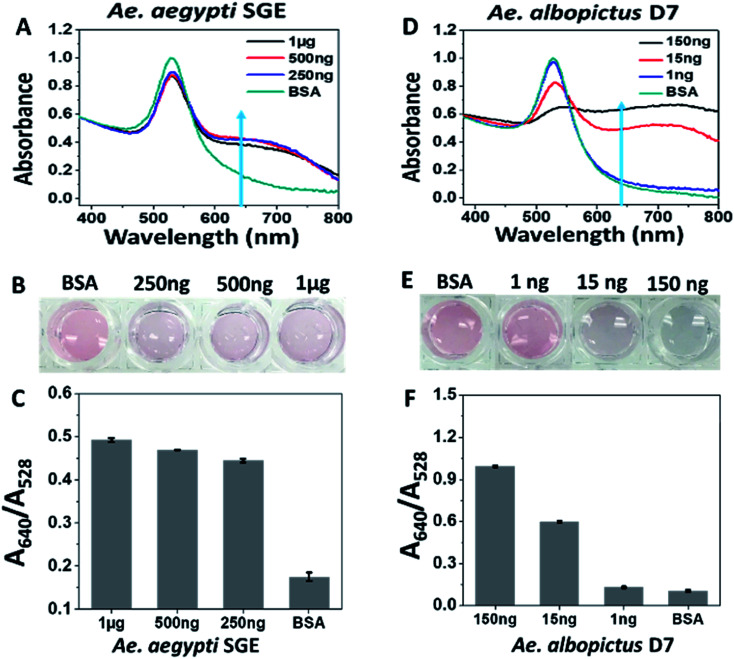
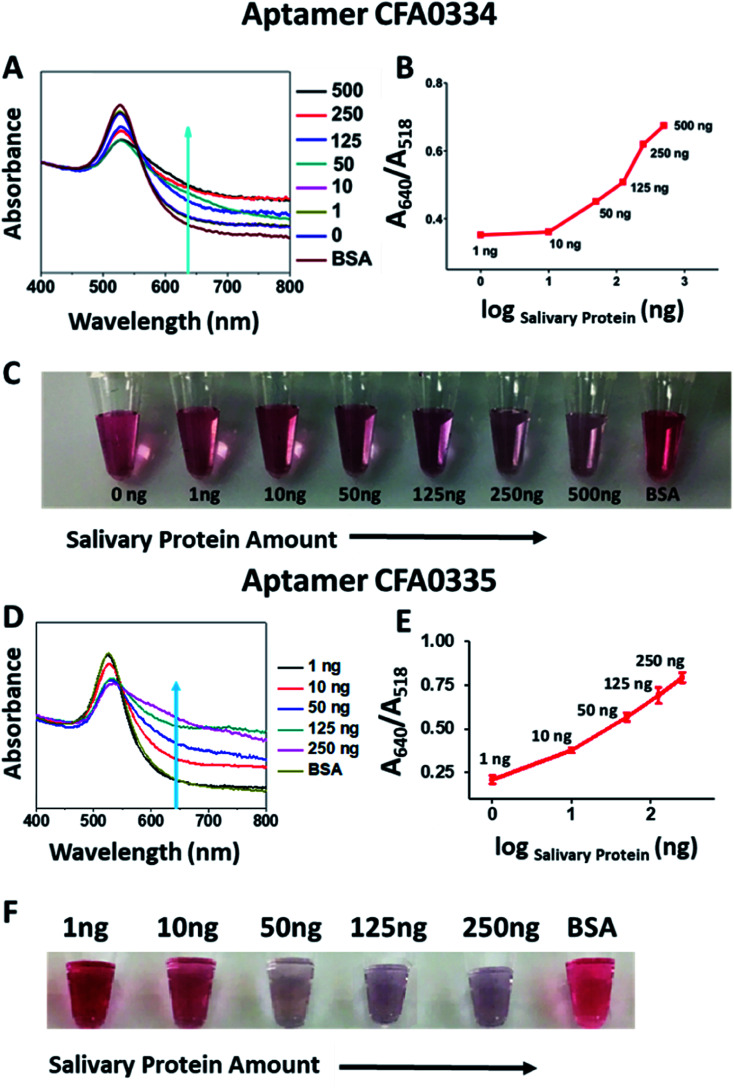
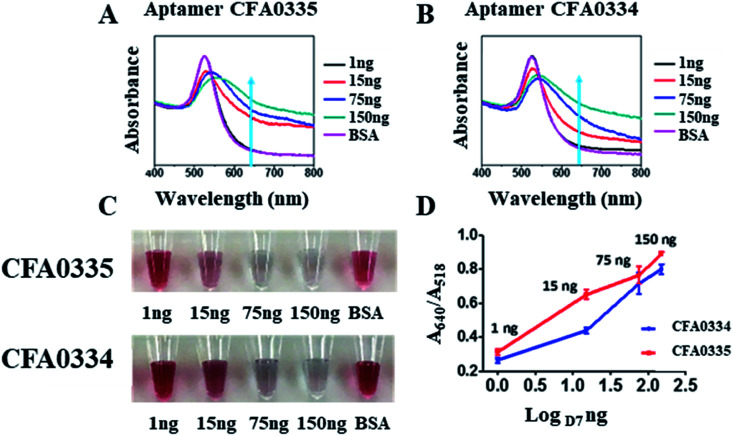
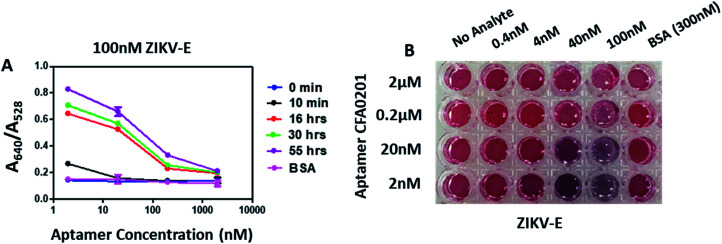
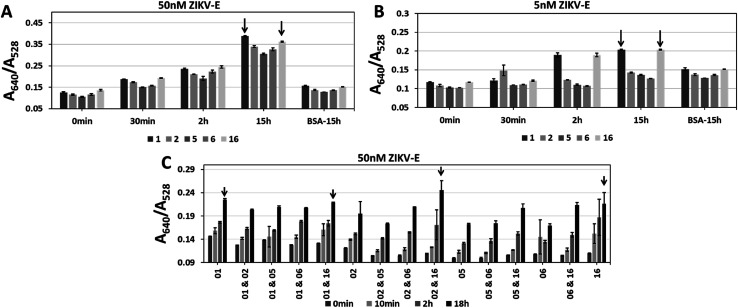
The real-time, colorimetric detection of analytes aptamer-gold nanoparticle technology has proven to be an important, emerging technique within the medical field. Of global health importance, the ability to detect vector mosquito species, such as the () mosquito, and transmitted arboviruses, such as Zika virus, is paramount to mosquito control and surveillance efforts. Herein, we describe the detection of salivary protein for vector identification and the detection of Zika virus to assess mosquito infection status by aptamer-gold nanoparticle conjugates. Key to optimization of these diagnostics were gold nanoparticle capping agents and aptamer degree of labelling (, the amount of aptamers per gold nanoparticle). In the present study, detection was achieved for as little as 10 ng salivary protein and 1.0 × 10 PFU live Zika virus. These aptamer-gold nanoparticle conjugate diagnostics could one day prove to be useful as deployable nano-based biosensors that provide easy-to-read optical read outs through a straightforward red-to-blue colour change either within a diagnostic solution or atop a card/membrane-based biosensor.
基于适配体-金纳米颗粒技术的分析物实时比色检测已被证明是医学领域一项重要的新兴技术。对于全球健康而言,检测媒介蚊虫种类(如 蚊)以及传播的虫媒病毒(如寨卡病毒)的能力对于蚊虫控制和监测工作至关重要。在此,我们描述了通过适配体-金纳米颗粒缀合物检测唾液蛋白以进行媒介鉴定以及检测寨卡病毒以评估蚊虫感染状况。这些诊断方法优化的关键在于金纳米颗粒封端剂和适配体标记程度(即每个金纳米颗粒上适配体的数量)。在本研究中,对于低至10 ng的唾液蛋白和1.0×10 PFU的活寨卡病毒均可实现检测。这些适配体-金纳米颗粒缀合物诊断方法有朝一日可能会被证明是有用的可部署纳米生物传感器,通过在诊断溶液中或基于卡片/膜的生物传感器上直接从红色到蓝色的颜色变化提供易于读取的光学读数。