Zhou Lu, Liu Guojie, Wang Yang, Liu Jianling, Zhang Yajie, Ma Yong
Department of Chemistry, School of Fundamental Sciences, China Medical University Shenyang 110122 China
Department of Gastroenterology, Shengjing Hospital of China Medical University Shenyang 110004 China.
RSC Adv. 2019 Oct 29;9(60):34958-34962. doi: 10.1039/c9ra07404j. eCollection 2019 Oct 28.
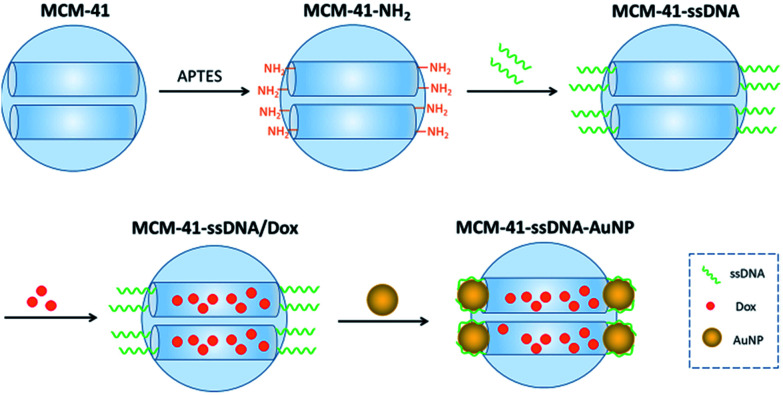
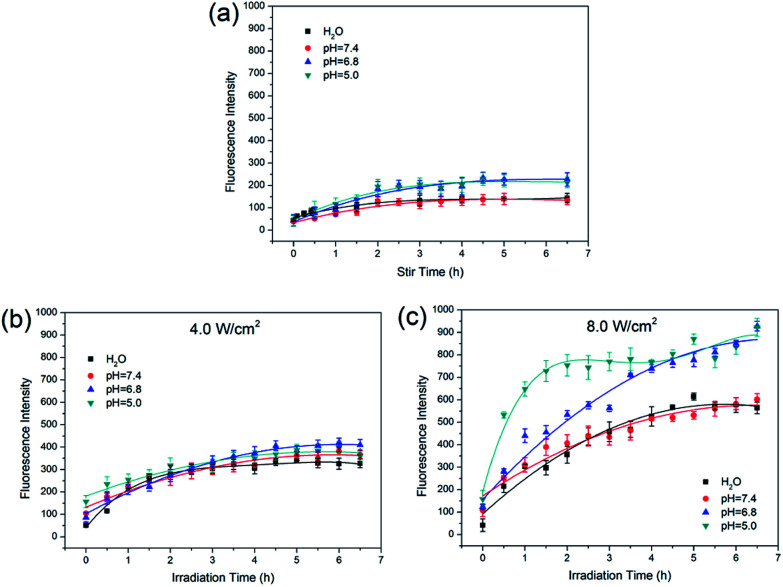
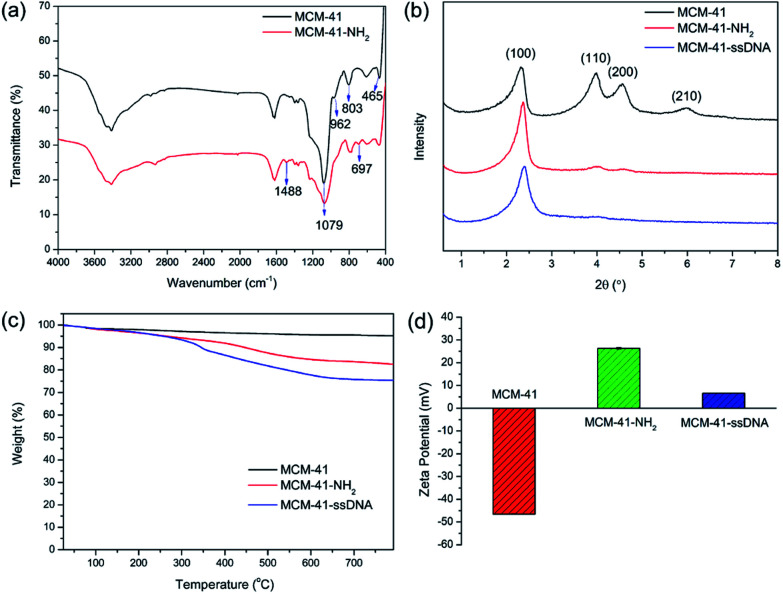
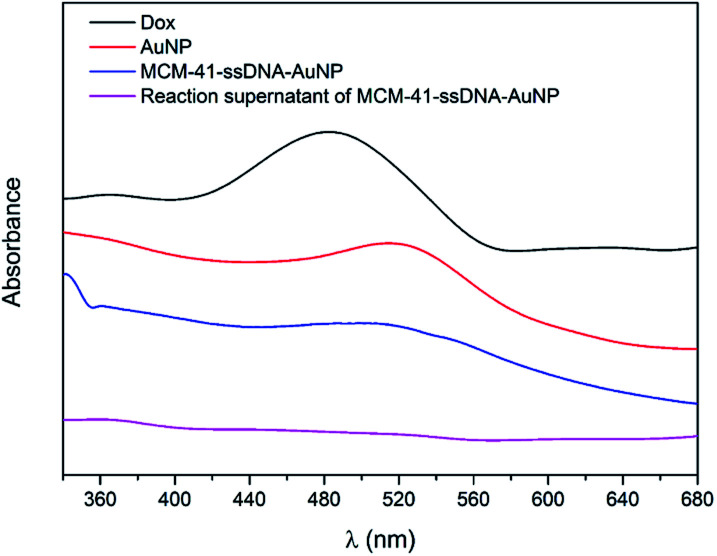
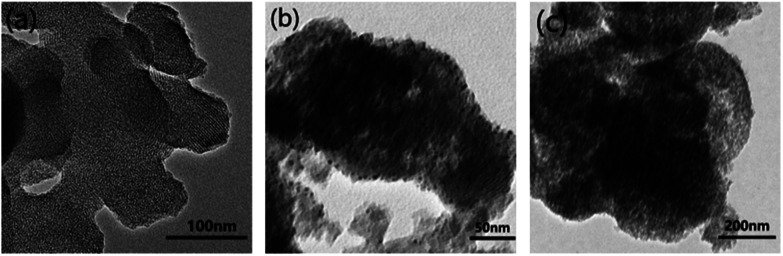
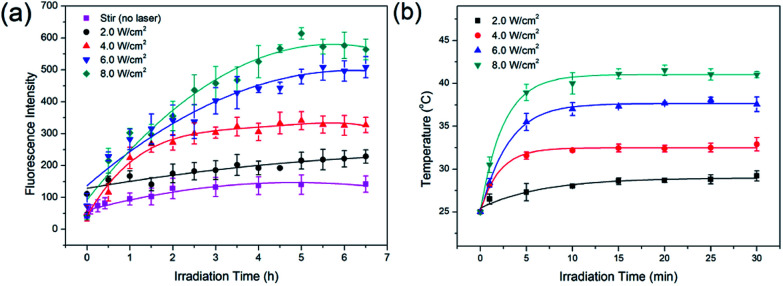
In order to improve drug efficacy, and reduce drug toxicity and side effects, a novel drug controlled release system was developed based on mesoporous silica nanoparticles (MSNs) with gold nanoparticles (AuNPs) acting as pore caps and short single-stranded DNA (ssDNA) oligomers as the linker. The synthesised composites were characterized by Fourier transform infrared spectroscopy (FTIR), powder X-ray diffraction (XRD), thermogravimetric analysis (TGA), zeta potential measurement, transmission electron microscopy (TEM) and UV-vis spectroscopy. The anticancer drug doxorubicin (Dox) was applied as a model drug to investigate the 808 nm near infrared (NIR) laser-controlled drug release behavior at different pH by fluorescence measurements. The investigation results demonstrate that this nanocarrier could achieve drug controlled release by external near-infrared (NIR) laser stimulation, which is expected to be applied in cancer therapy.
为了提高药物疗效,降低药物毒性和副作用,基于介孔二氧化硅纳米颗粒(MSNs)开发了一种新型药物控释系统,其中金纳米颗粒(AuNPs)作为孔帽,短单链DNA(ssDNA)寡聚物作为连接体。通过傅里叶变换红外光谱(FTIR)、粉末X射线衍射(XRD)、热重分析(TGA)、zeta电位测量、透射电子显微镜(TEM)和紫外可见光谱对合成的复合材料进行了表征。以抗癌药物阿霉素(Dox)为模型药物,通过荧光测量研究了其在不同pH值下808nm近红外(NIR)激光控制的药物释放行为。研究结果表明,这种纳米载体可以通过外部近红外(NIR)激光刺激实现药物控释,有望应用于癌症治疗。