He Qi, Fu Jingtao, Wu Wenhao, Pervaiz Sabeeh
School of Finance and Economics, Jiangsu University, Zhenjiang, 212013, People's Republic of China.
School of Management, Hainan University, Haikou, 570228, People's Republic of China.
Psychol Res Behav Manag. 2022 May 3;15:1105-1119. doi: 10.2147/PRBM.S321689. eCollection 2022.
On the basis of previous research results, the opinion that compulsory citizenship behavior (CCB) leads to negative impacts over employees and organizations prevails. However, the latest researches negate the absence of rewards and favorable evaluation from organizational system for CCB. Instead, CCB is likely to be awarded by incentive allocation and recognitive affirmation. In the case of the resource compensation based on CCB, will the expected utility of CCB still show the consistence with the traditional CCB researches, imposing negative effects over employees and organizations?
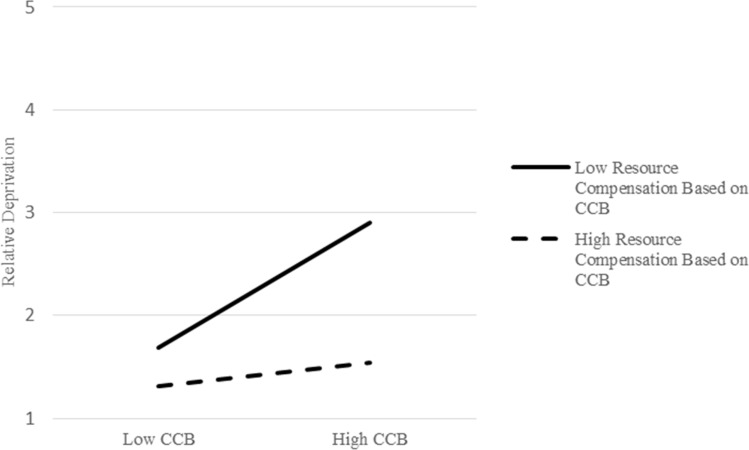
This research explored the mechanism and boundary condition based on self-determination theory (SDT) and relative deprivation theory (RDT) to avert the negative effects of CCB, hoping to explain the above question. Time-lagged survey data from 227 employees tested the moderated mediation model, and the results verified the hypotheses.
With resource compensation after the delivery of CCB, employees will not feel relative deprivation caused by reluctant false citizenship behaviors. In addition, relative deprivation expresses the gap between expectation and reality, low psychological discrepancy will not deeply undermine employees' work well-being.
基于以往的研究结果,强制公民行为(CCB)会对员工和组织产生负面影响这一观点颇为盛行。然而,最新研究否定了组织系统对CCB缺乏奖励和正面评价这一说法。相反,CCB很可能会通过激励分配和认可肯定而得到奖励。在基于CCB的资源补偿情况下,CCB的预期效用是否仍会与传统CCB研究一致,对员工和组织产生负面影响呢?
本研究基于自我决定理论(SDT)和相对剥夺理论(RDT)探讨了避免CCB负面影响的机制和边界条件,希望能解释上述问题。来自227名员工的时间滞后调查数据对调节中介模型进行了检验,结果验证了假设。
在实施CCB后给予资源补偿,员工不会因不情愿的虚假公民行为而感到相对剥夺。此外,相对剥夺表达了期望与现实之间的差距,低心理差异不会严重损害员工的工作幸福感。