Dabouian Atiyeh, Bakhshi Hadi, Irani Shiva, Pezeshki-Modaress Mohamad
Department of Biology, School of Basic Sciences, Science and Research Branch, Islamic Azad University 1477893855 Tehran Iran.
Macromolecular Chemistry II, University of Bayreuth, Universitätsstraße 30 95440 Bayreuth Germany.
RSC Adv. 2018 Mar 12;8(18):9941-9945. doi: 10.1039/c7ra13237a. eCollection 2018 Mar 5.
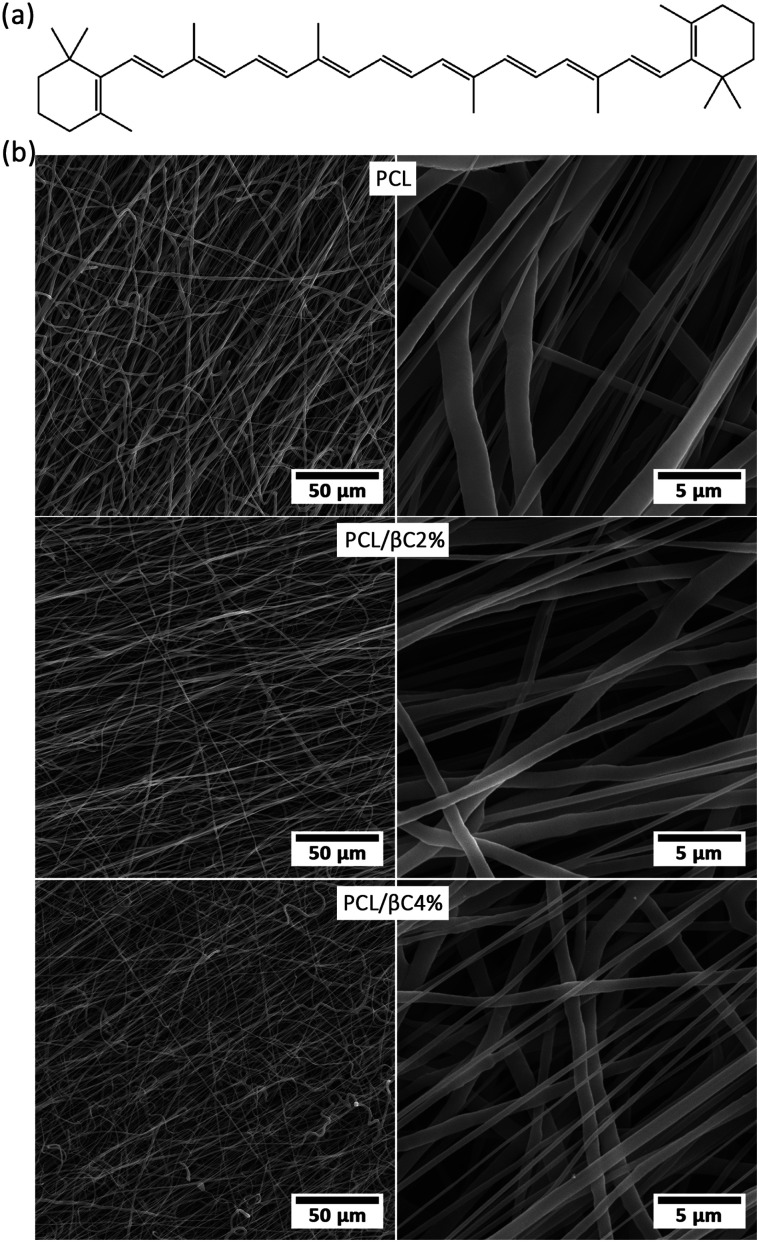
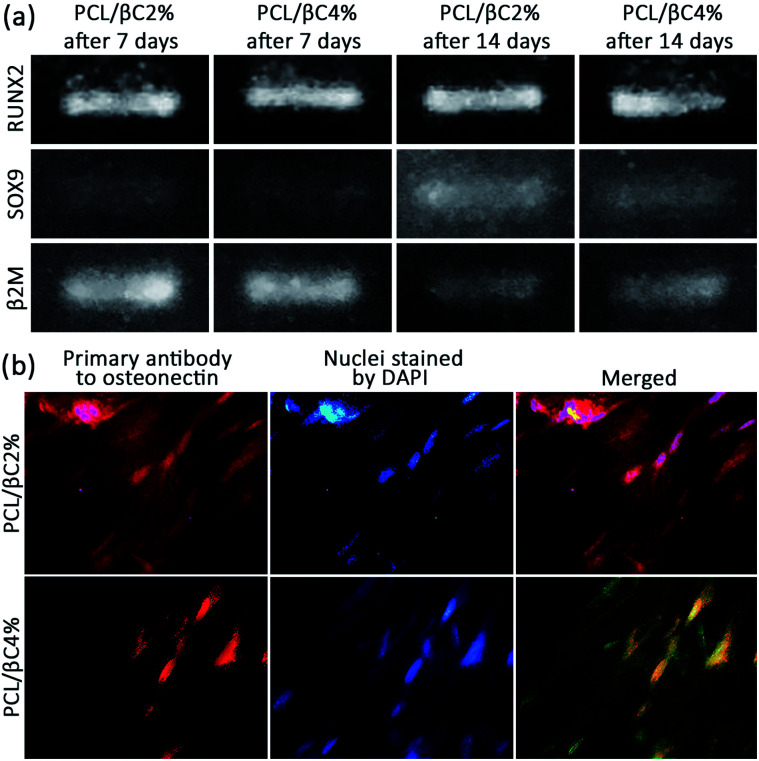
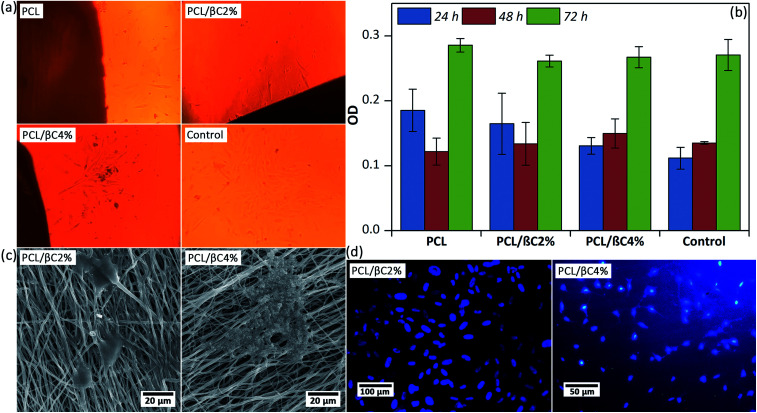
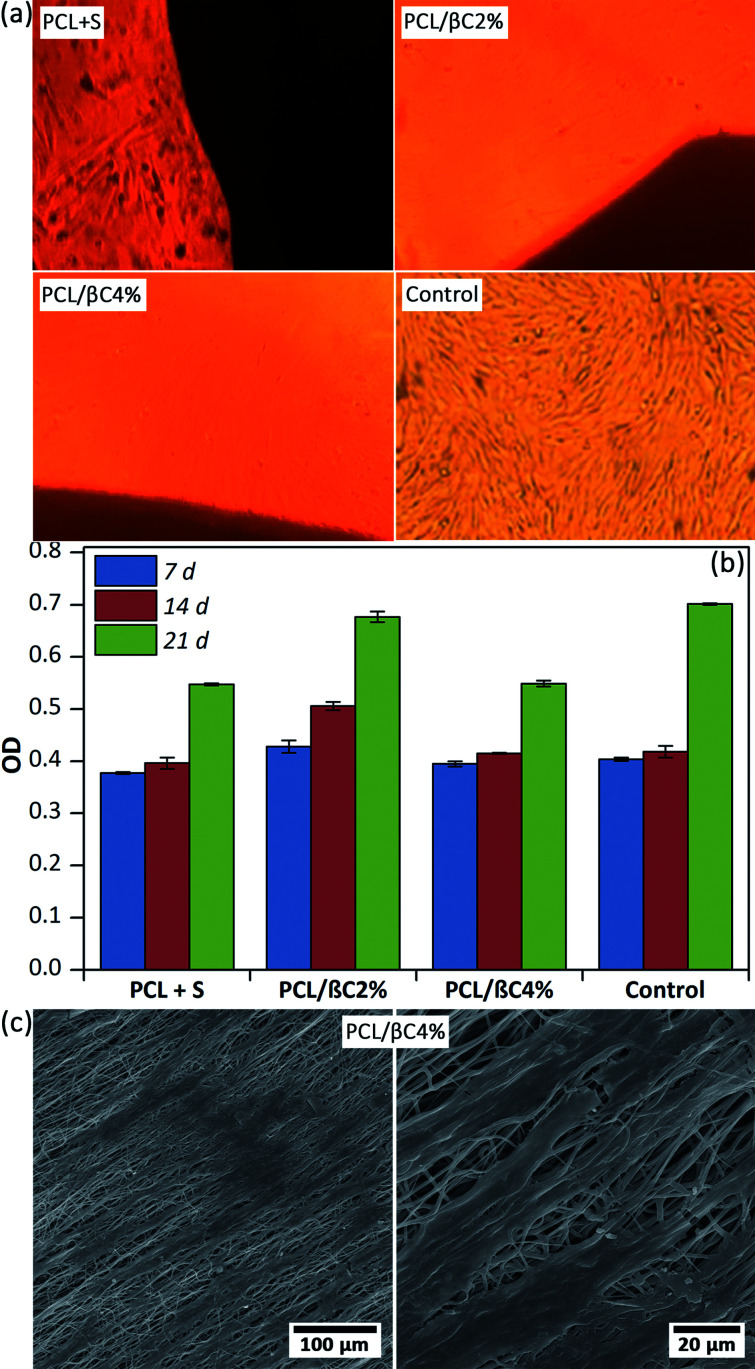
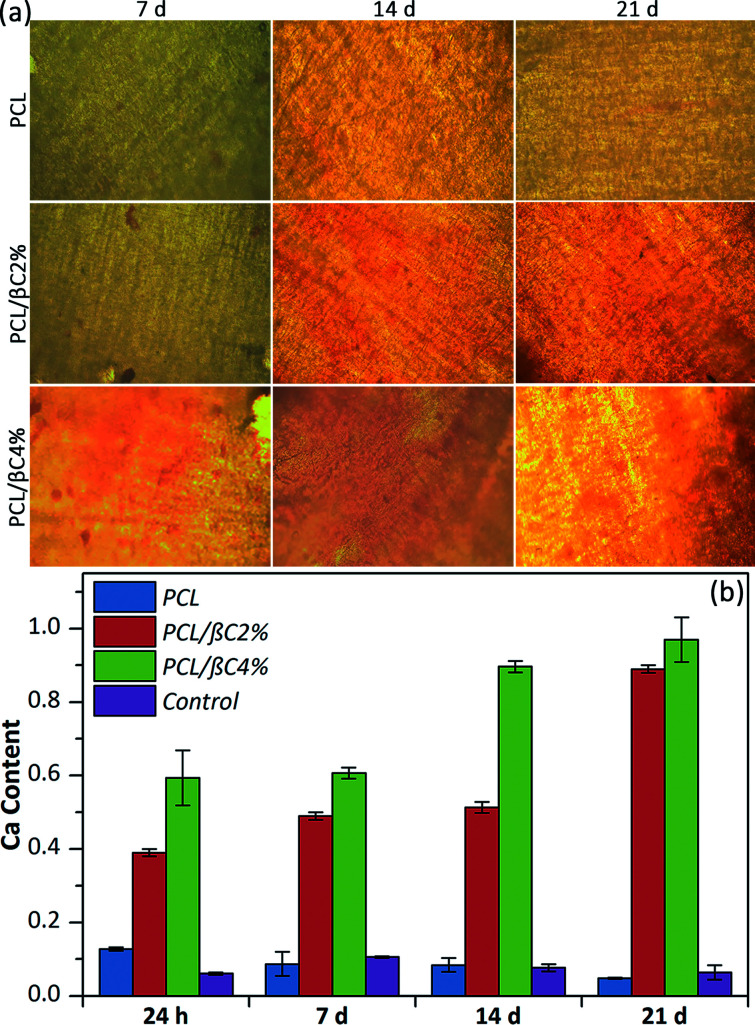
β-Carotene (βC) as a natural osteogenic material was incorporated in PCL electrospun mats to fabricate scaffolds for bone tissue engineering. These scaffolds successfully supported the attachment and proliferation of mesenchymal stem cells (MSCs). Seeded scaffolds were calcinated during 21 days of cell culture in a non-differential medium, which showed the osteodifferentiation of MSCs. Expression of , SOX9, and proved the osteoinductive effect of incorporated β-carotene on the differentiation of MSCs to osteoblasts without using any external osteogenic differential agent. However, the cells did not pass the early phase of osteogenesis and were still osteochondro-progenitor after 21 days of incubation. Thus, the fabricated fibrous scaffolds are potential candidates for direct bone tissue engineering.
β-胡萝卜素(βC)作为一种天然的成骨材料被掺入聚己内酯(PCL)电纺垫中,以制备用于骨组织工程的支架。这些支架成功地支持了间充质干细胞(MSCs)的附着和增殖。接种后的支架在无分化培养基中进行21天的细胞培养过程中进行了煅烧,这显示了MSCs的成骨分化。 、SOX9和 的表达证明了掺入的β-胡萝卜素在不使用任何外部成骨分化剂的情况下对MSCs向成骨细胞分化的骨诱导作用。然而,细胞并未通过成骨的早期阶段,在培养21天后仍为骨软骨祖细胞。因此,所制备的纤维支架是直接骨组织工程的潜在候选材料。